
Loading, please wait...
LOT 1433
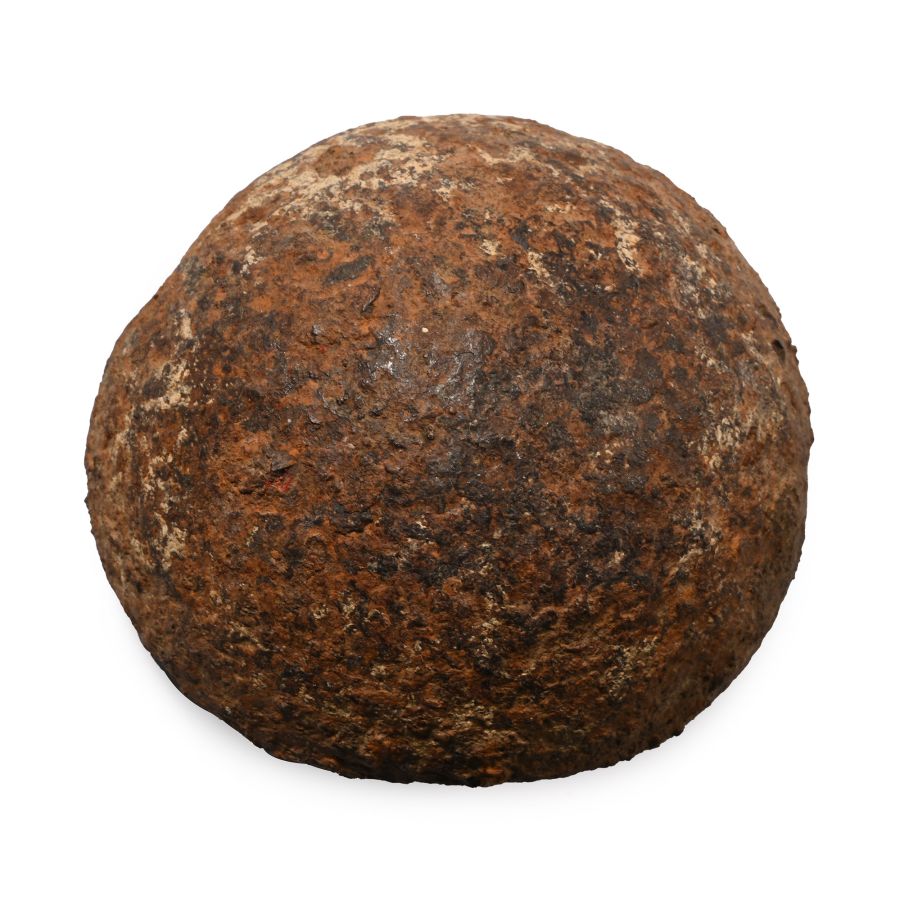
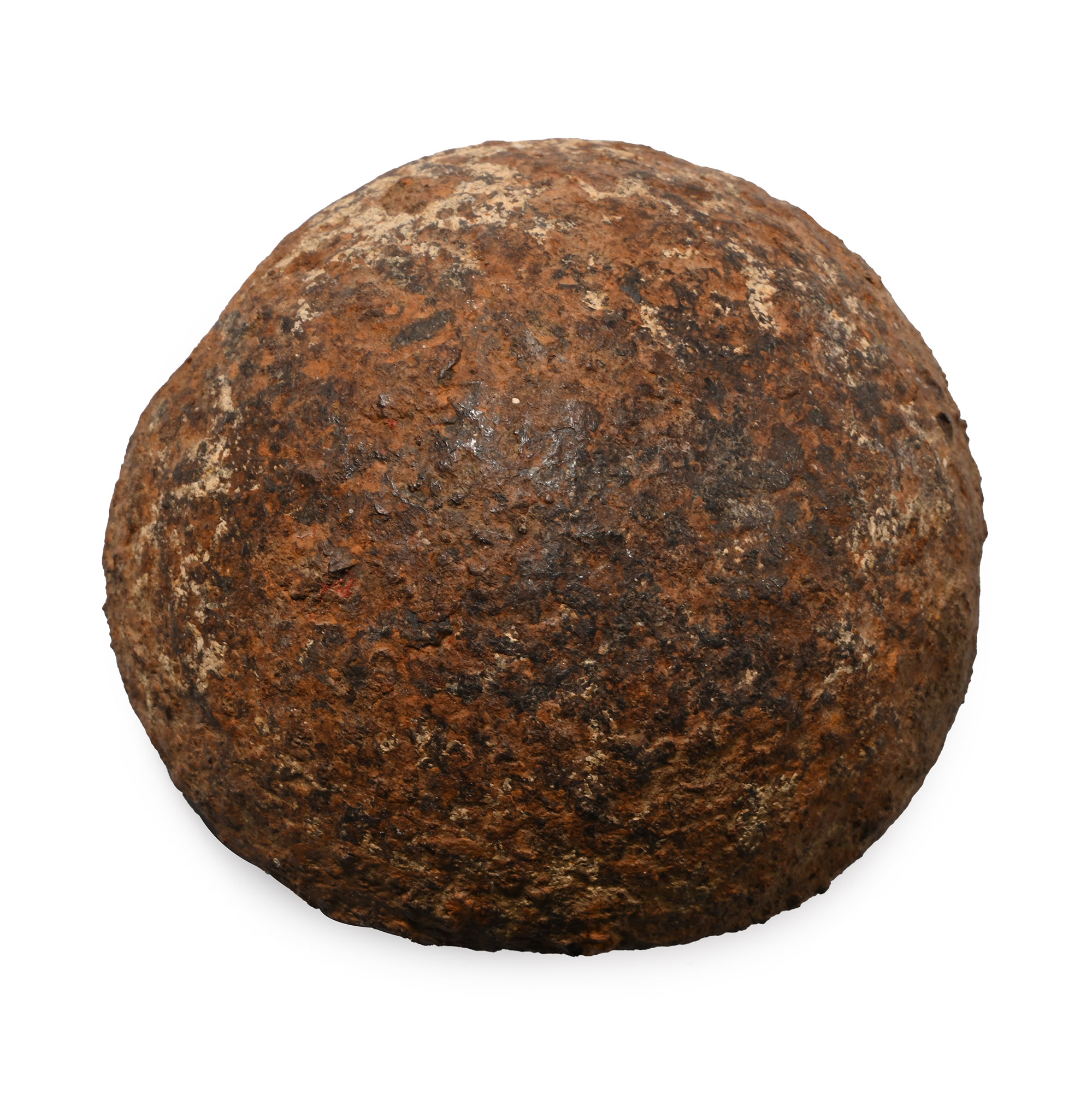
Civil War 'Battle of Newbury' Exploded Cannon Ball Section
CIRCA 1644 A.D.
4 in. (1.47 kg, 10 cm).
A large section of missile, 100mm diameter suggesting use in a 'Bastard Carbine Cannon'. [No Reserve]
ProvenanceFound near Donnington Castle battle area, Speen, West Berkshire, UK.
Acquired on the UK art market.
Property of a Berkshire, UK, gentleman collector.
Accompanied by a copy of the British Museum's Portable Antiquities Scheme (PAS) report no.BERK-9ED66D.
This lot is accompanied by an illustrated lot declaration signed by the Head of the Antiquities Department, Dr Raffaele D'Amato.
TimeLine Auctions follows a vetting process to ensure the authenticity and legality of all items, reinforcing our commitment to integrity and responsible trading. Each antiquity, antique, and coin lot undergoes thorough examination by a vetting committee of at least ten external specialists, professional trade association members, scientists, and archaeologists: Our Vetting Process
AUCTIONS:
TimeLine is a leading auction house specialising in antiquities, ancient art, collectables, natural history, coins, medals, and books. Our auctions offer museums, collectors, historians, and enthusiasts the opportunity to acquire unique and historically significant pieces.
LOT 1433
Civil War 'Battle of Newbury' Exploded Cannon Ball Section
Sold for (Inc. bp): £208
-
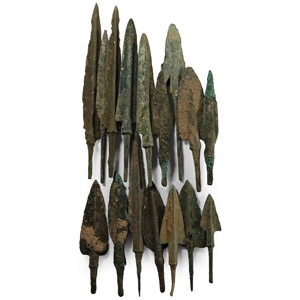
Luristan Bronze Arrowhead Collection
13th-6th century B.C.Sold for (Inc. bp): £182
Comprising a variety of tanged triangular and leaf-shaped arrowheads with thick mid-rib, one barbed-and-tanged example. 375 grams total, 7.7-16 cm
Ex London art market, 1980-1990s. This lot is accompanied by an illustrated lot declaration signed by the Head of the Antiquities Department, Dr Raffaele D'Amato.
One category of the represented arrowheads has a sharp, flat blade, the ends of which extend to form wings or barbs, and a prominent midrib extending into a long tang that often has a stop; the blade shape varies from deltoid to more triangular. Another form has no barbs, but it has a prominent midrib extending to the tang, and a narrow leaf-shaped blade. -
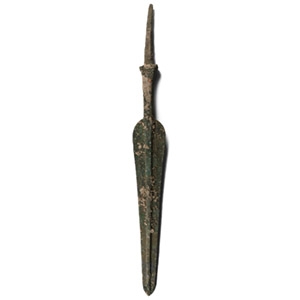
Very Large Amlash Bronze Spear-Head
12th-11th century B.C.Sold for (Inc. bp): £117
Leaf-shaped blade with raised midrib extending to a square-section shank, flared below with a square-section tang. 537 grams, 45.5 cm
Ex London art market, 1980-1990s. This lot is accompanied by an illustrated lot declaration signed by the Head of the Antiquities Department, Dr Raffaele D'Amato.
The weapon belongs to the type 1 of the spear-head classification of Khorasani, mainly from Marlik or Amlash areas. Similar pieces have been dated by Stutzinger to 1200-1100 B.C. -
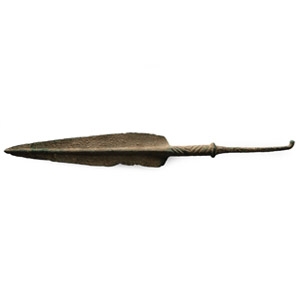
Luristan Bronze Spearhead
2nd-1st millennium B.C.Sold for (Inc. bp): £85
Leaf-shaped blade with raised midrib extending to the shaft with a collar, rectangular section tang. 205 grams, 35 cm
Ex North London, UK, collection, 1990s. This lot is accompanied by an illustrated lot declaration signed by the Head of the Antiquities Department, Dr Raffaele D'Amato.
