
Loading, please wait...
LOT 0177
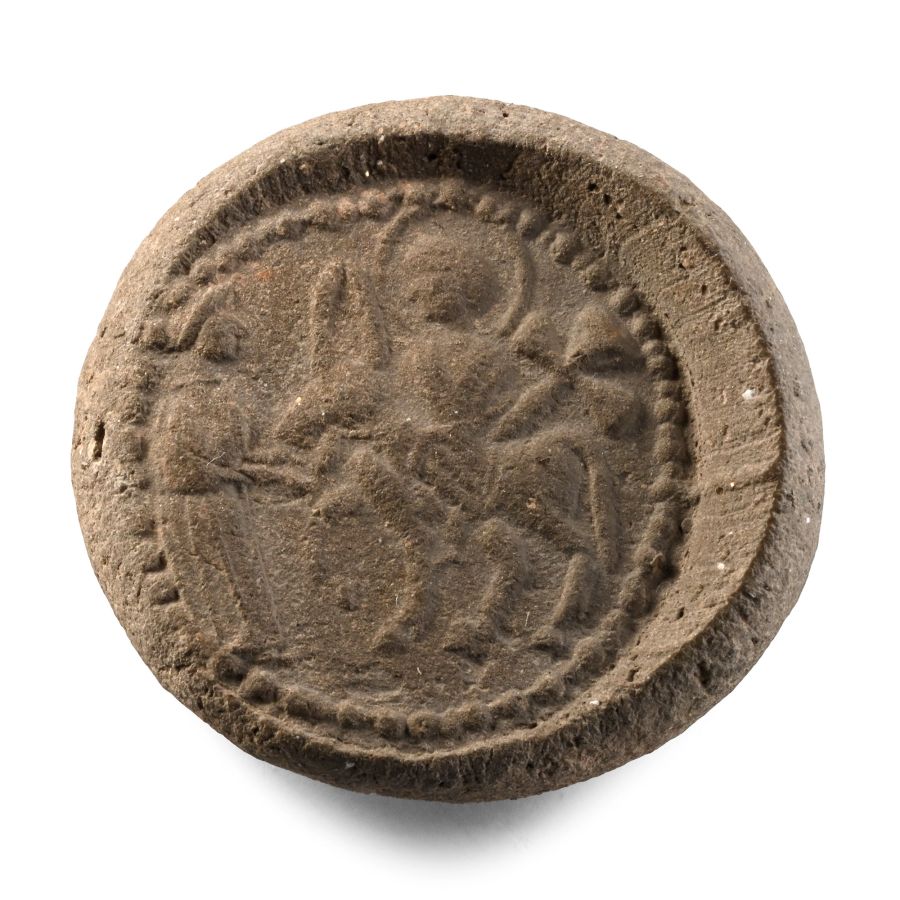
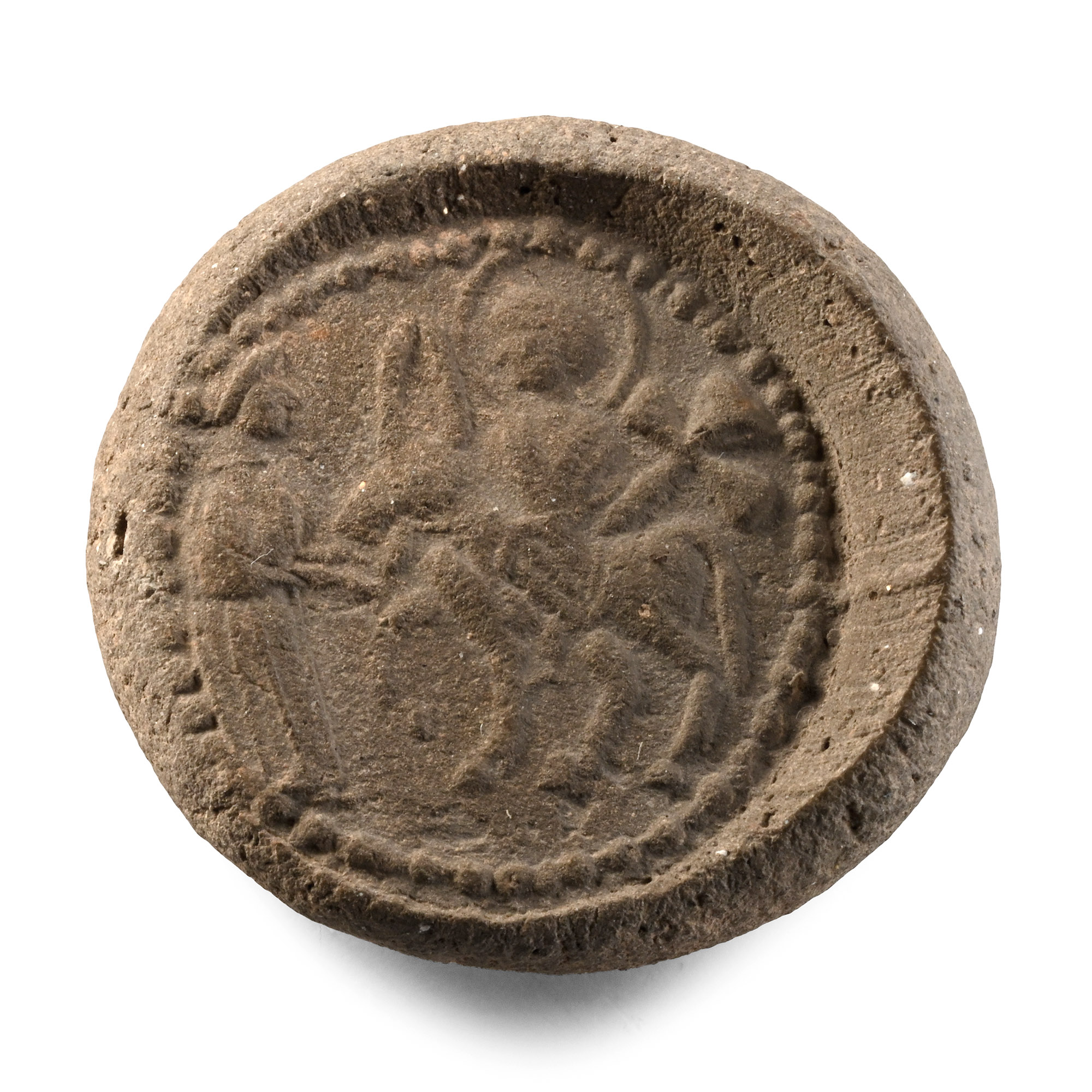
Christian 'First Passion, Entry into Jerusalem' Terracotta Pilgrim's Token
CIRCA 6TH-8TH CENTURY A.D.
1 in. (6.09 grams, 25 mm).
Plano-convex in section with impressed design of a nimbate figure riding a donkey led by a facing robed figure, cross to the rear, all within a pelletted border.
ProvenanceEx important Christian collection, 1970s.
CONDITIONTimeLine Auctions follows a vetting process to ensure the authenticity and legality of all items, reinforcing our commitment to integrity and responsible trading. Each antiquity, antique, and coin lot undergoes thorough examination by a vetting committee of at least ten external specialists, professional trade association members, scientists, and archaeologists: Our Vetting Process
AUCTIONS:
TimeLine is a leading auction house specialising in antiquities, ancient art, collectables, natural history, coins, medals, and books. Our auctions offer museums, collectors, historians, and enthusiasts the opportunity to acquire unique and historically significant pieces.
LOT 0177
Christian 'First Passion, Entry into Jerusalem' Terracotta Pilgrim's Token
Sold for (Inc. bp): £338
-
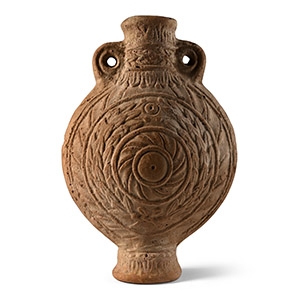
Byzantine Ceramic Pilgrim's Flask with Wreath
Circa 6th-8th century A.D.Sold for (Inc. bp): £247
Biconvex in section with flared base and mouth, lateral pierced lugs at the shoulders, low-relief wreath detailing to the body. 166 grams, 14.1 cm
Ex Mayfair, London, UK, gallery, 2000s. -
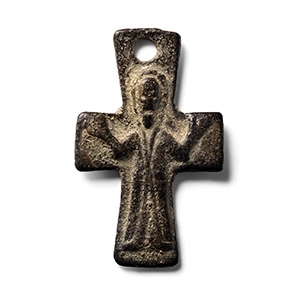
Byzantine Bronze Cross Pendant
Circa 10th century A.D.Sold for (Inc. bp): £104
Cruciform plaque pierced for suspension at the upper edge, obverse with low-relief robed figure in orans pose. 3.02 grams, 31 mm
Acquired from Chris Martin-Zakheim, Iconastas, 5 Piccadilly Arcade, London SW1. From the private collection of a West London, UK, gentleman, formed since the early 2000s. -
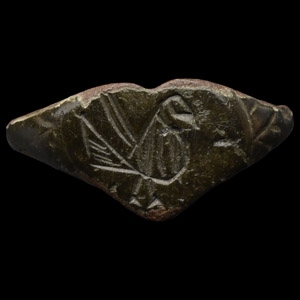
Byzantine Bronze Ring with Dove
6th-8th century A.D.Sold for (Inc. bp): £65
Slender hoop expanding to a heart-shaped bezel with a stylised dove facing right. 2.36 grams, 21.91 mm overall, 19.40 mm internal diameter (approximate size British Q, USA 8, Europe 17.49, Japan 16)
Ex P Chapman collection, 1980s-1990s.
