Loading, please wait...

Chinese Tang Tinned Bronze Mirror with Monkeys Chinese Tang Tinned Bronze Mirror with Monkeys Chinese Tang Tinned Bronze Mirror with Monkeys Chinese Tang Tinned Bronze Mirror with Monkeys Chinese Tang Tinned Bronze Mirror with Monkeys Chinese Tang Tinned Bronze Mirror with Monkeys
Use mousewheel to zoom in and out, click to enlarge
Details

LOT 1968

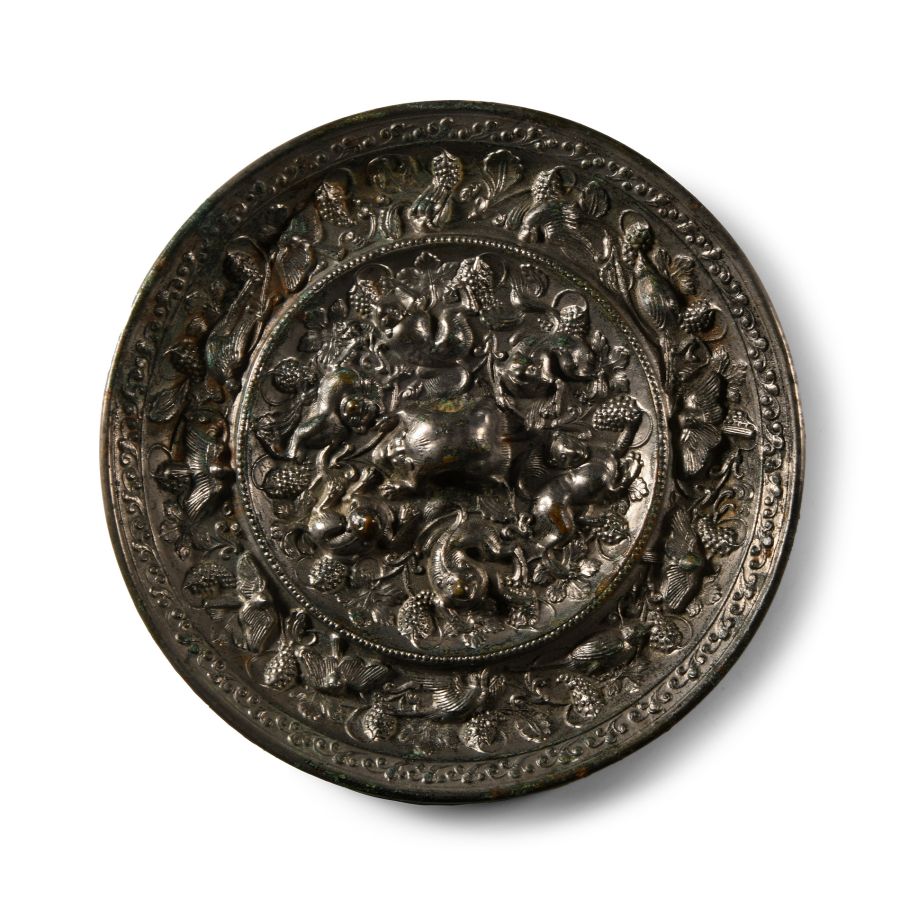
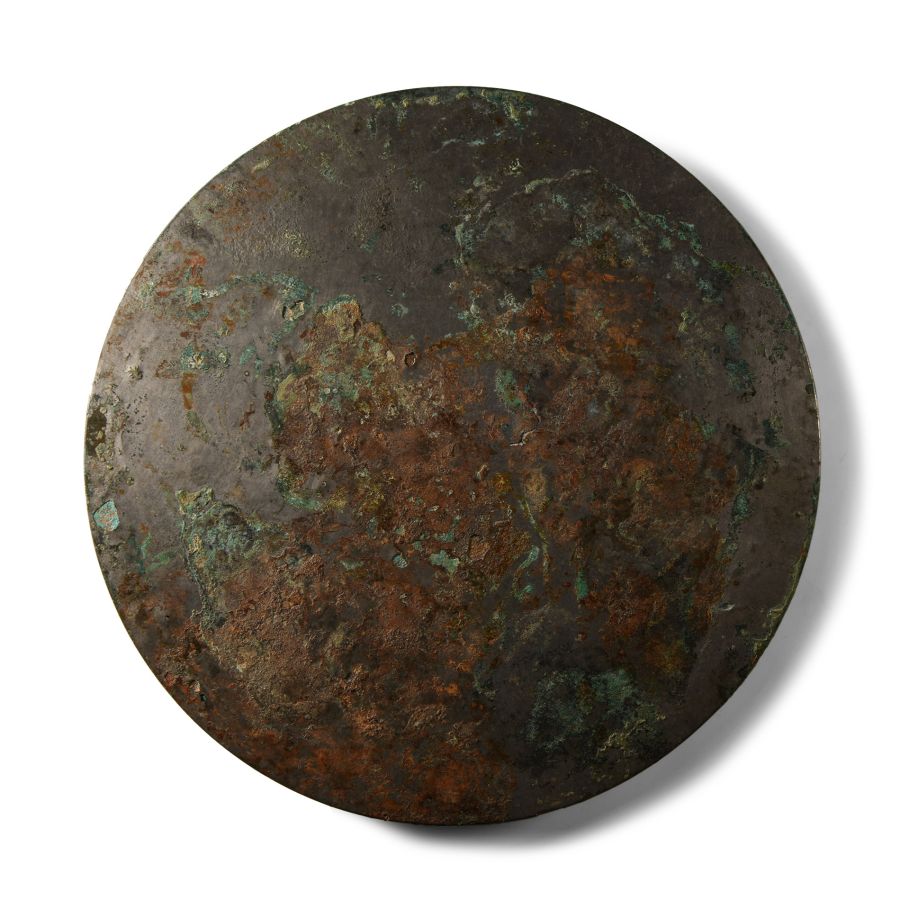
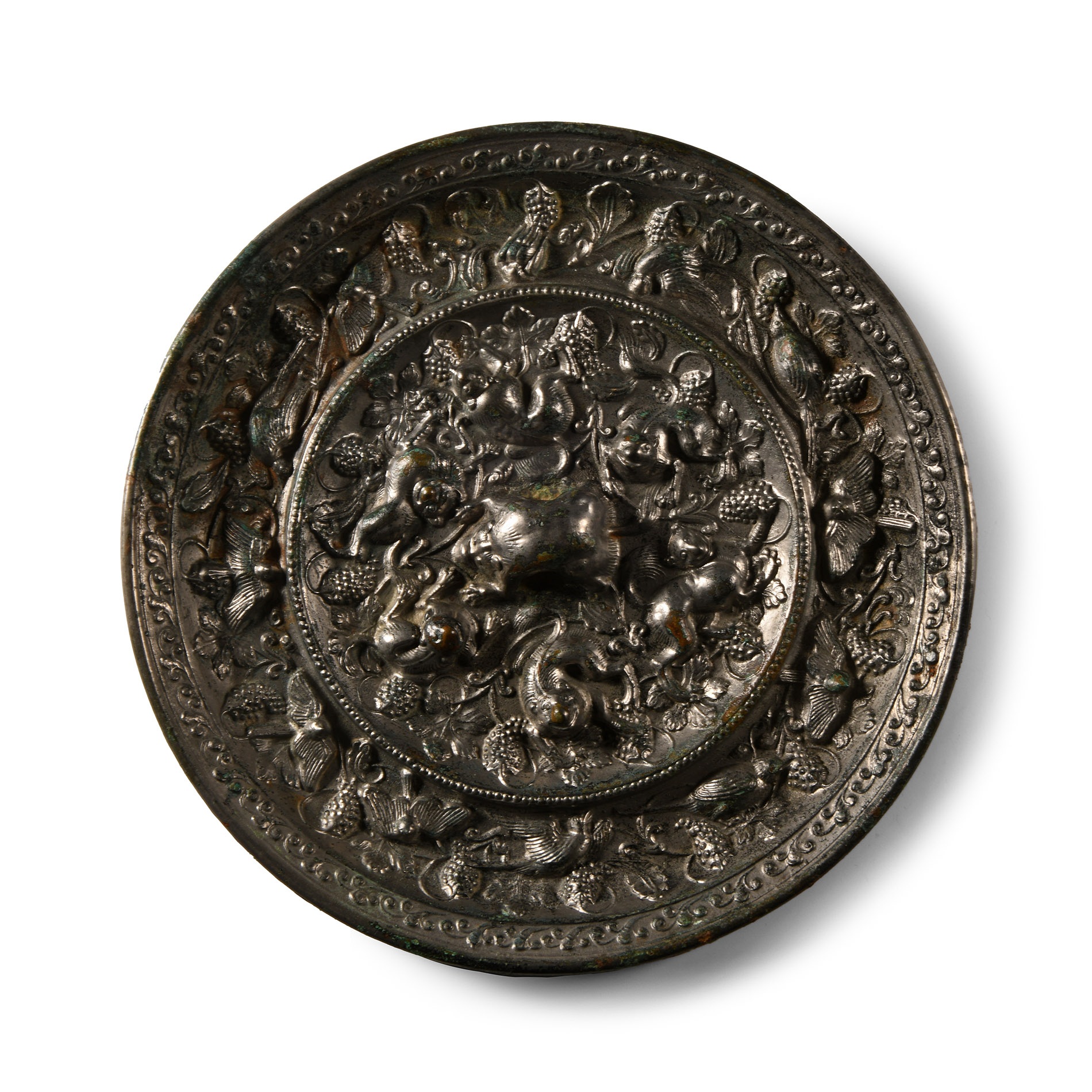
Chinese Tang Tinned Bronze Mirror with Monkeys

TANG DYNASTY, 618-907 A.D OR LATER

6 3/4 in. (1.27 kg, 17 cm).

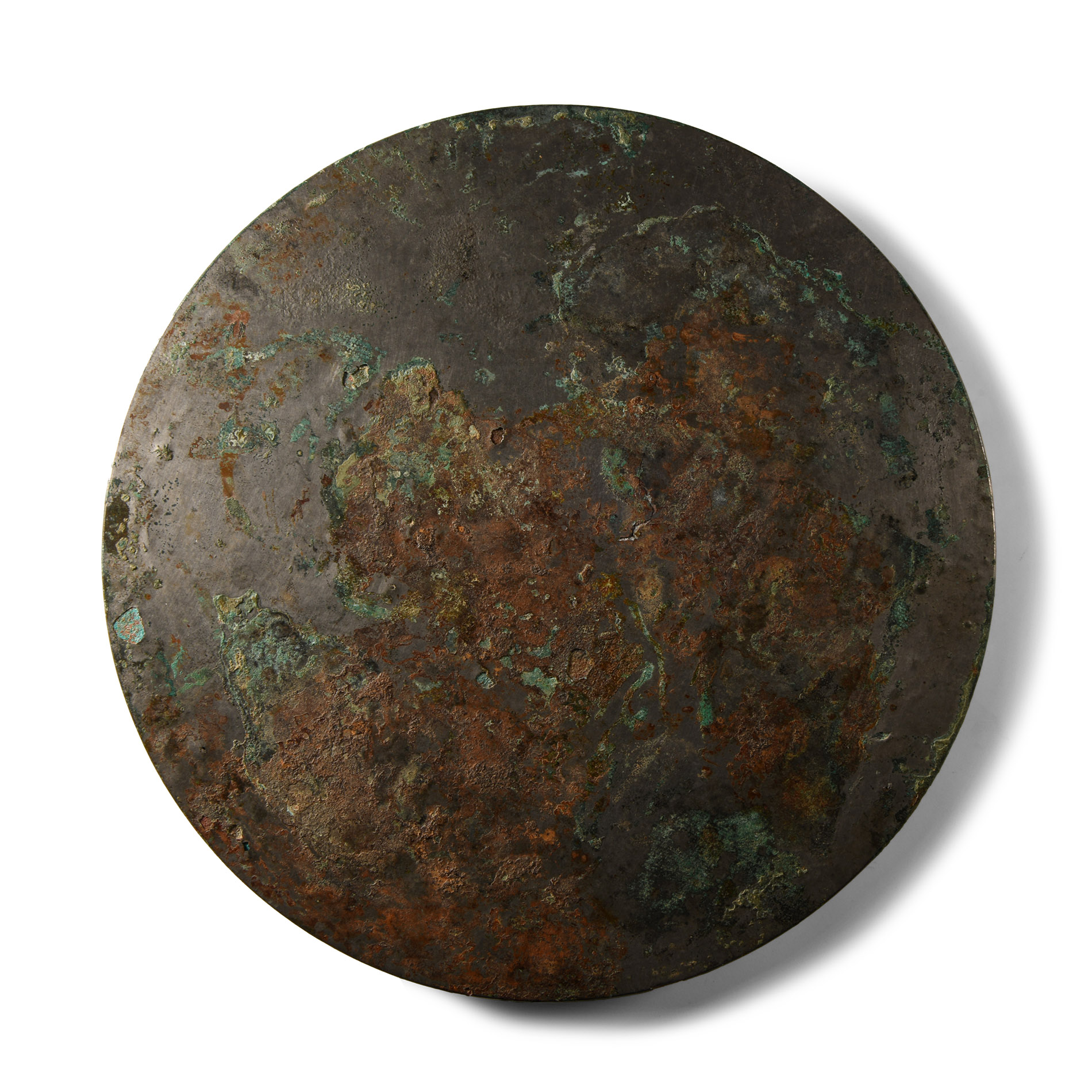
With one flat face, the other dished with a raised and beaded circular border; decorated with high-relief birds, beasts, floral motifs and bunches of grapes. [No Reserve]

Provenance

Acquired UK, in the 1980s.
Property of a retired South West London doctor.

Literature

Cf. The Metropolitan Museum, accession number 17.52, for similar.

CONDITION
VETTING:

TimeLine Auctions follows a vetting process to ensure the authenticity and legality of all items, reinforcing our commitment to integrity and responsible trading. Each antiquity, antique, and coin lot undergoes thorough examination by a vetting committee of at least ten external specialists, professional trade association members, scientists, and archaeologists: Our Vetting Process


AUCTIONS:

TimeLine is a leading auction house specialising in antiquities, ancient art, collectables, natural history, coins, medals, and books. Our auctions offer museums, collectors, historians, and enthusiasts the opportunity to acquire unique and historically significant pieces.

LOT 1968

Chinese Tang Tinned Bronze Mirror with Monkeys

Sold for (Inc. bp): £442

Print page

RELATED LOTS
  • Chinese Qing Glazed Terracotta Pair of Ladies
    Chinese Qing Glazed Terracotta Pair of Ladies
    Qing Dynasty, 1644-1911 A.D

    Sold for (Inc. bp): £143

    Each hollow-formed standing erect in a floor-length robe, with carefully dressed hair, one holding a casket to her chest and the other two vessels. 906 grams total, 23 cm each


    Ex West Country, UK, collection, 1980-1990s.

    Lot Details

  • Chinese Tang Terracotta Camel with Rider
    Chinese Tang Terracotta Camel with Rider
    Tang Dynasty, 618-907 A.D.

    Sold for (Inc. bp): £2,600

    Modelled in the round advancing on a polygonal base, head tossed backwards and mouth open exposing the animal's teeth and tongue, saddled with a camel bag decorated with beast heads, rider staring into the distance whilst playing a set of pipes held in his right hand, the left held lower with hand making a fist to grip reins; remains of polychrome pigmentation. 6.2 kg, 53 cm


    Acquired 1990s. West Country, UK, collection. Accompanied by an original thermoluminescence analysis report no.CJ22522022 from Laboratory Kotalla. This lot has been checked against the Interpol Database of stolen works of art and is accompanied by search certificate no.11369-192727.

    Camels symbolised the prosperity of the Silk Route- the trade routes between China, Europe, and the Middle East- as they were the main form of transportation in the caravans. A popular theme for Tang court painters and sculptors was that of foreign ambassadors submitting tribute to the emperor. Diplomatic missions and the concomitant opulent offerings were an important medium of international exchange. In the dynasty’s first decades, the Tang expanded control north and east to Goguryeo and Baekje in Manchuria and the Korean peninsula, north to the steppes of Mongolia, west to the deserts and oases of Central Asia, and south to parts of the present-day provinces of Guangxi, Yunnan, and northern Vietnam. These and other kingdoms sent staples and exotica: lions from Persia and rhinoceroses from the kingdom of Champa in south and central Vietnam, hawks from the Korean peninsula, ostriches sent by Western Turks, sandalwood from the Indonesian archipelago, cardamom from the coast of the Malay peninsula, indigo from Samarkand, and wool from Tibet. Even entertainers such as musicians, dancers, and performers, as depicted on this piece, were presented as gifts. As is evident in tomb paintings and figurines, international trade whetted a taste for striking and sumptuous fashions among the Tang elite. Leopard-skin hats and close-fitting sleeves, imitating the clothing of Central Asians and Persians to the west, were popular in the mid-8th century. High boots, practical for riding, were worn by both men and women, as were short tunics.

    Lot Details

  • South East Asian Gold Ring with Scorpion Intaglio
    South East Asian Gold Ring with Scorpion Intaglio
    14th-16th century A.D. or earlier

    Sold for (Inc. bp): £546

    Slender hoop with dolphin-shaped shoulders supporting a round bezel with pelletted perimeter, set with a purple glass intaglio with a scorpion. 2.10 grams, 19.02 mm overall, 15.14 mm internal diameter (approximate size British H 1/2, USA 4, Europe 6.81, Japan 6)


    Ex property of a late Japanese collector, 1970-2000s.

    Lot Details

Stay up-to-date with the latest from TimeLine Auctions by joining our mailing list