
Loading, please wait...


LOT 2257
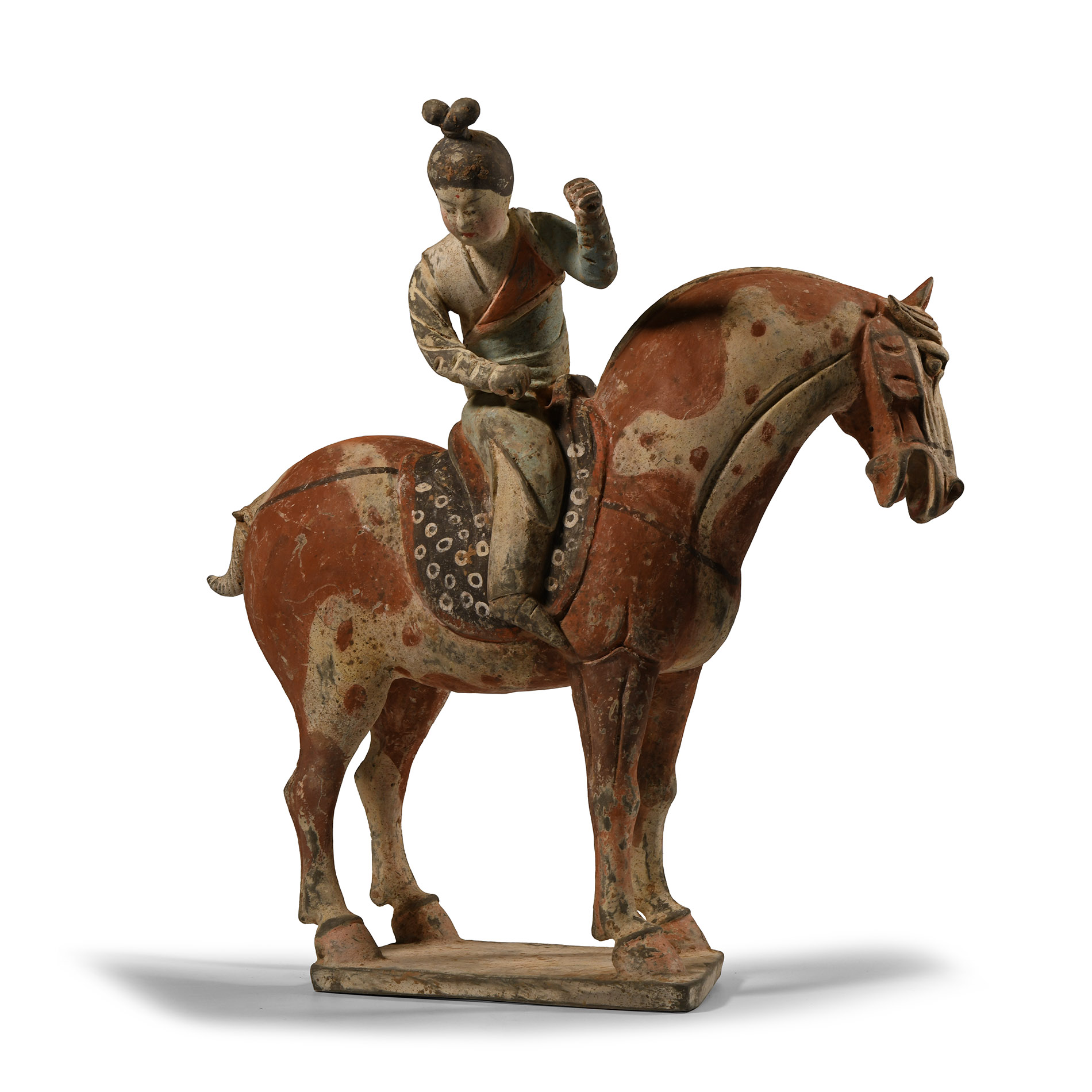
Chinese Tang Terracotta Practising Polo Player
TANG DYNASTY, 618-907 A.D.
17 in. (5.6 kg, 43 cm).
The horse in a static pose with its head turned to the left, the female rider bent at waist with her left arm held high in a swinging pose, the other arm held at waist high for holding the reins; painted annulets to the saddle blanket.
ProvenanceFrom a West Country, UK, collection, 1990s.
Accompanied by a thermoluminescence analysis report no.04C26042024 from Laboratory Kotalla.
TimeLine Auctions follows a vetting process to ensure the authenticity and legality of all items, reinforcing our commitment to integrity and responsible trading. Each antiquity, antique, and coin lot undergoes thorough examination by a vetting committee of at least ten external specialists, professional trade association members, scientists, and archaeologists: Our Vetting Process
AUCTIONS:
TimeLine is a leading auction house specialising in antiquities, ancient art, collectables, natural history, coins, medals, and books. Our auctions offer museums, collectors, historians, and enthusiasts the opportunity to acquire unique and historically significant pieces.
LOT 2257
Chinese Tang Terracotta Practising Polo Player
Estimate £2,000 - 3,000€2,320 - 3,480 (for guidance only)$2,700 - 4,050 (for guidance only)
-
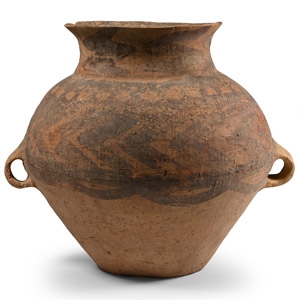
Chinese Neolithic Painted Pottery Jar
3rd-2nd millennium B.C.Sold for (Inc. bp): £130
With piriform body and high shoulder, low neck with everted rim and two loop handles to the shoulder; the upper body with painted chevrons and pellets. 1.8 kg, 23.5 cm
From a West Country, UK, collection, 1990s. -
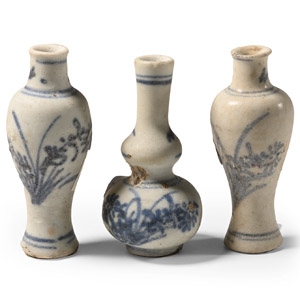
Ca Mau Cargo Shipwreck Glazed Blue and White Miniature Vessel Group
Early 18th century A.D.Sold for (Inc. bp): £124
Comprising three miniature vessels with painted floral decoration. 61 grams total, 60-63 mm
Ex Sotheby's, Amsterdam, 29-31 January 2007. Accompanied by an illustrated information sheet about the Ca Mau shipwreck.
The Ca Mau shipwreck refers to a cargo of Chinese porcelain sunk between 1723 and 1735 off the coast of Vietnam. The wreck was discovered by Vietnamese fishermen in 1998. It is believed the wreck was a merchant’s junk on its way from Canton (Guangzhou) to Batavia when it caught fire and sank. The ship was carrying goods destined for Dutch traders who had limited access to China and its ports. -
.jpg)
Thai Gilt Bronze Deity with Ghouls
19th century A.D.Sold for (Inc. bp): £130
Tiered rectangular base with figures climbing across the surface; central figure of Buddha in paridhana garment standing on a drum-shaped dais with skeletal figures. 1.6 kg, 28.1 cm
From a collection acquired on the UK art market from various auction houses and collections mostly before 2000. From an important Cambridgeshire estate; thence by descent.
