
Loading, please wait...
LOT 2042
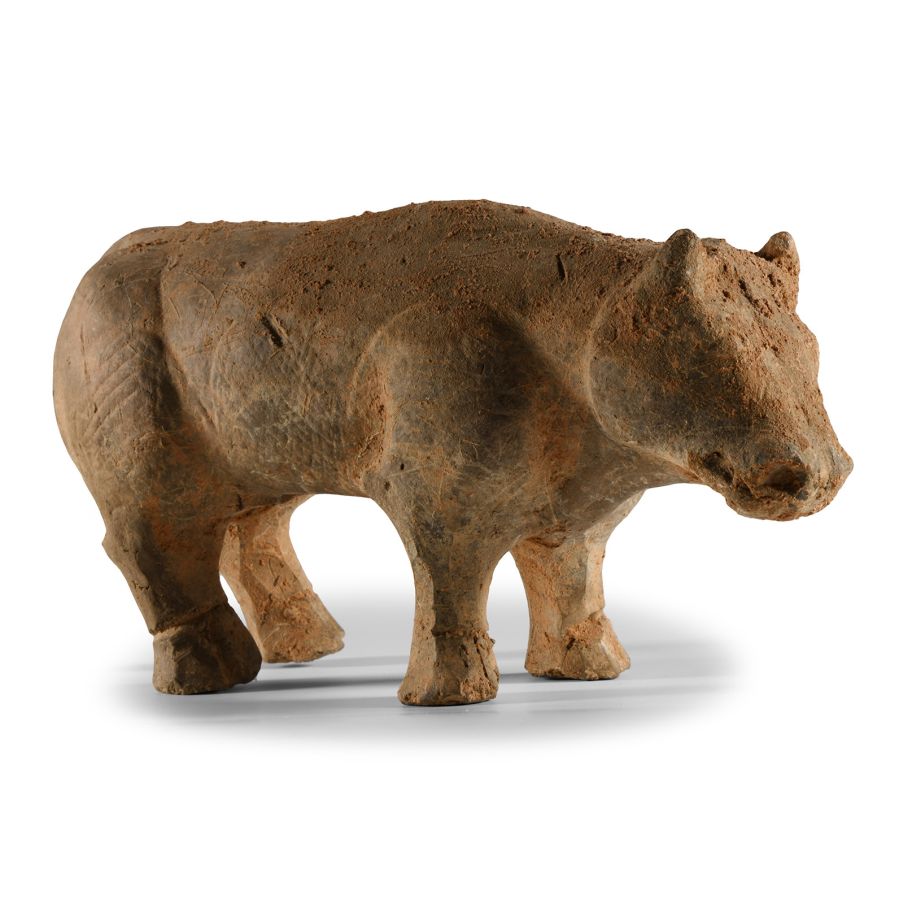
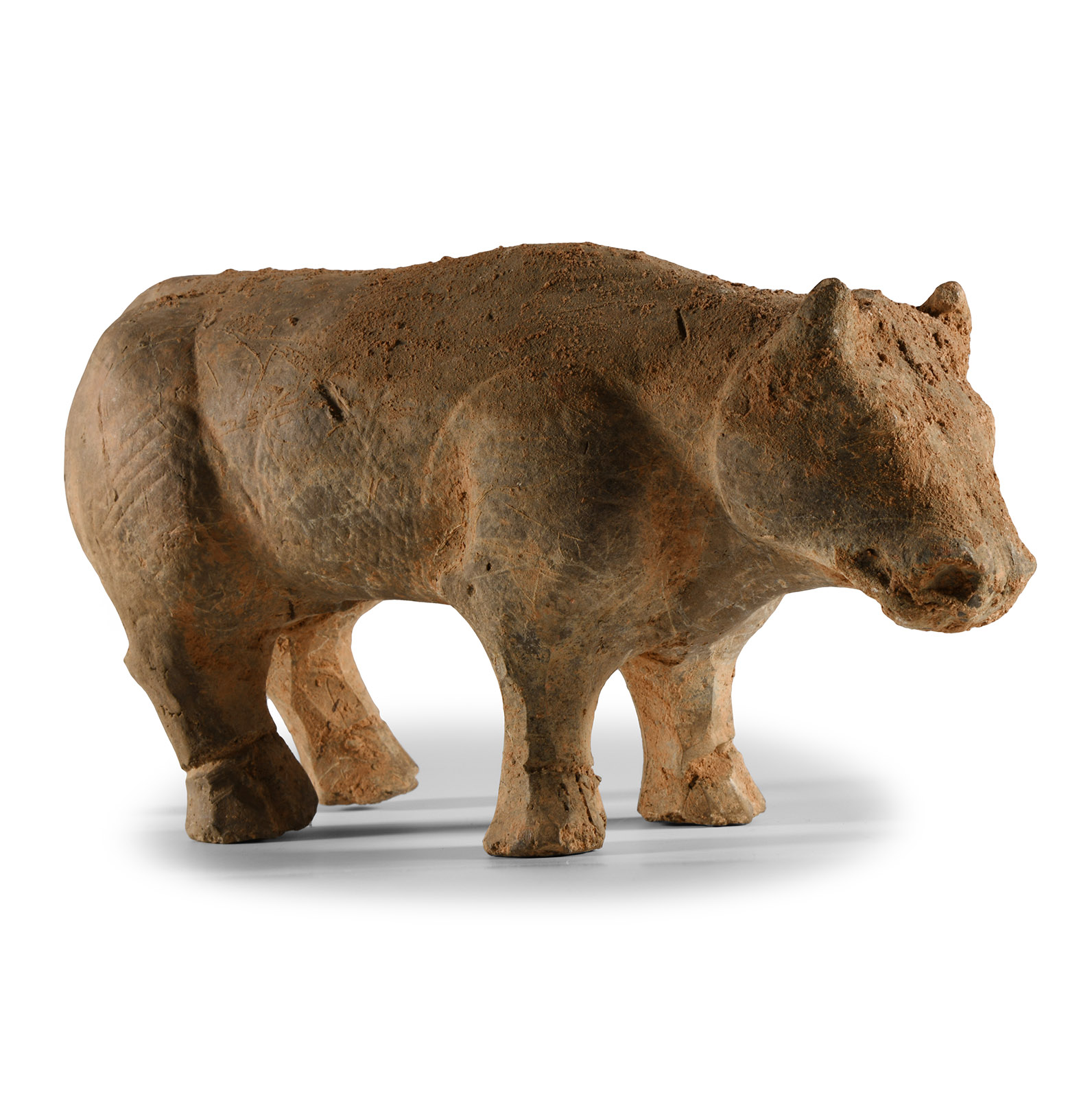
Chinese Tang Terracotta Bull
TANG DYNASTY, 618-907 A.D. OR LATER
8 5/8 in. (980 grams, 22 cm long).
Hollow-formed bull modelled in the round with vent to the underside. [No Reserve]
ProvenanceNorth Yorkshire, UK, collection, 1990s.
CONDITIONTimeLine Auctions follows a vetting process to ensure the authenticity and legality of all items, reinforcing our commitment to integrity and responsible trading. Each antiquity, antique, and coin lot undergoes thorough examination by a vetting committee of at least ten external specialists, professional trade association members, scientists, and archaeologists: Our Vetting Process
AUCTIONS:
TimeLine is a leading auction house specialising in antiquities, ancient art, collectables, natural history, coins, medals, and books. Our auctions offer museums, collectors, historians, and enthusiasts the opportunity to acquire unique and historically significant pieces.
-
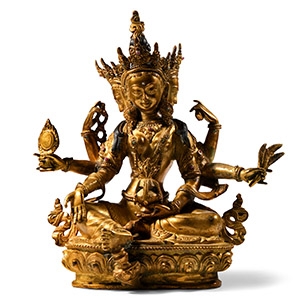
Sino-Tibetan Gilt Bronze Bodhisattva Statue
20th century A.D.Sold for (Inc. bp): £572
Hollow-formed gilt-bronze figure of a bodhisattva with six arms, each holding a symbol, and three radiating faces beneath the crown; resting on a lotus-flower base; upper body festooned with swags of beads and inset with cabochon gemstones. 2.3 kg, 25 cm
Ex North West London, UK, collection, 1990-2000. -
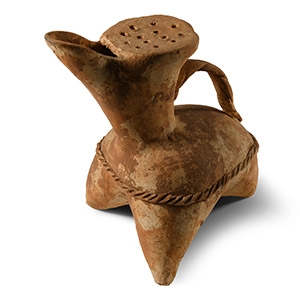
Chinese Neolithic Terracotta Tripod Strainer Vessel
Dawenkou Culture, circa 2800-2400 B.C.Sold for (Inc. bp): £468
Gui with three splayed tapering legs, conical spout with strainer above, applied 'ropework' strap handle and band to the equator. 475 grams, 18 cm high
From a collection acquired on the UK art market from various auction houses and collections mostly before 2000. From an important Cambridgeshire estate; thence by descent. -
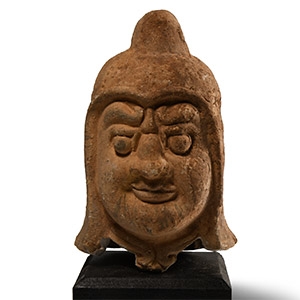
Large Chinese Song Soldier's Head with Helm
Sui Dynasty, circa 590-618 A.D. or laterEstimate: £120 - 170 (+bp*)
Opening Bid: £60
Unglazed model head of a soldier wearing a helmet with dommed crest, segmented bowl and lateral curtain; stylised facial features; hollow-formed, mounted on a custom-made stand. 918 grams total, 20.2 cm high including stand
Ex Hong Kong collection, 1990s.
The headdress of late Sui and early Tang warriors was a black cloth (boutou) drawn over the head and elaborately tied into a sausage-like shape at the rear. For more formal wear this cloth cap, especially the free ends of the knot at the back, would be stiffly starched.
