
Loading, please wait...
LOT 0427
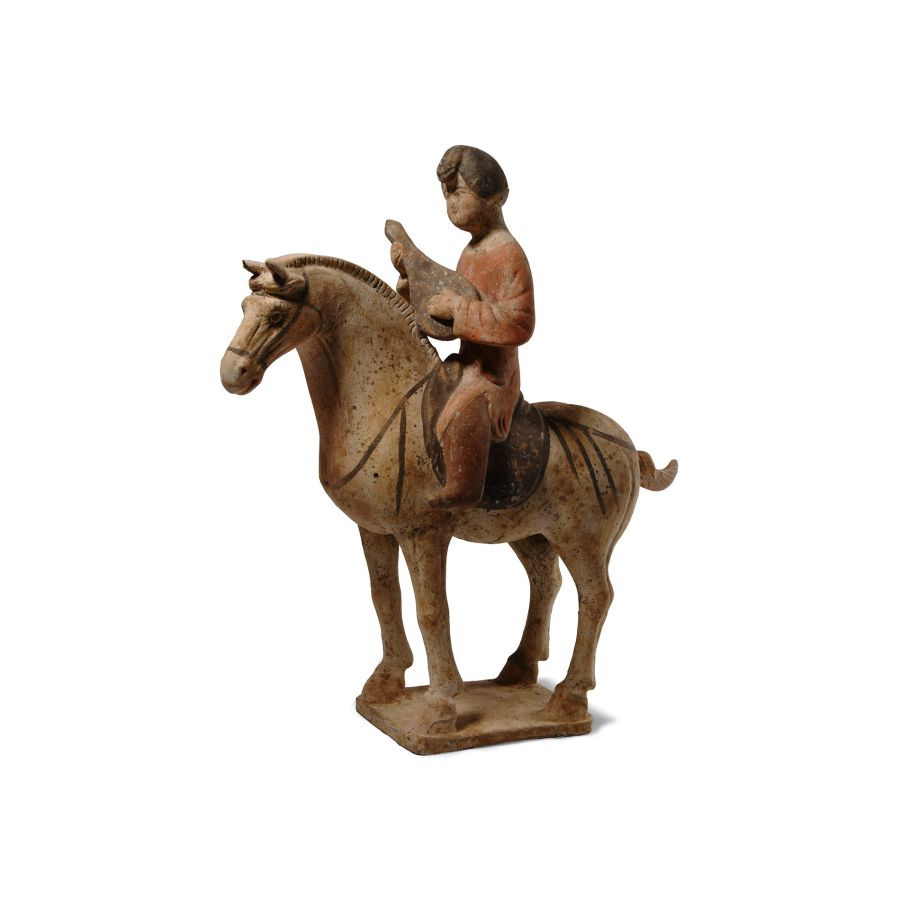
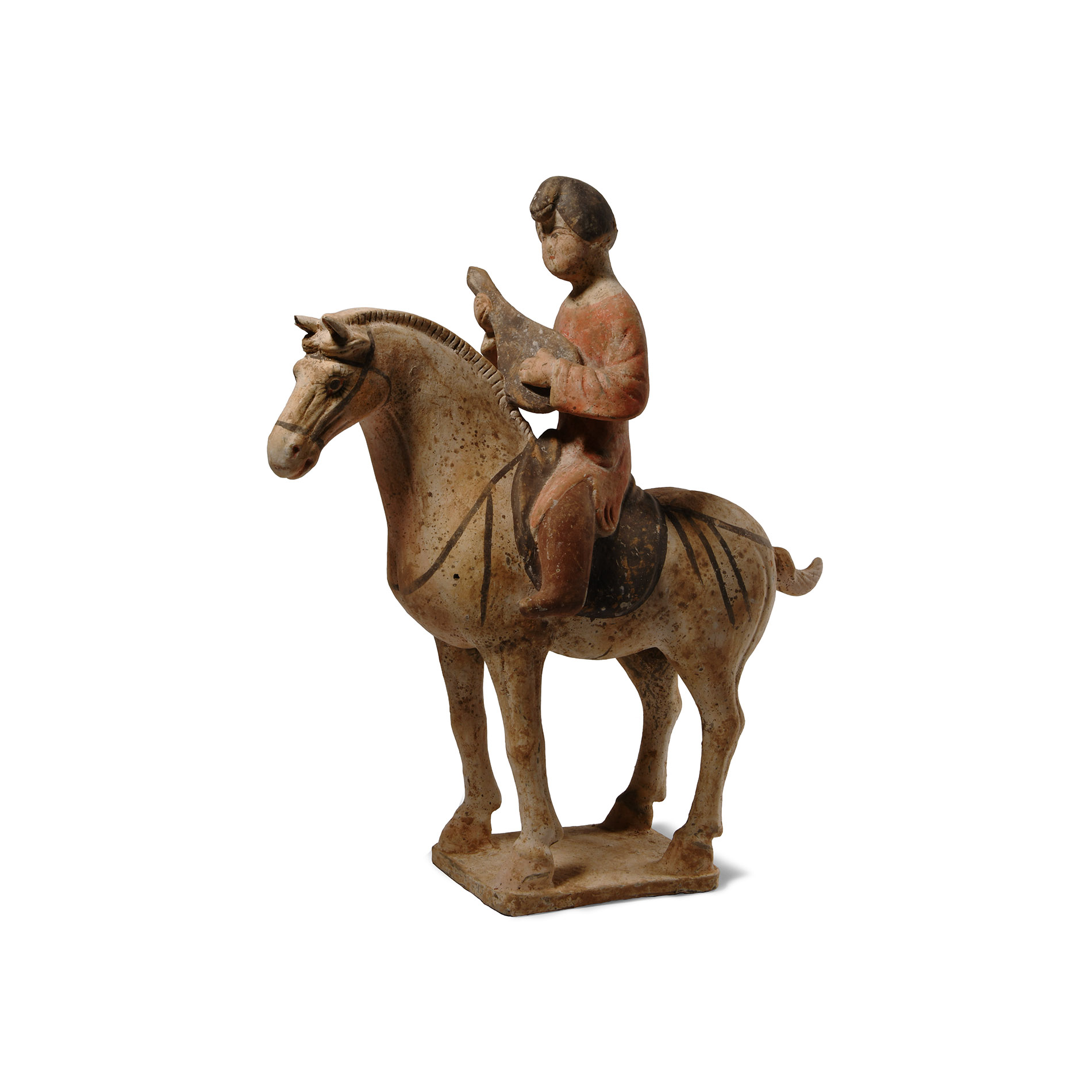
Chinese Tang Ceramic Mounted Musician
TANG DYNASTY, 618-907 A.D.
15 3/8 in. (2.65 kg, 39 cm high).
On a rectangular base; the horse standing with painted harness, bridle and saddle detailing; the integral rider in loose coat and riding boots, wearing a floppy cap and playing a p'i-p'a (Chinese lute).
ProvenanceAcquired 1990s.
West Country, UK, collection.
Accompanied by an original thermoluminescence analysis report no.13CM180321 from Laboratory Kotalla.
This lot has been checked against the Interpol Database of stolen works of art and is accompanied by search certificate no.11366-192805.
TimeLine Auctions follows a vetting process to ensure the authenticity and legality of all items, reinforcing our commitment to integrity and responsible trading. Each antiquity, antique, and coin lot undergoes thorough examination by a vetting committee of at least ten external specialists, professional trade association members, scientists, and archaeologists: Our Vetting Process
AUCTIONS:
TimeLine is a leading auction house specialising in antiquities, ancient art, collectables, natural history, coins, medals, and books. Our auctions offer museums, collectors, historians, and enthusiasts the opportunity to acquire unique and historically significant pieces.
LOT 0427
Chinese Tang Ceramic Mounted Musician
Estimate £4,500 - 6,500€5,220 - 7,540 (for guidance only)$6,080 - 8,780 (for guidance only)
-
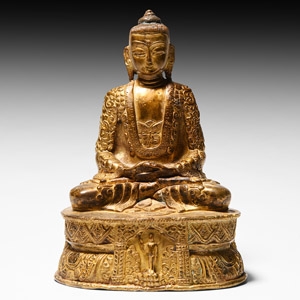
Sino-Tibetan Gilt Bronze Buddha Figure
19th-20th century A.D.Estimate: £300 - 400 (+bp*)
Opening Bid: £167
Sitting cross-legged on a lotus flower dais; both hands placed palm-upwards in the lap; the D-shaped base with a lotus detailing to the outer face and icons of Buddha in various poses, hollow with panel to the underside. 1.9 kg, 17 cm high
Fine condition.
Acquired 1970s-2000s. From a Japanese collection of Buddhist art. -
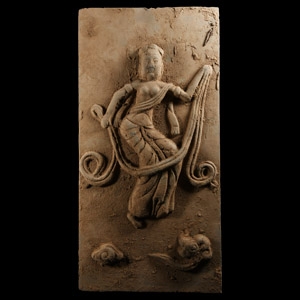
Chinese Song Ceramic Tile
Song Dynasty, 960-1279 A.D.Estimate: £120 - 170 (+bp*)
Opening Bid: £60
Rectangular panel, high-relief dancing girl in active pose with scrolled veil and vegetation. 3.4 kg, 37.5 cm wide
Ex Cotswold, UK, collection, 1970-1990. -
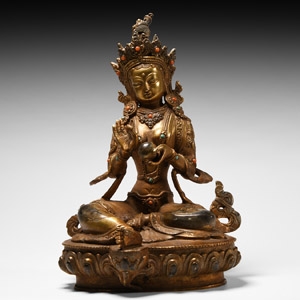
Sino-Tibetan Gilt Bronze Arya Tara Figure
19th-early 20th century A.D.Estimate: £300 - 400 (+bp*)
Opening Bid: £167
Hollow-formed, sitting on a lotus-flower dais, holding a sphere in her left hand; inset turquoise and carnelian cabochons; with faux Chinese six character Yongle reign mark to back. 1.2 kg, 22 cm high
Acquired 1980-2015. Ex Abelita family collection.
