
Loading, please wait...
_900x900.jpg "Chinese Tang Ceramic Horse with Musician")
_200x200.jpg "Chinese Tang Ceramic Horse with Musician")
.jpg "Chinese Tang Ceramic Horse with Musician")
LOT 2174
Chinese Tang Ceramic Horse with Musician
TANG DYNASTY, 618-907 A.D.
15 1/8 in. (2.7 kg, 38.5 cm high).
Modelled standing with mounted rider playing a drum, the horse with semi-naturalistic anatomical detailing, cropped mane, dressed tail, saddle and decorative saddle cloth; extensive remains of painted pigmentation; standing on an integral rectangular base; repaired.
ProvenanceAcquired 1990s.
West Country, UK, collection.
This lot has been checked against the Interpol Database of stolen works of art and is accompanied by search certificate no.11359-192667.
Cf. The British Museum, museum number 1938,0524.114, for similar horses modelled in different poses.
CONDITIONTimeLine Auctions follows a vetting process to ensure the authenticity and legality of all items, reinforcing our commitment to integrity and responsible trading. Each antiquity, antique, and coin lot undergoes thorough examination by a vetting committee of at least ten external specialists, professional trade association members, scientists, and archaeologists: Our Vetting Process
AUCTIONS:
TimeLine is a leading auction house specialising in antiquities, ancient art, collectables, natural history, coins, medals, and books. Our auctions offer museums, collectors, historians, and enthusiasts the opportunity to acquire unique and historically significant pieces.
LOT 2174
Chinese Tang Ceramic Horse with Musician
Estimate £1,800 - 2,400€2,090 - 2,780 (for guidance only)$2,430 - 3,240 (for guidance only)
-
.jpg)
Chinese Tang Terracotta Courtly Lady
Tang Dynasty, 618-907 A.D.Estimate: £2,000 - 3,000 (+bp*)
Opening Bid: £1,111
Modelled standing facing in a floor-length courtly dress featuring a hand fan and floral print, hands held within voluminous sleeves at her chest, presenting a small lidded box; remains of polychrome pigmentation. 2.6 kg, 40 cm high
Acquired 1990s. West Country, UK, collection. Accompanied by an original thermoluminescence analysis report no.CJ142522022 from Laboratory Kotalla. This lot has been checked against the Interpol Database of stolen works of art and is accompanied by search certificate no.11370-192729. -
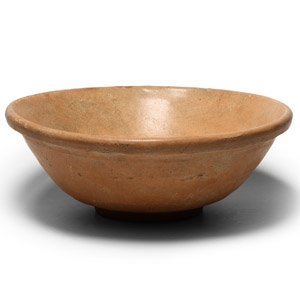
Chinese Tang Glazed Ceramic Bowl
Tang Dynasty, 618-907 A.D. or laterSold for (Inc. bp): £39
Formed with a gently tapering convex side wall, everted rim and ring foot. 512 grams, 17 cm wide
From a late Japanese specialist collector, 1970-2000s. -
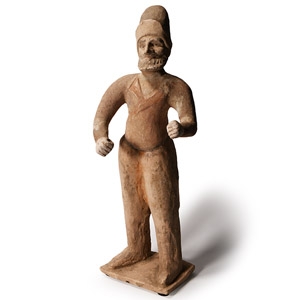
Chinese Tang Terracotta Foreign Groom
Tang Dynasty, 618-907 A.D.Estimate: £500 - 700 (+bp*)
Opening Bid: £250
Wearing a cross-over horseman's jacket, tight trousers and a tall cap with a wide upturned brim; Iranian bearded facial features; repaired. 3 kg, 48.5 cm high
head and arm repaired.
Ex Cotswold, UK, collection, 1970-1990.
