
Loading, please wait...
LOT 2029
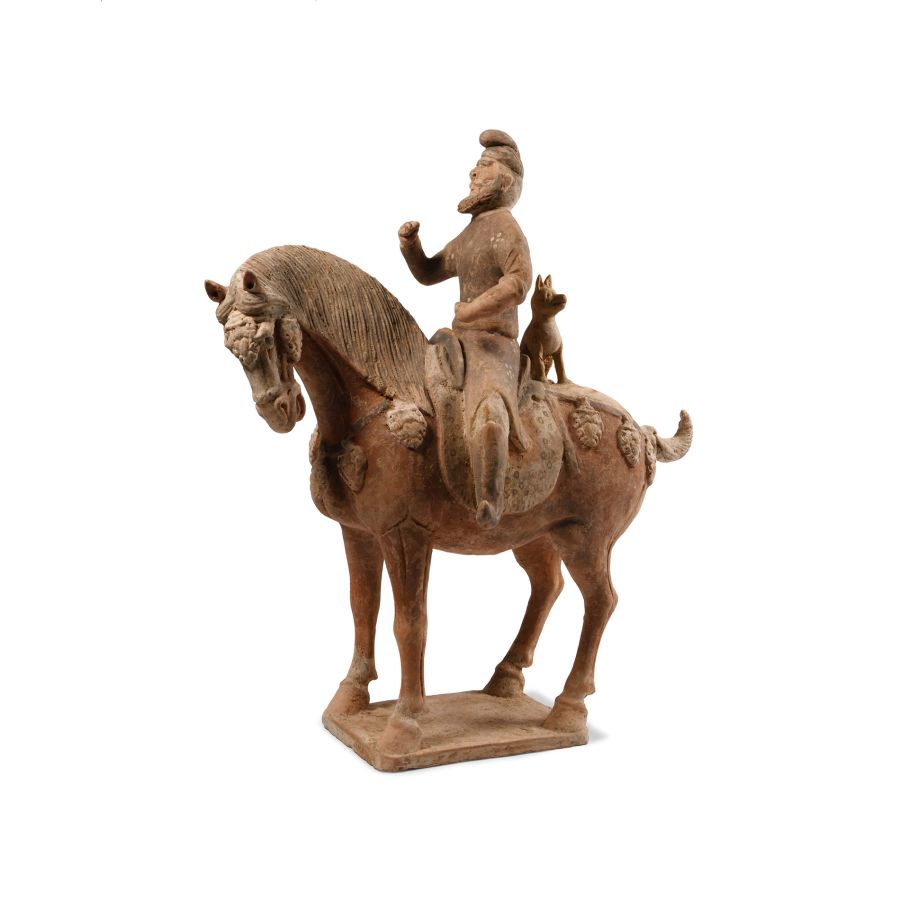
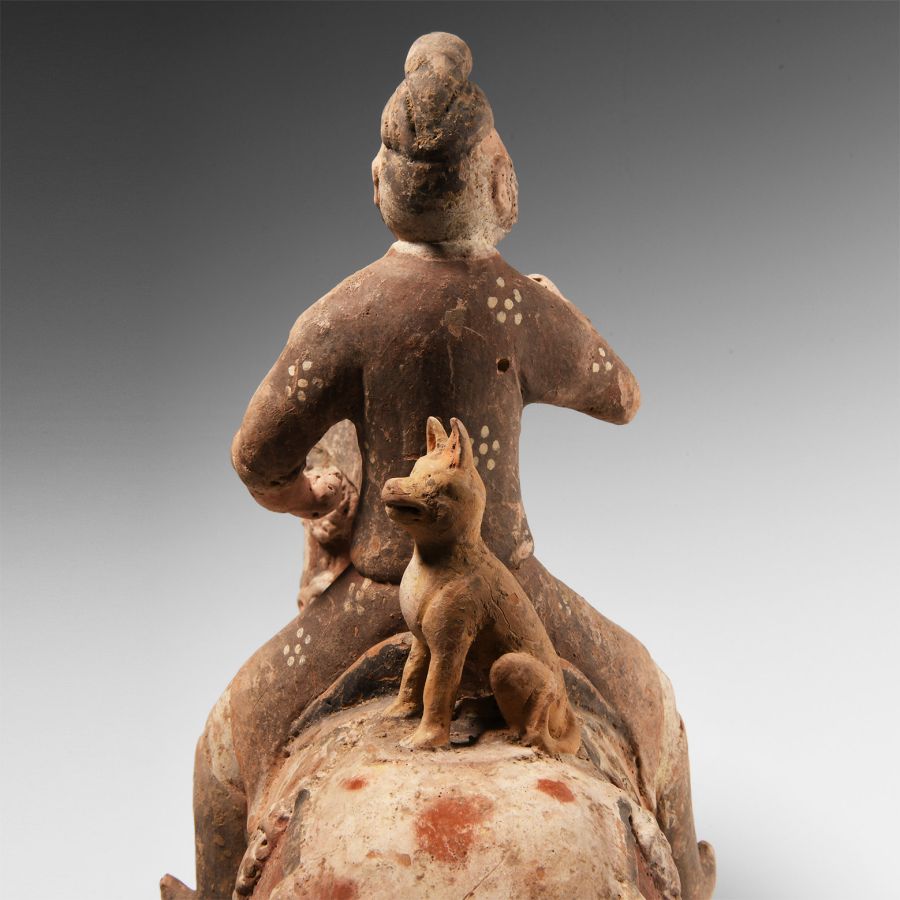
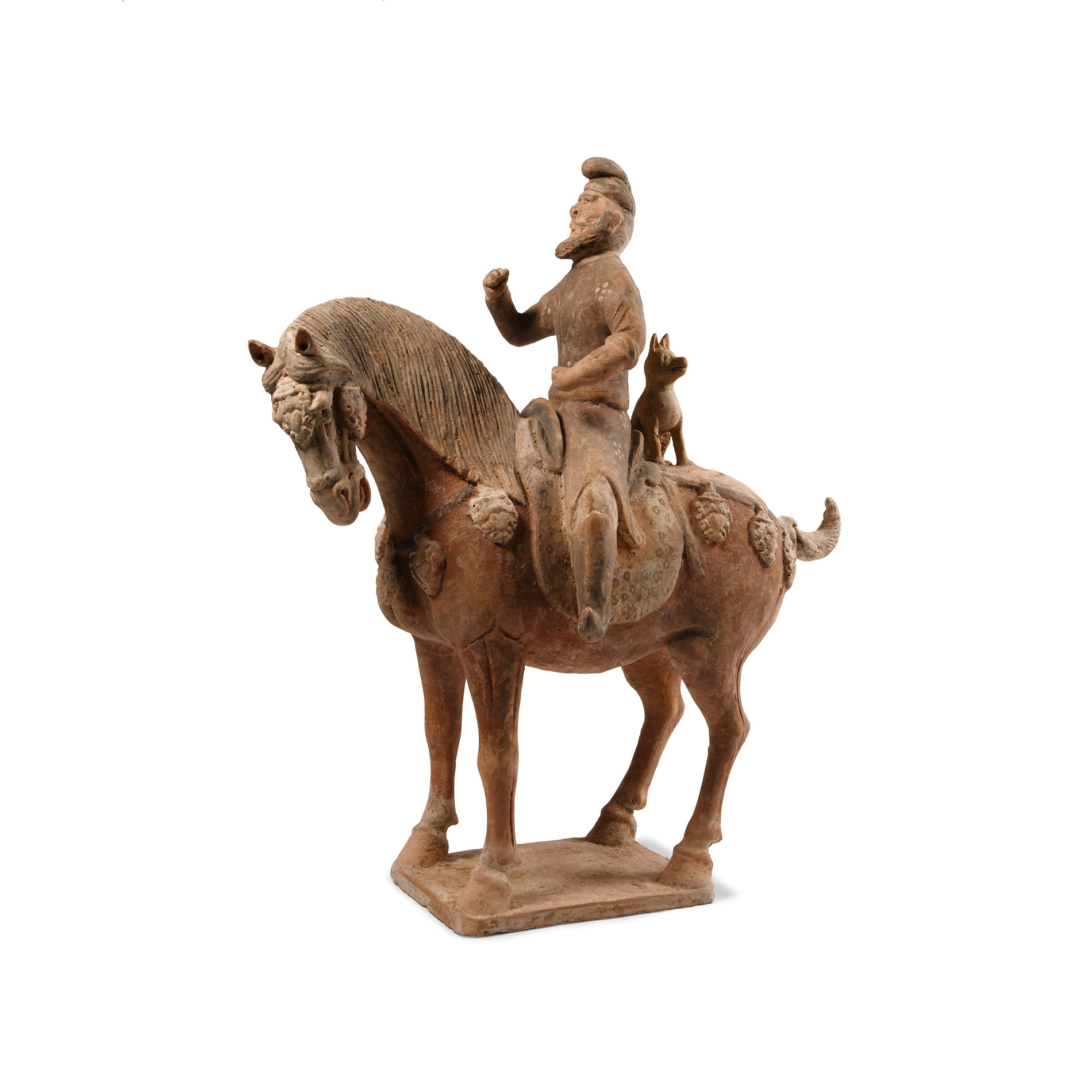
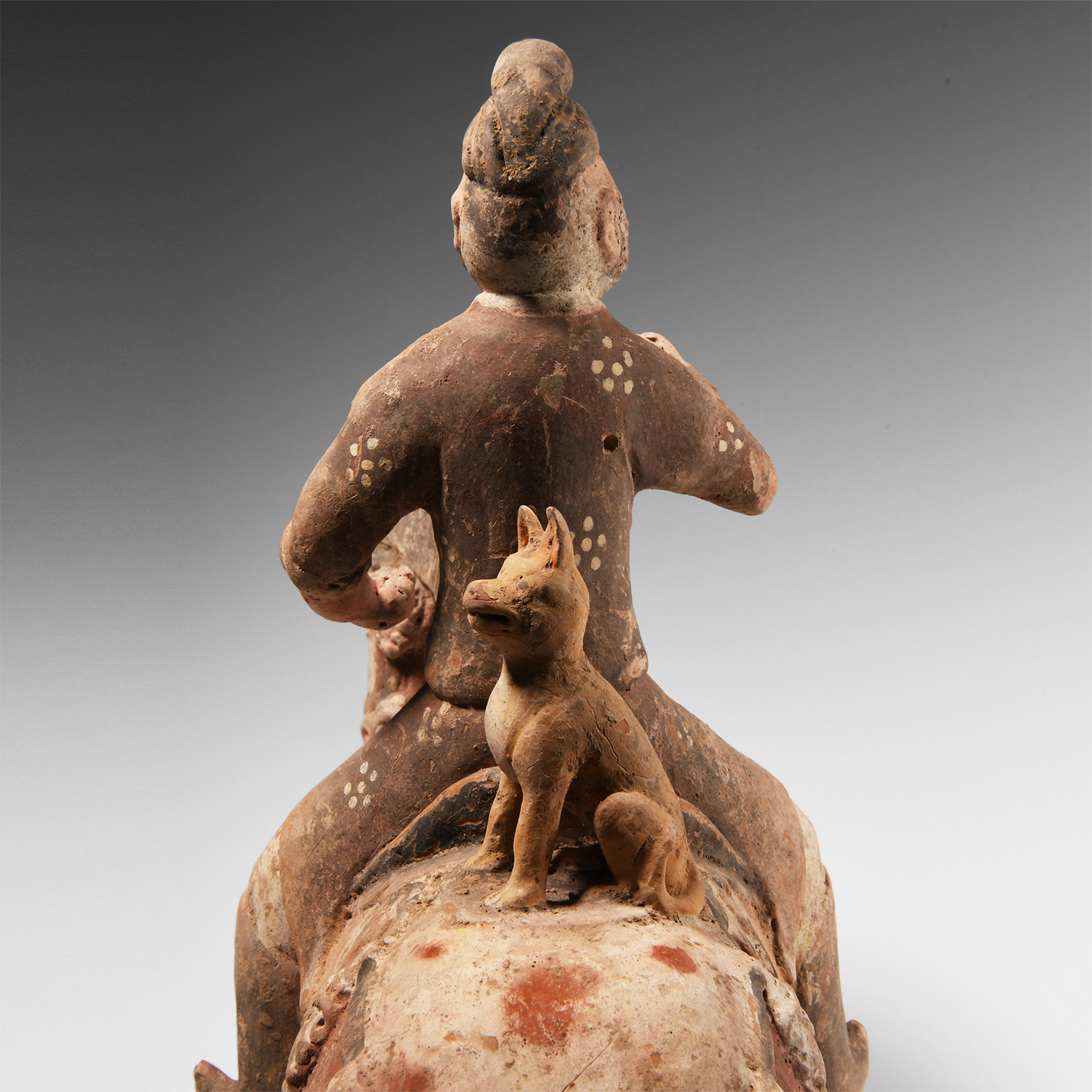
Chinese Tang Ceramic Horse and Rider with Dog
TANG DYNASTY, 618-907 A.D.
16 1/2 in. (3.9 kg, 42 cm high).
Modelled in the round standing on a rectangular base, the animal's head bowed down and turned slightly left, shown with a long and immaculately-kept mane, short dressed tail, saddle cloth decorated with an 'animal skin' pattern and a harness adorned with pendants; the male rider seated in the saddle wearing a knee-length robe and riding boots, his arms positioned to hold reins (absent), a domestic dog perched on a covering behind him; semi-naturalistic anatomical detailing to both figures, the rider shown with a full beard and moustache, wearing a cap.
ProvenanceAcquired 1980s-1990s.
Ex West Country collection.
Accompanied by an original thermoluminescence analysis report no. C122f84 from Oxford Authentication.
This lot has been checked against the Interpol Database of stolen works of art and is accompanied by search certificate number no.11702-199228.
Cf. The Metropolitan Museum, accession number 991.253.7a, b, for a broadly comparable figure.
CONDITIONTimeLine Auctions follows a vetting process to ensure the authenticity and legality of all items, reinforcing our commitment to integrity and responsible trading. Each antiquity, antique, and coin lot undergoes thorough examination by a vetting committee of at least ten external specialists, professional trade association members, scientists, and archaeologists: Our Vetting Process
AUCTIONS:
TimeLine is a leading auction house specialising in antiquities, ancient art, collectables, natural history, coins, medals, and books. Our auctions offer museums, collectors, historians, and enthusiasts the opportunity to acquire unique and historically significant pieces.
-
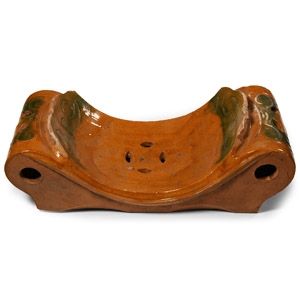
Chinese Ming Sancai Glazed Terracotta Pillow
Ming Dynasty, 1368-1644 A.D. or laterSold for (Inc. bp): £156
With green floral motifs; hollow-formed with decorative piercings complementing the main design. 2.45 kg, 36 cm
Ex West Country, UK, collection, 1980-1990s. -
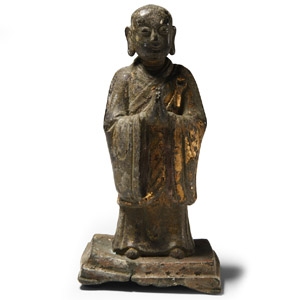
Chinese Gilt Bronze Praying Buddha Statue
Circa 19th century A.D. or earlier.Sold for (Inc. bp): £715
Modelled in the round hollow-formed figure of Buddha standing erect in floor-length robe on a tiered base, the hands pressed together in prayer. 767 grams, 18.3 cm
From a collection acquired on the UK art market from various auction houses and collections mostly before 2000. From an important Cambridgeshire estate; thence by descent. -
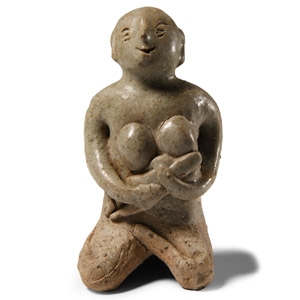
Si Satchanalai Thai Green-Glazed Mother and Child Figurine
16th century A.D.Sold for (Inc. bp): £13
Modelled in the round with celadon glaze, a nursing mother kneeling and naked with suckling child held to the left breast, the hair drawn back into a topknot, impressed eyes and mouth. 135 grams, 92 mm
Acquired on the UK art market from various auction houses and collections mostly before 2000. From an important Cambridgeshire estate; thence by descent.
The Si Satchanalai figurines were one of the ceramic products produced by Si Satchanalai kilns located in the present-day area of Si Satchanalai district, Sukhothai province in the upper part of central Thailand. The characteristic features related to maternity and parenthood were represented in figurines of pregnant females and of couples (mother and father) with a baby.
