
Loading, please wait...
LOT 2032
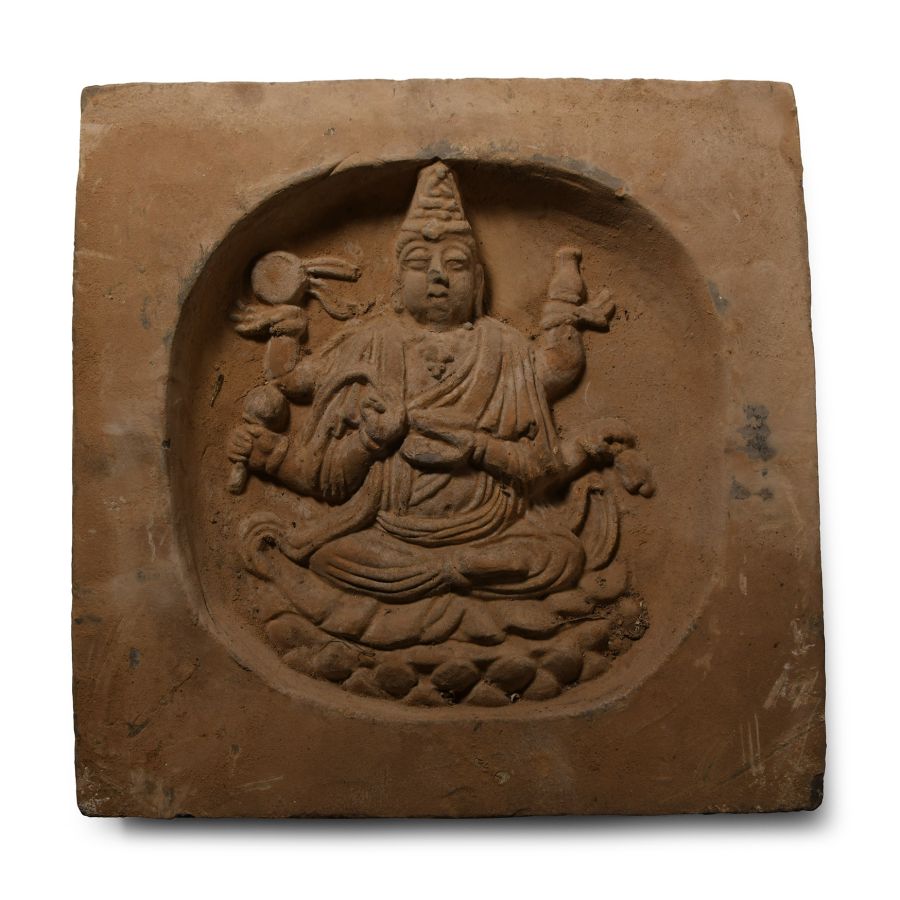
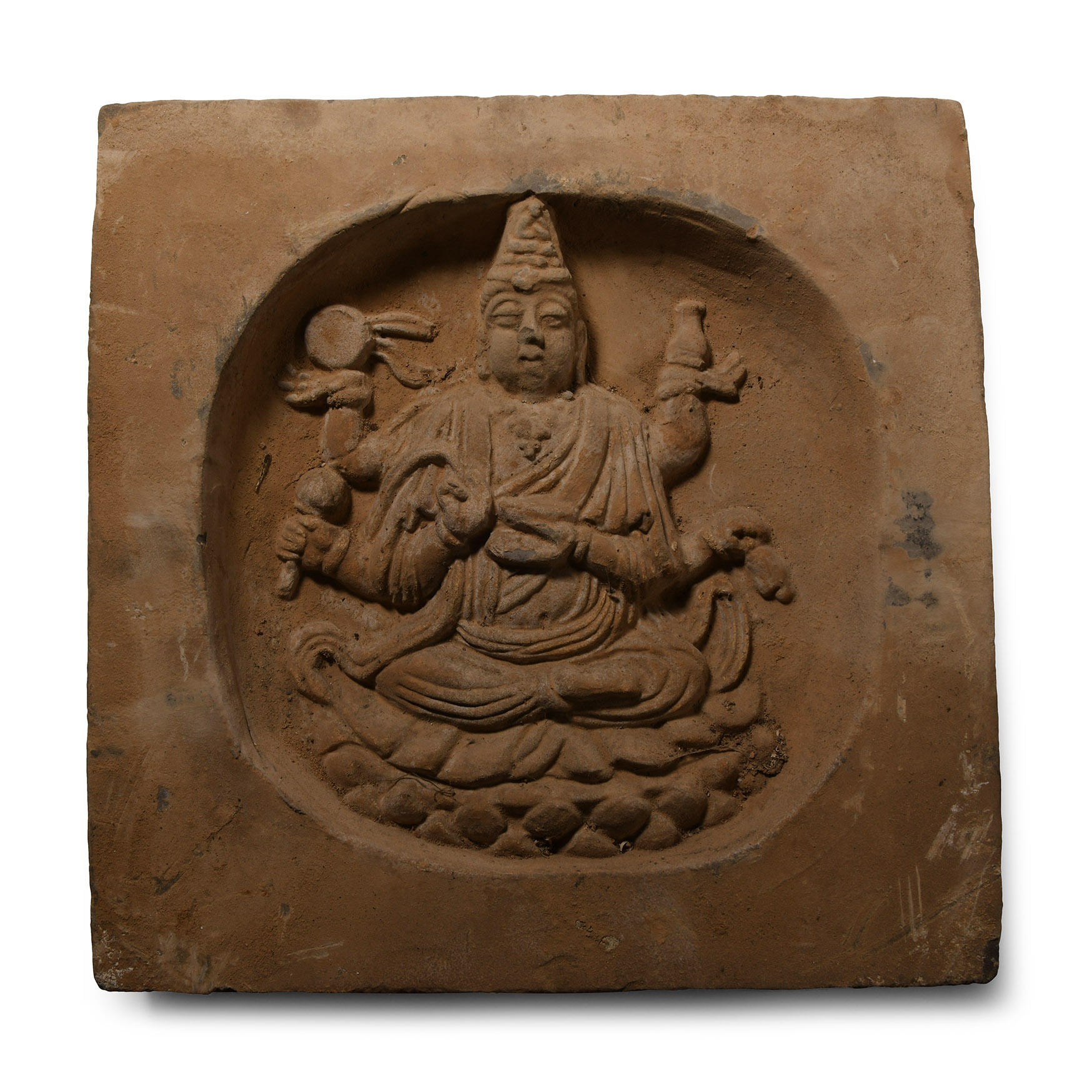
Chinese Song Tile with Buddha
SONG DYNASTY, 960-1279 A.D. OR LATER
11 1/4 in. (4.7 kg, 28.5 cm).
Square in plan with recessed bowl, figure modelled in the half-round of Buddha sitting on a raised throne with various attributes in his six hands.
ProvenanceEx West Country, UK, collection, 1980-1990s.
CONDITIONTimeLine Auctions follows a vetting process to ensure the authenticity and legality of all items, reinforcing our commitment to integrity and responsible trading. Each antiquity, antique, and coin lot undergoes thorough examination by a vetting committee of at least ten external specialists, professional trade association members, scientists, and archaeologists: Our Vetting Process
AUCTIONS:
TimeLine is a leading auction house specialising in antiquities, ancient art, collectables, natural history, coins, medals, and books. Our auctions offer museums, collectors, historians, and enthusiasts the opportunity to acquire unique and historically significant pieces.
LOT 2032
Chinese Song Tile with Buddha
Estimate £100 - 140€120 - 160 (for guidance only)$140 - 190 (for guidance only)
-
.jpg)
Pair of Large Chinese Tang Terracotta Musicians
Tang Dynasty, 618-907 A.D.Sold for (Inc. bp): £3,380
Two mounted musicians comprising: the horse standing on a rectangular base with painted harness, bridle and saddle detailing; the integral rider in loose coat and riding boots, wearing a floppy cap and playing a p'i-p'a (Chinese lute); the other similar, playing a ling-gu tambour held in the left hand. 5.35 kg total, 38.5 cm high each
Acquired 1990s. West Country, UK, collection. Accompanied by a copy of a thermoluminescence analysis report no.13CM180321 from Laboratory Kotalla for one of the figures. This lot has been checked against the Interpol Database of stolen works of art and is accompanied by search certificate no.11990-209554. -
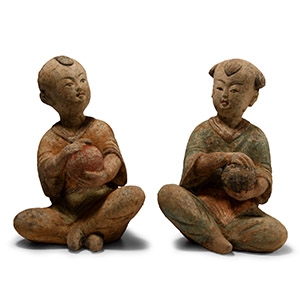
Chinese Wei Terracotta Seated Children Pair
Northern Wei, 386-534 A.D. or laterSold for (Inc. bp): £1,105
Each modelled in the round in squatting pose wearing loose-fitting robes, with shaven head and forelock; holding a ball; much pigment remaining; hollow to the underside. 1.56 kg total, 16.5-17 cm
Ex West Country, UK, collection, 1980-1990s. Accompanied by an indeterminate thermoluminescence analysis report no.C124d52 for one of the figures from Oxford Authentication. -
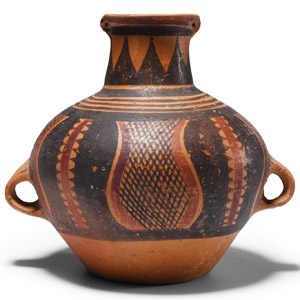
Chinese Neolithic Painted Miniature Jar
Yangshao Culture, circa 4th-3rd millennium B.P.Sold for (Inc. bp): £650
Squat in profile with lateral loop handles below the equator, broad shoulder, tubular neck with rounded rim; painted ornament including reserved vandykes to the neck, concentric rings, tongue-shaped hatched panels. 316 grams, 15.2 cm wide
From a collection acquired on the UK art market from various auction houses and collections mostly before 2000. From an important Cambridgeshire estate; thence by descent.
