Loading, please wait...

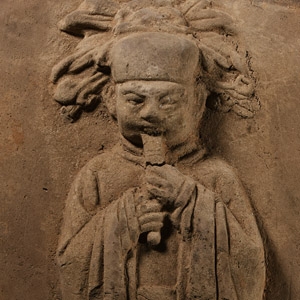
Chinese Song Terracotta Tile with Philosopher Chinese Song Terracotta Tile with Philosopher Chinese Song Terracotta Tile with Philosopher
Use mousewheel to zoom in and out, click to enlarge
Details

LOT 2081

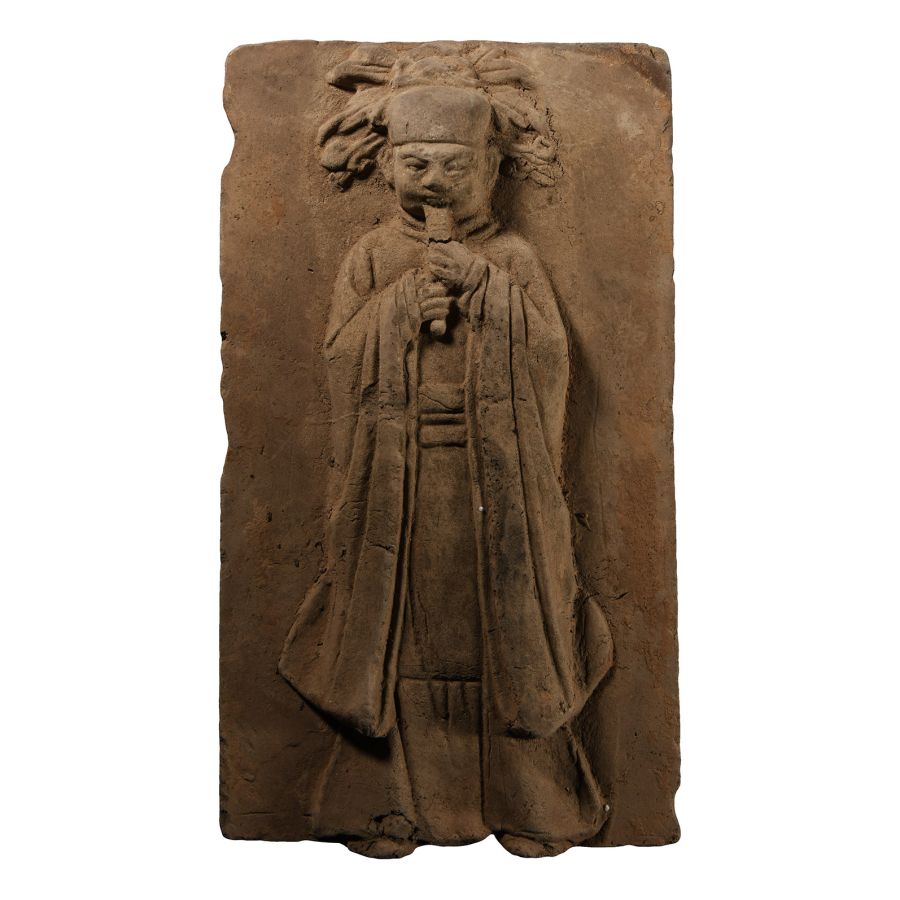
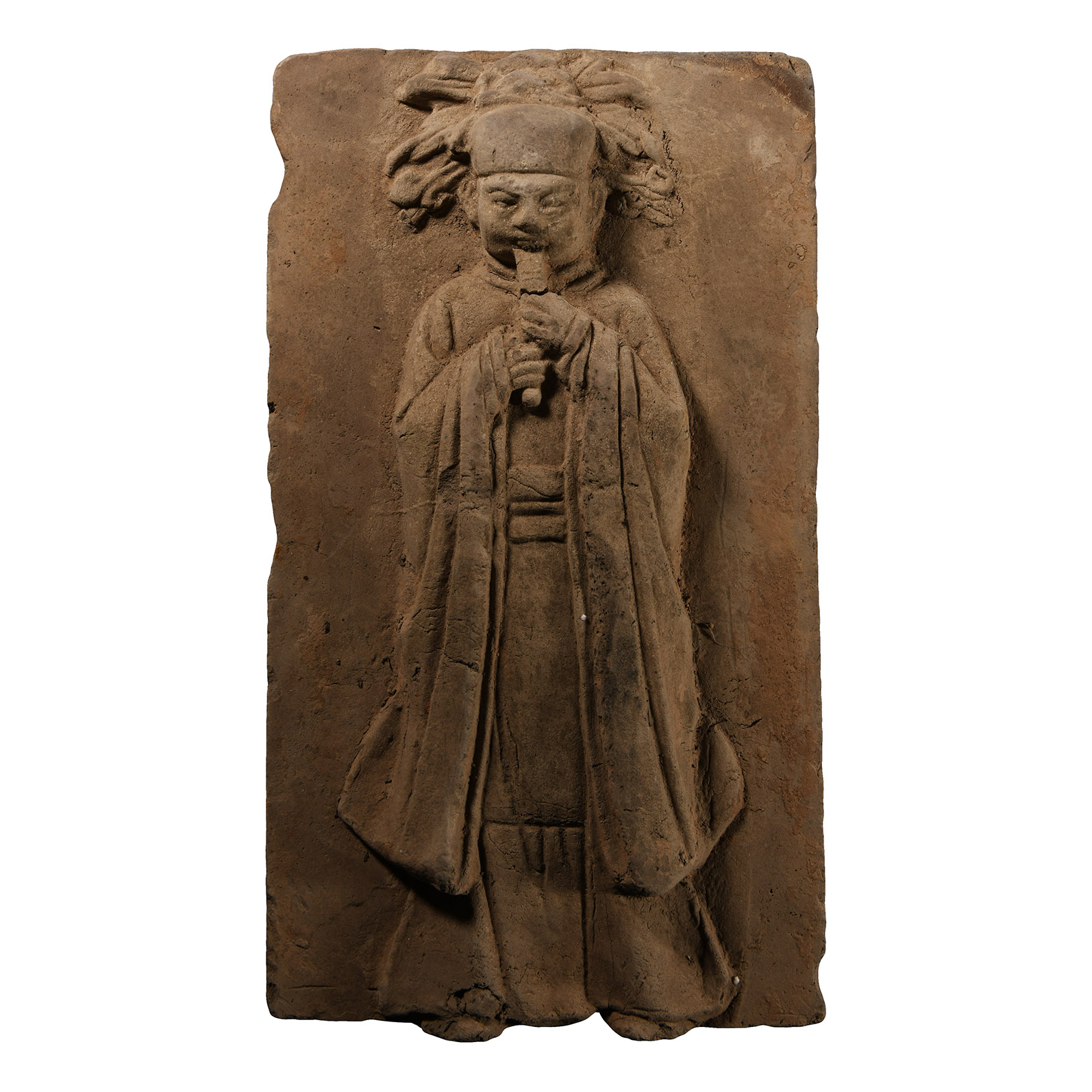
Chinese Song Terracotta Tile with Philosopher

SONG DYNASTY, CIRCA 960-1279 A.D.

12 5/8 x 7 in. (3.4 kg, 32 x 18 cm).

With high-relief image modelled in the half-round, standing figure in long robe and impressive headgear, clutching his beard to his chest.

Provenance

Ex Cotswold collection, UK, 1990s.

CONDITION
VETTING:

TimeLine Auctions follows a vetting process to ensure the authenticity and legality of all items, reinforcing our commitment to integrity and responsible trading. Each antiquity, antique, and coin lot undergoes thorough examination by a vetting committee of at least ten external specialists, professional trade association members, scientists, and archaeologists: Our Vetting Process


AUCTIONS:

TimeLine is a leading auction house specialising in antiquities, ancient art, collectables, natural history, coins, medals, and books. Our auctions offer museums, collectors, historians, and enthusiasts the opportunity to acquire unique and historically significant pieces.

LOT 2081

Chinese Song Terracotta Tile with Philosopher

Sold for (Inc. bp): £208

Print page

RELATED LOTS
  • Sino-Tibetan Gilt Arya Tara Figure
    Sino-Tibetan Gilt Arya Tara Figure
    19th-early 20th century A.D.

    Sold for (Inc. bp): £1,300

    Hollow-formed, sitting cross-legged flanked by uptala flowers, hands held in the mudra of instruction; black pigment to the hair and inset ruby-coloured gemstones to the headdress. 1.29 kg, 22 cm high


    Acquired 1980-2015. Ex Abelita family collection.

    Lot Details

  • Chinese Ming Terracotta Attendant on Horseback
    Chinese Ming Terracotta Attendant on Horseback
    Ming Dynasty, 1368-1644 A.D. or later

    Sold for (Inc. bp): £325

    Modelled on a rectangular base, the horse standing in harness and with a long saddlecloth; the rider modelled seated in the saddle, arms held before the body, holding cymbals. 1.65 kg, 30.5 cm high


    Ex North Yorkshire, UK, collection, 1990s.

    The finest of ceramic figures during the Ming Dynasty have a simplicity and compactness of modelling that makes them extremely impressive. Far greater freedom of movement was possible in ceramic sculpture, which now lent an air of gaiety and splendour already glittering with yellow, blue, and green tiles. Boldly conceived figures of men and horses in green-and-brown-glazed terracotta (liu-li) are splendid examples of the confident manner in which Ming craftsmen revived and transformed the style of the Tang Dynasty. These attendants on horseback are excellent examples of Ming Dynasty tomb pottery. The glazed sculptures were placed in burial chambers in order to flaunt social status, wealth, and power.

    Lot Details

  • Chinese Han Gilded Bronze Sword Pommel with Jade
    Chinese Han Gilded Bronze Sword Pommel with Jade
    Han Dynasty, 2nd century B.C.-1st century A.D.

    Sold for (Inc. bp): £9,100

    Comprising a discoid body and cylindrical socket pierced twice for attachment (one piercing occluded); a circumferential zoomorphic frieze in high-relief to the exterior, displaying a procession of vegetal forms alternating with real and mythical creatures, each with stylised anatomical detailing: a monkey; a fenghuang; a leopard (or other feline); a tiger; set with a moonstone-quality khotain jade roundel, carved in high-relief with two sinuous fantastical beasts, swirling clouds in the field; minor restoration. 387 grams, 76 mm

    Some restoration, very good condition.

    Acquired from Dandelion Fine Arts, Hollywood Road, Hong Kong, 1970s. Ex Prof. David Anderson collection. UK private collection, circa 2010. Accompanied by a copy of metallurgic analytical results, written by metallurgist Dr Peter Northover (ex Department of Materials, Materials Science-Based Archaeology Group & Department of Materials, University of Oxford). Accompanied by an academic report by Dr Raffaele D'Amato. This lot has been checked against the Interpol Database of stolen works of art and is accompanied by search certificate number no.12036-211774.

    The Khotain jade was the best 'moonstone' quality used for gilded-bronzes, and came from the White Jade River, available after the signature of a military treaty in about 69BC to 101AD. This object is believed to have been produced for a notable client, likely even for a royal given the item's similarity to a finial excavated from the tomb of a Prince of Zhongshan.

    Lot Details

Stay up-to-date with the latest from TimeLine Auctions by joining our mailing list