
Loading, please wait...
LOT 1399
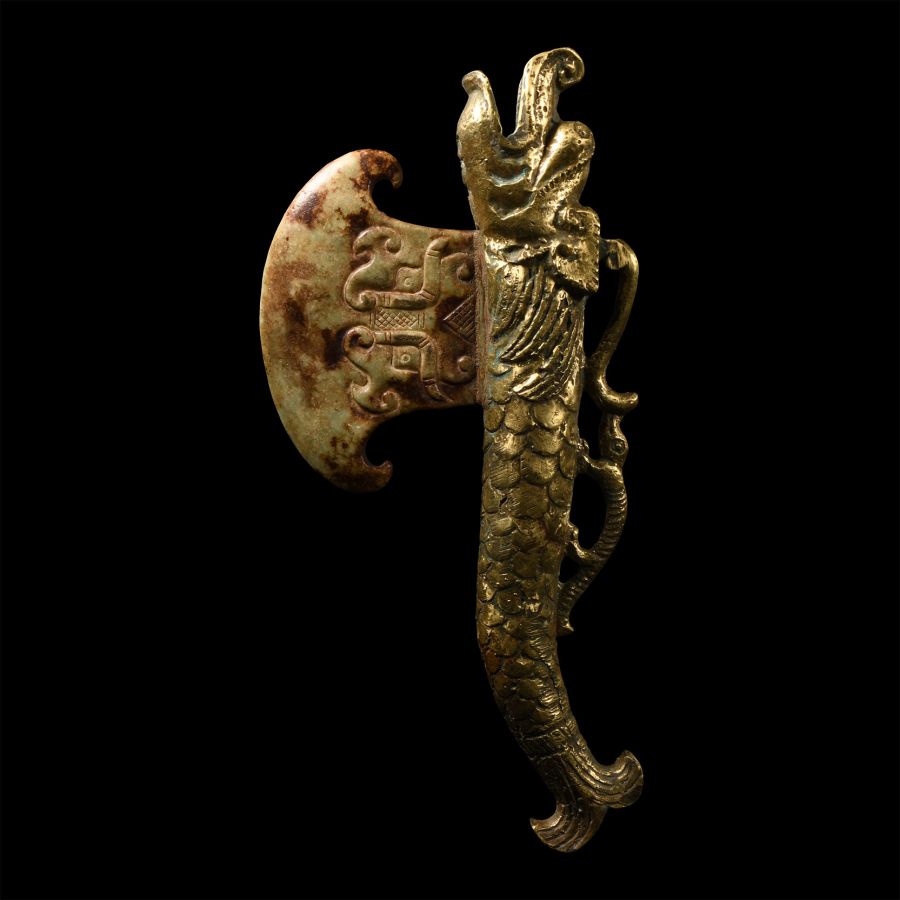
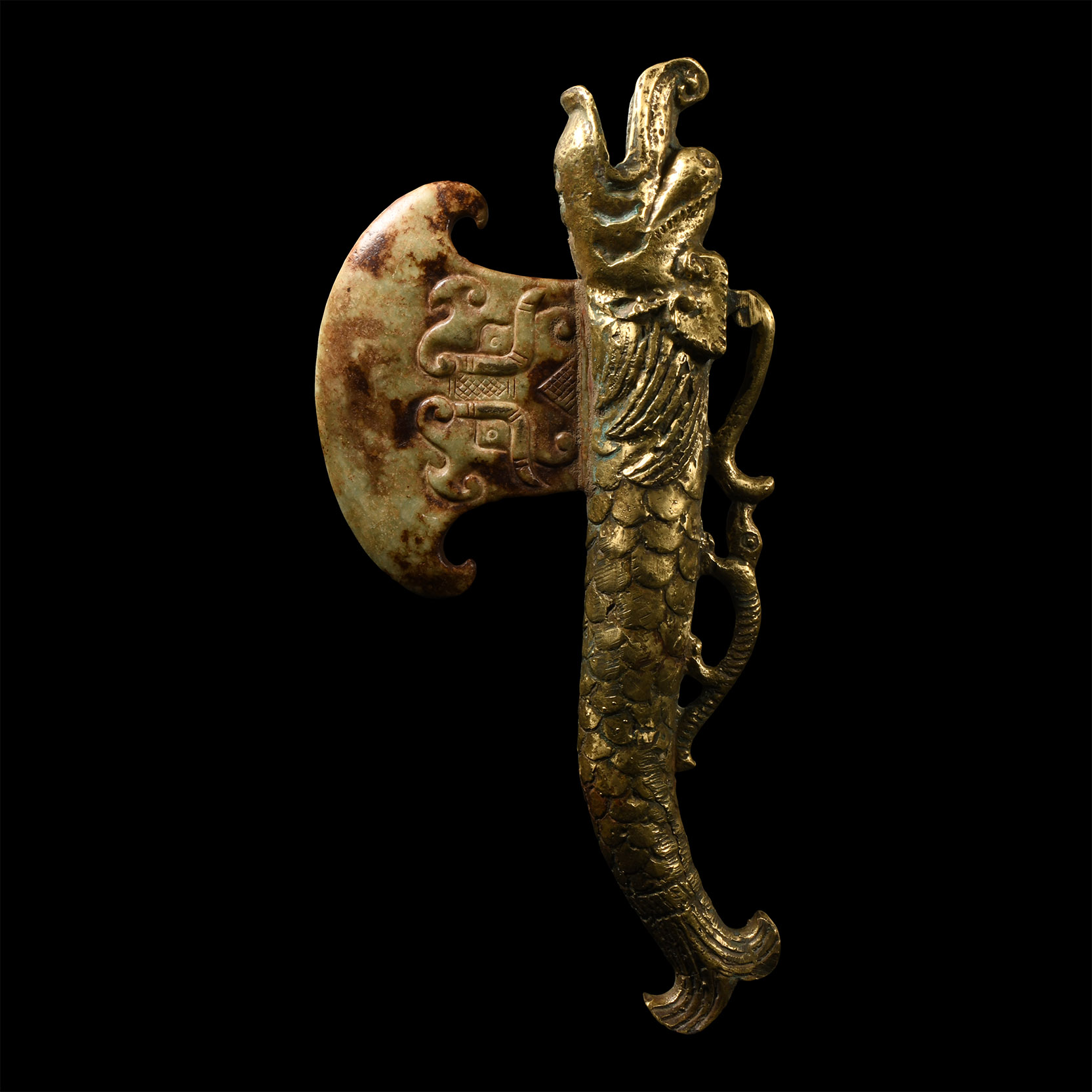
Chinese Serpentine and Gilt Bronze Ceremonial Axe
QING DYNASTY, 19TH-EARLY 20TH CENTURY A.D.
9 1/4 in. (513 grams, 23.5 cm).
Comprising a serpentine pelta-shaped blade with taotie motif, bronze socket formed as a stylised fish with a lizard on its back, open mouth to accept the staff; in archaic style. [No Reserve]
ProvenanceAcquired UK, in the 1980s.
Property of a retired South West London doctor
TimeLine Auctions follows a vetting process to ensure the authenticity and legality of all items, reinforcing our commitment to integrity and responsible trading. Each antiquity, antique, and coin lot undergoes thorough examination by a vetting committee of at least ten external specialists, professional trade association members, scientists, and archaeologists: Our Vetting Process
AUCTIONS:
TimeLine is a leading auction house specialising in antiquities, ancient art, collectables, natural history, coins, medals, and books. Our auctions offer museums, collectors, historians, and enthusiasts the opportunity to acquire unique and historically significant pieces.
-
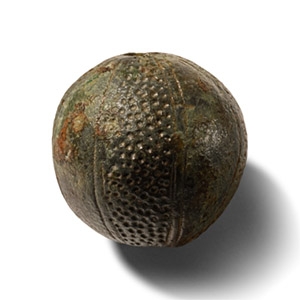
Medieval Bronze Sword Pommel
Circa 14th century A.D.Sold for (Inc. bp): £182
Hollow-formed spherical pommel with rectangular slot to the underside to accept the tang, and smaller slot above to accommodate the piebed end; segmented outer face with alternating plain and pointillé surfaces. 119 grams, 39 mm
Found Suffolk, UK. -
.jpg)
Lead Musket Ball Collection
17th-18th century A.D.Sold for (Inc. bp): £221
Group of ninty-nine lead musket and pistol balls. 2.08 kg total, 12-18 mm
UK gallery, early 2000s. -
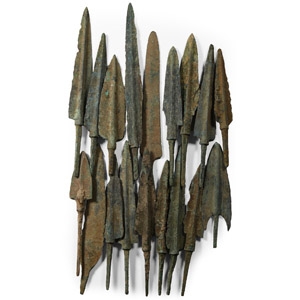
Elamite Bronze Arrowhead Collection
Circa 1200-900 B.C.Sold for (Inc. bp): £234
Including triangular-section with long tang, barbed, elongated lanceolate with mid-rib and other types. 485 grams total, 12-17.5 cm
Ex London, UK, collection, 1990s.
These arrowheads seem to belong to the type V, subcategory types A and C according to the classification of Khorasani and Negahban. In the four categories of triangular bronze arrowheads from Luristan, Marlik and Northern Iran individuated by Negahban, subtypes A and C of type V are larger arrow heads with barbed shoulders and triangular heads. The type was widely used in Elam between 13th and 10th century B.C.
