
Loading, please wait...
LOT 1418
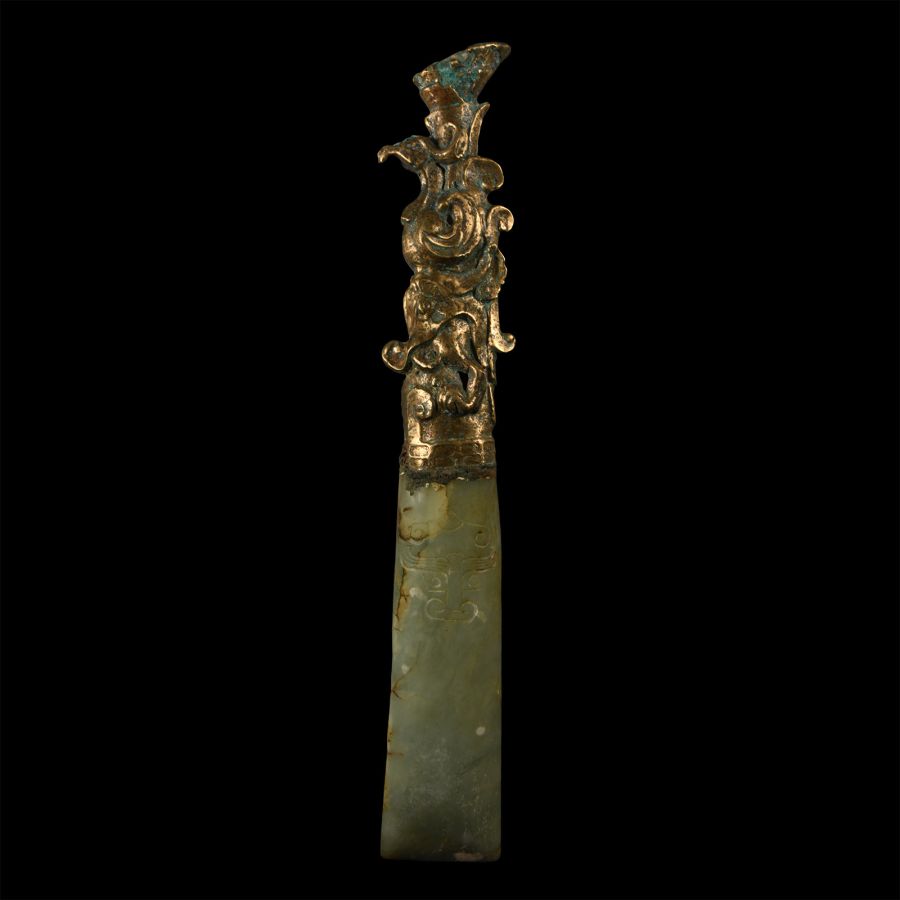
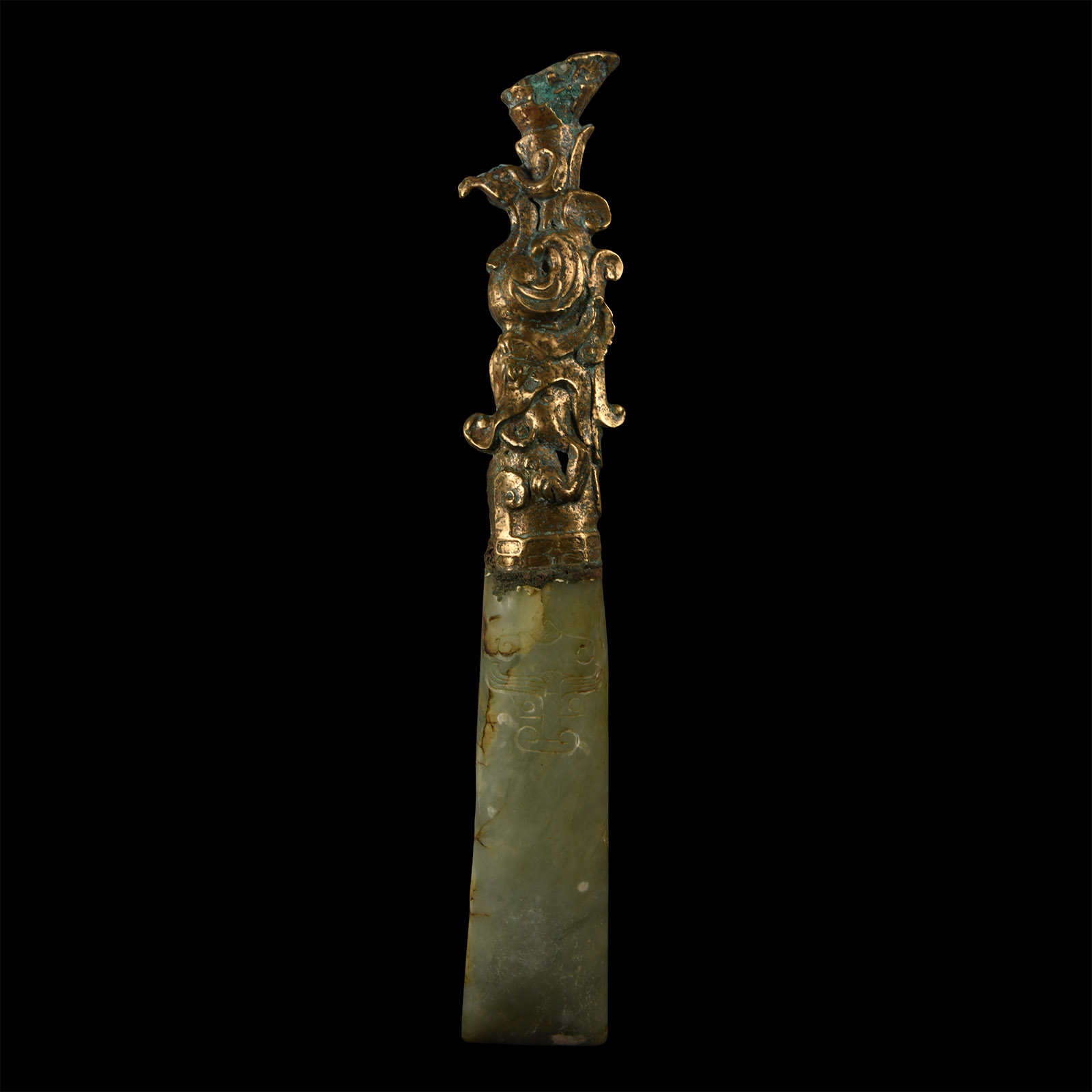
Chinese Serpentine and Gilt Bronze Ceremonial Adze
QING DYNASTY, 19TH-EARLY 20TH CENTURY A.D.
13 in. (736 grams, 33 cm).
With serpentine blade, engraved with a
in archaic style. [No Reserve]
Acquired UK, in the 1980s.
Property of a retired South West London doctor.
TimeLine Auctions follows a vetting process to ensure the authenticity and legality of all items, reinforcing our commitment to integrity and responsible trading. Each antiquity, antique, and coin lot undergoes thorough examination by a vetting committee of at least ten external specialists, professional trade association members, scientists, and archaeologists: Our Vetting Process
AUCTIONS:
TimeLine is a leading auction house specialising in antiquities, ancient art, collectables, natural history, coins, medals, and books. Our auctions offer museums, collectors, historians, and enthusiasts the opportunity to acquire unique and historically significant pieces.
-
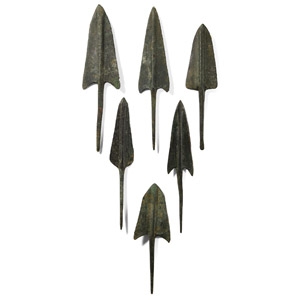
Luristan Bronze Arrowhead Collection
Circa 1000 B.C.Sold for (Inc. bp): £111
Each with an elongated, triangular shape with barbed shoulders, raised midrib and quadrangular spiked tang. 84 grams total, 8-11.2 cm
UK private collection before 2000. Acquired on the UK art market. Property of a London gentleman.
This type of arrowhead came in different varieties and sizes: some of them have barbed shoulders, some rounded shoulders, but both the types had a raised midrib. -
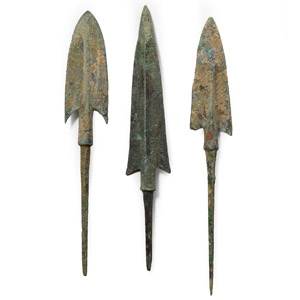
Luristan Bronze Arrowhead Group
Circa 14th-10th century B.C.Sold for (Inc. bp): £130
Each with a sturdy square-section tang, narrow barbed head with midrib. 98 grams total, 15.5-16 cm
Ex London, UK, collection, 1990s.
These arrowheads seem to belong to the type V, subcategory types A and C according to the classification of Khorasani and Negahban. In the four categories of triangular bronze arrowheads from Luristan, Marlik and Northern Iran individuated by Negahban, subtypes A and C of type V are larger arrow heads with barbed shoulders and triangular heads. These types of arrowheads were commonly used in Anatolia and Mesopotamia from the 2nd millennium B.C., but apparently their employment began earlier in this area, where types like these occur alongside the non-barbed, predominantly ribbed and tanged types. -
.jpg)
Luristan Bronze Arrowhead
13th-7th century B.C.Sold for (Inc. bp): £85
Heater-shaped with barbs to the rear and midrib developing to a tang. 34 grams, 15.6 cm (139 grams total, 16.7 cm high including stand)
Ex Abelita family collection, 1988.
