
Loading, please wait...
LOT 2229
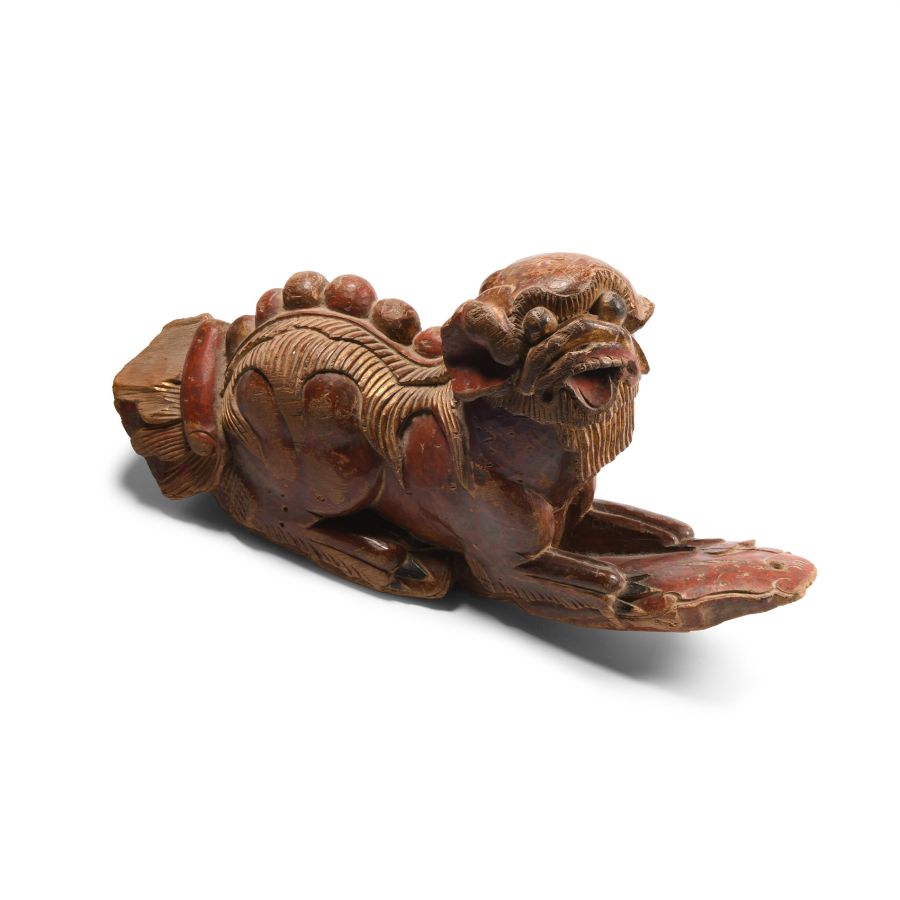
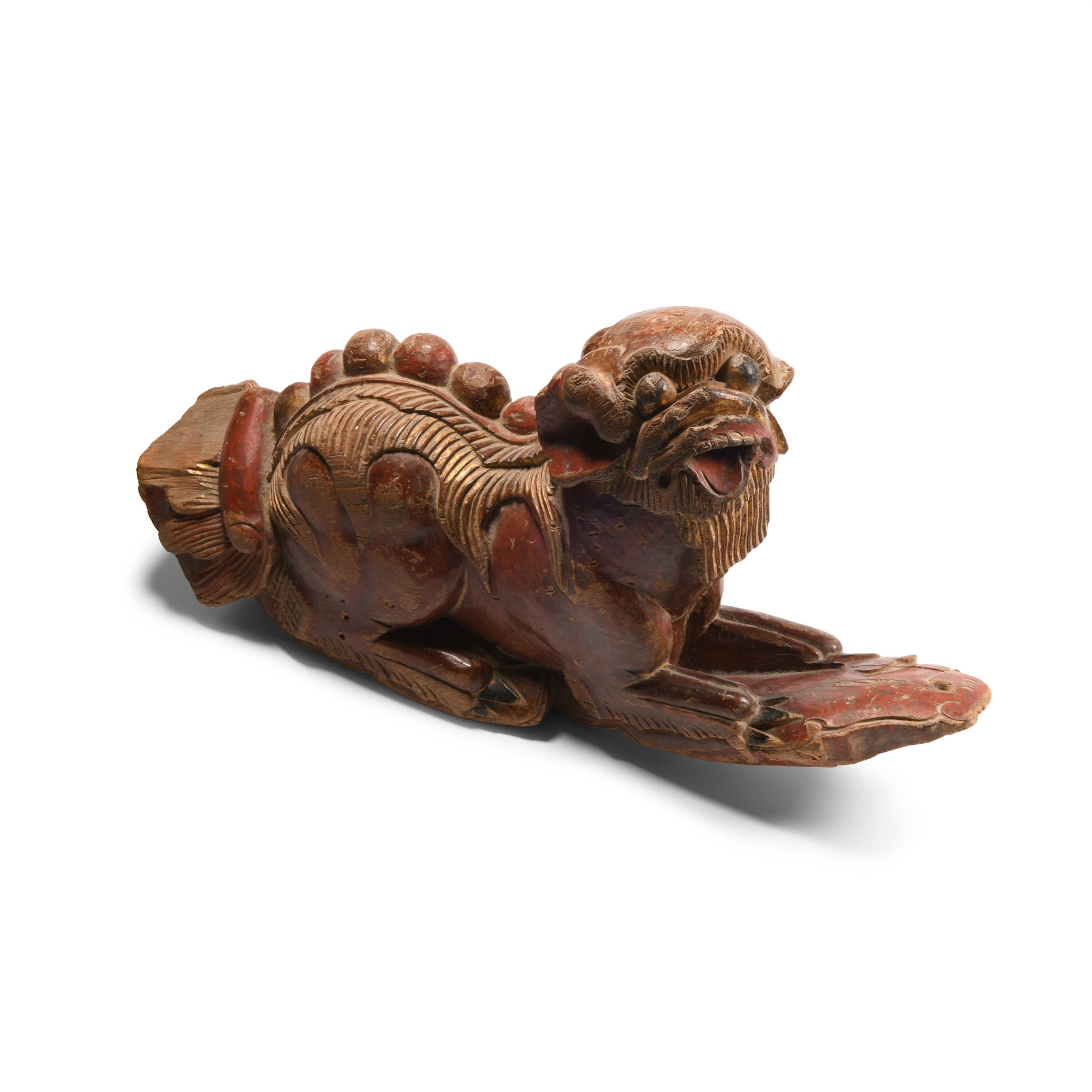
Chinese Qing Wooden Lion Dog
17TH-19TH CENTURY A.D.
14 in. (1 kg total, 35.5 cm wide).
Carved architectural feature with red and gold pigment; sunwheel motif above the head, forelegs extended and hindlegs folded beneath the body; head turned and mouth gaping. [No Reserve]
ProvenanceEx North Yorkshire deceased estate, 1990s.
CONDITIONTimeLine Auctions follows a vetting process to ensure the authenticity and legality of all items, reinforcing our commitment to integrity and responsible trading. Each antiquity, antique, and coin lot undergoes thorough examination by a vetting committee of at least ten external specialists, professional trade association members, scientists, and archaeologists: Our Vetting Process
AUCTIONS:
TimeLine is a leading auction house specialising in antiquities, ancient art, collectables, natural history, coins, medals, and books. Our auctions offer museums, collectors, historians, and enthusiasts the opportunity to acquire unique and historically significant pieces.
-
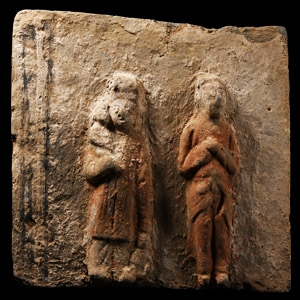
Chinese Song Ceramic Tile
Song Dynasty, 960-1279 A.D.Estimate: £200 - 300 (+bp*)
Opening Bid: £100
Presenting two high-relief figures, a male wearing tight-fitting garments and a female in ample robes holding a child. 3 kg, 25 cm wide
Acquired 1970s-1990s. Hong Kong collection. Ex West Country collection, UK -
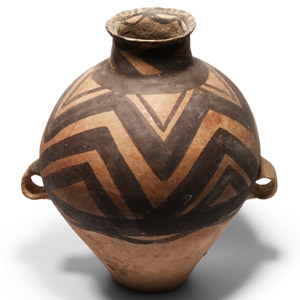
Chinese Neolithic Painted Ceramic Jar
3rd-2nd millennium B.C.Sold for (Inc. bp): £293
Piriform bodied and decorated with a frieze of chevrons to the upper body and neck; loop handles to the equator. 2.7 kg, 31.5 cm high
Ex Bath, Avon, UK, collection, 1990s. -
.jpg)
Chinese Han Style Bronze Bear Finial
19th-20th century A.D.Estimate: £250 - 350 (+bp*)
Opening Bid: £125
In a seated position, one leg drawn up beside its body with left paw resting upon it, the other pushed out to the side of its body, the right paw resting upon it, large head with gaping mouth exposing teeth and tongue, pricked ears and bulging eyes, sagging breasts resting atop the creature's pot-belly, incised fur detailing and a short tail to the reverse; hollow-formed. 135 grams, 58 mm
Fine condition.
Acquired 1980-1990s. From a West Country collection.
