
Loading, please wait...
LOT 2175
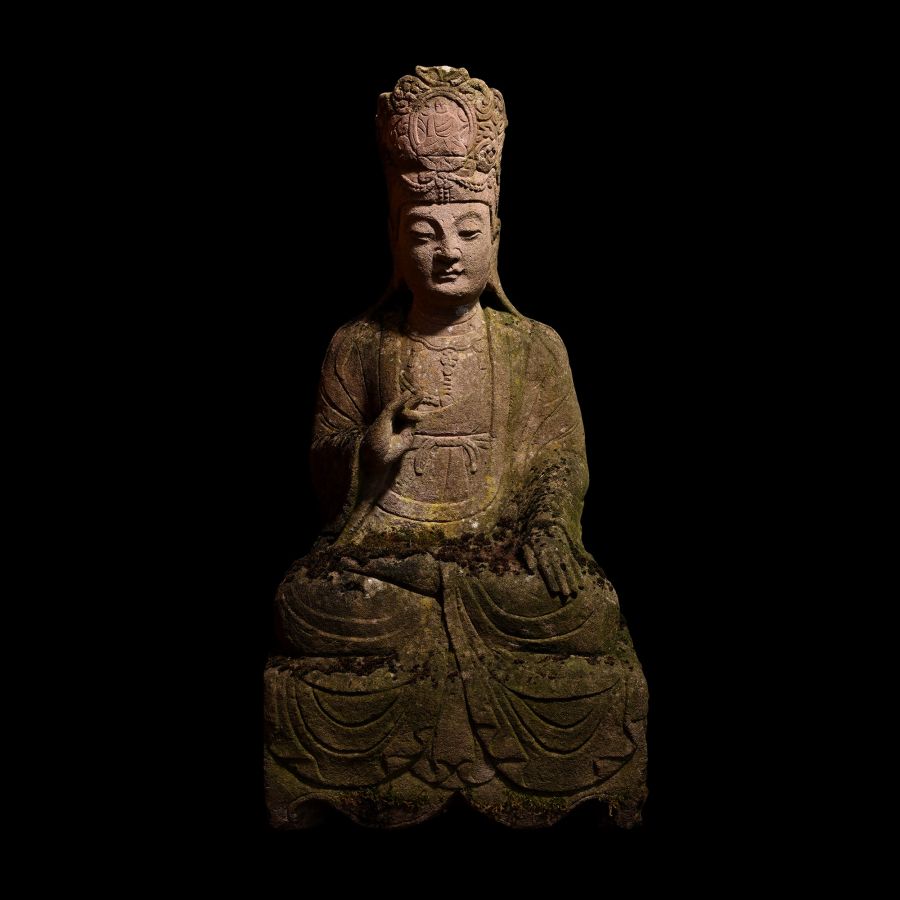
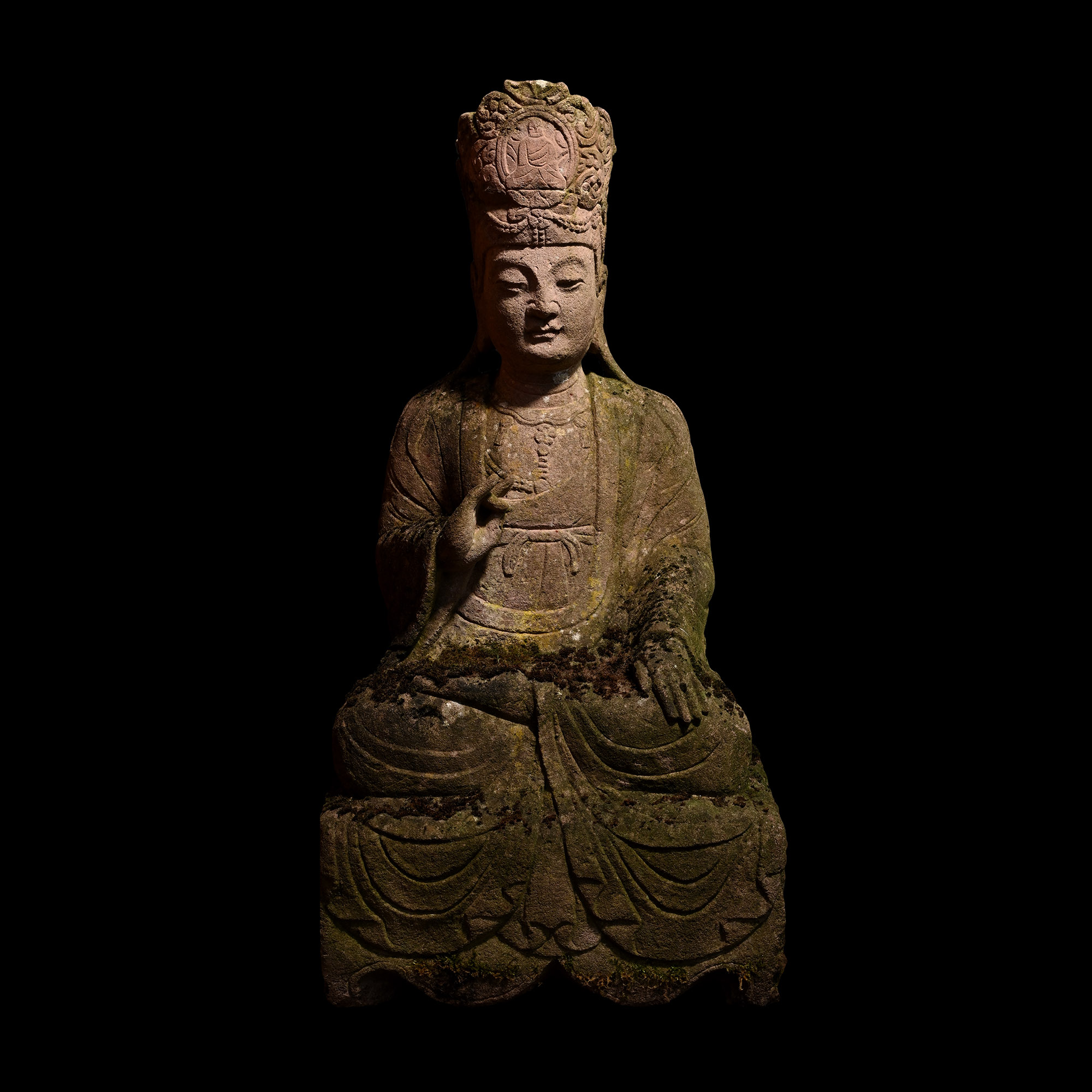
Chinese Qing Stone Statue of Bodhisattva Avalokiteshvara
QING DYNASTY, 1644-1911 A.D. OR LATER
34 1/2 in. (132 kg, 87.5 cm).
Seated in a lotus pose on a draped pedestal, wearing flounced robes and a tall, elaborate crown with Amitabha in roundel, elongated earlobes and downcast eyes, right hand raised in a gesture of reassurance and left hand resting on his knee.
ProvenanceEx K.C. collection, London, 1990-2000.
This lot is accompanied by an illustrated lot declaration signed by the Head of the Antiquities Department, Dr Raffaele D’Amato.
This lot is accompanied by an illustrated lot declaration signed by the Head of the Antiquities Department, Dr Raffaele D'Amato.
TimeLine Auctions follows a vetting process to ensure the authenticity and legality of all items, reinforcing our commitment to integrity and responsible trading. Each antiquity, antique, and coin lot undergoes thorough examination by a vetting committee of at least ten external specialists, professional trade association members, scientists, and archaeologists: Our Vetting Process
AUCTIONS:
TimeLine is a leading auction house specialising in antiquities, ancient art, collectables, natural history, coins, medals, and books. Our auctions offer museums, collectors, historians, and enthusiasts the opportunity to acquire unique and historically significant pieces.
LOT 2175
Chinese Qing Stone Statue of Bodhisattva Avalokiteshvara
Sold for (Inc. bp): £374
-
.jpg)
Banded Agate and Glass Bead Necklace
20th century A.D.Sold for (Inc. bp): £143
A restrung necklace composed of elongated biconical beads in agate and banded glass. 130 grams, 106 cm
From the family collection of a Hampstead gentleman; formerly acquired in the 1980s. This lot is accompanied by an illustrated lot declaration signed by the Head of the Antiquities Department, Dr Raffaele D'Amato. -
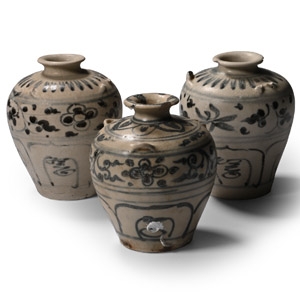
Hoi An Cargo Shipwreck Glazed Blue and White Vase Trio
15th century A.D.Sold for (Inc. bp): £715
Comprising three piriform vessels with small trumpet-shaped mouths, remains of loop handles above the shoulder, painted floral decoration to each with stylised petals radiating from the base. 742 grams total, 9.7-10 cm
Ex Butterfield and Butterfield auction with official Hoi An Hoard labels. Accompanied by an illustrated information sheet about the Hoi An shipwreck. This lot is accompanied by an illustrated lot declaration signed by the Head of the Antiquities Department, Dr Raffaele D'Amato.
In the mid 15th century a freighting junk loaded with fine Vietnamese pottery sank in an area of the South China Sea called the 'Dragon’s Embrace.' This vessel is part of the shipwreck cargo recovered off the coast of Vietnam at Hoi An. The ceramics themselves were probably made in the area of Chu Dau. -
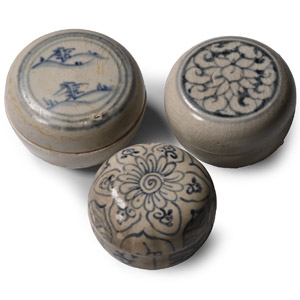
Hoi An Cargo Shipwreck Glazed Blue and White Lidded Box Collection
15th century A.D.Sold for (Inc. bp): £234
Comprising three powder boxes, two with painted floral motifs and one with trees in a hilly landscape. 287 grams total, 56-65 mm
Ex Butterfield and Butterfield auction with official Hoi An Hoard labels. Accompanied by an illustrated information sheet about the Hoi An shipwreck. This lot is accompanied by an illustrated lot declaration signed by the Head of the Antiquities Department, Dr Raffaele D'Amato.
In the mid 15th century a freighting junk loaded with fine Vietnamese pottery sank in an area of the South China Sea called the 'Dragon’s Embrace.' This vessel is part of the shipwreck cargo recovered off the coast of Vietnam at Hoi An. The ceramics themselves were probably made in the area of Chu Dau.
