
Loading, please wait...
LOT 2037
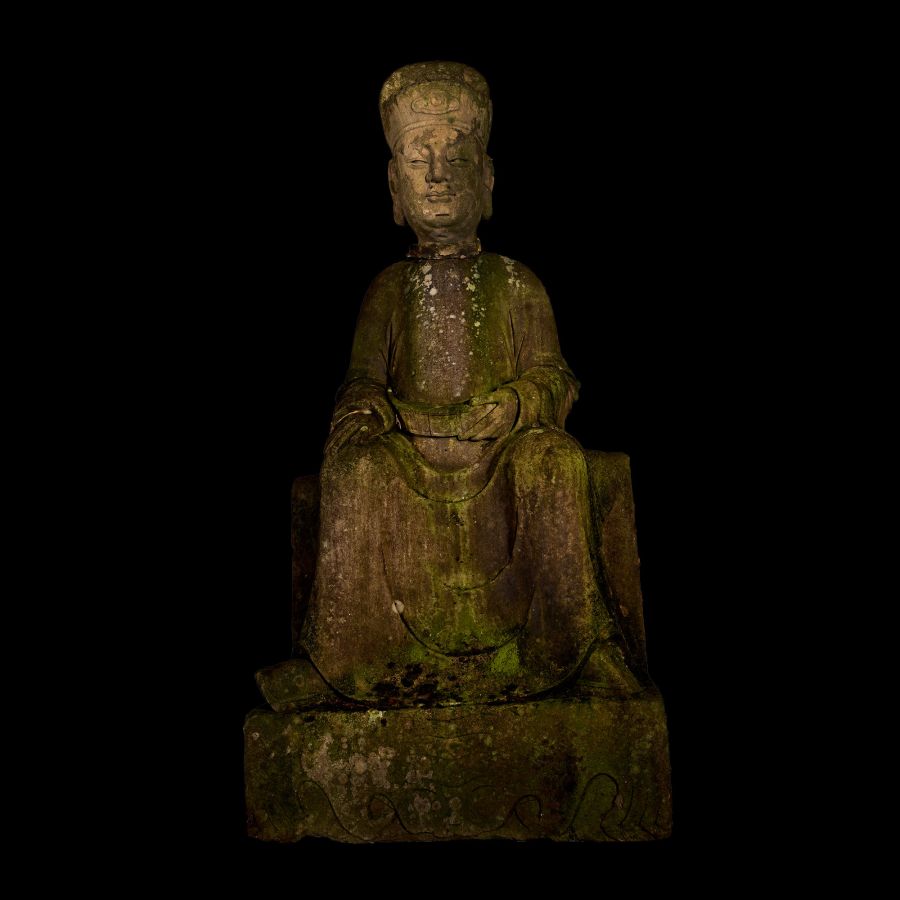
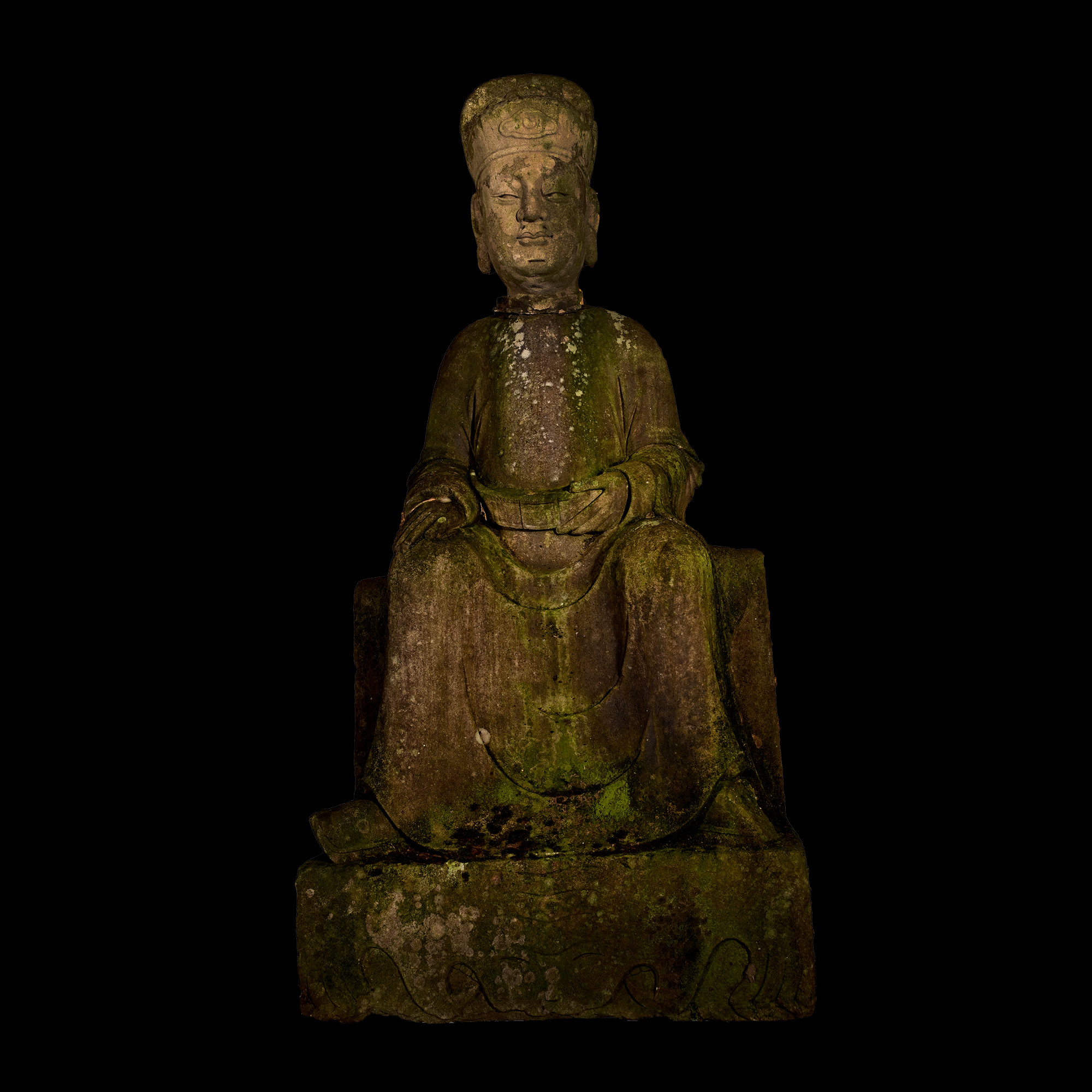
Chinese Qing Seated Stone Figure
QING DYNASTY, 1644-1911 A.D. OR LATER
49 1/4 in. (240 kg, 1.25 m).
Seated on a lion-skin covered pedestal, wearing long robes and a tall jewelled crown, resting his left hand on a thick belt with buckle and right hand on his knee; elongated earlobes and serene expression with downcast eyes; neck repaired.
ProvenanceEx K.C. collection, London, 1990-2000.
This lot is accompanied by an illustrated lot declaration signed by the Head of the Antiquities Department, Dr Raffaele D’Amato.
This lot is accompanied by an illustrated lot declaration signed by the Head of the Antiquities Department, Dr Raffaele D'Amato.
The statue possibly depicts either bodhisattva Manjushri, the bodhisattva of wisdom, or bodhisattva Avalokiteshvara, the bodhisattva of compassion. Both are often depicted sitting on a skin of lion, or on a lion, which represents their use of wisdom to control the mind.
CONDITIONTimeLine Auctions follows a vetting process to ensure the authenticity and legality of all items, reinforcing our commitment to integrity and responsible trading. Each antiquity, antique, and coin lot undergoes thorough examination by a vetting committee of at least ten external specialists, professional trade association members, scientists, and archaeologists: Our Vetting Process
AUCTIONS:
TimeLine is a leading auction house specialising in antiquities, ancient art, collectables, natural history, coins, medals, and books. Our auctions offer museums, collectors, historians, and enthusiasts the opportunity to acquire unique and historically significant pieces.
-

Chinese Tang Terracotta Horse and Rider
Tang Dynasty, 618-907 A.D.Sold for (Inc. bp): £2,340
The horse in a static pose with its head turned to the left, the female rider bent at waist with her left arm bent and fist clenched to grip the reins (absent), the other arm held high in a swinging pose; painted fur texture to the saddle blanket. 5.6 kg, 42.5 cm high
Ex West Country, UK, collection, 2000s. Accompanied by thermoluminescence analysis report no.C124d51 by Oxford Authentication. This lot has been checked against the Interpol Database of stolen works of art and is accompanied by a search certificate number no.12560-231126. This lot has been cleared against the Art Loss Register database, and is accompanied by an illustrated lot declaration signed by the Head of the Antiquities Department, Dr Raffaele D’Amato. This lot has been cleared against the Art Loss Register database, and is accompanied by an illustrated lot declaration signed by the Head of the Antiquities Department, Dr Raffaele D'Amato. -
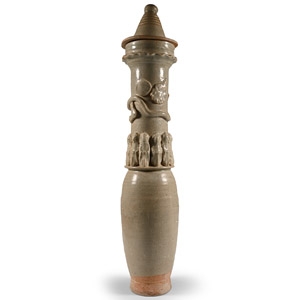
Chinese Song Green-Glazed Dragon Granary Jar
Song Dynasty, 960-1279 A.D. or laterSold for (Inc. bp): £182
Piriform in shape with piecrust collar to neck and slightly splayed foot; decorated with a medial frieze of applied figures standing above a collar, a sinuous dragon coiled around the neck, conical ribbed lid with flange rim. 1.23 kg total, 47.5 cm
Ex H.N. collection, Milton Keynes, UK, 1990s. This lot is accompanied by an illustrated lot declaration signed by the Head of the Antiquities Department, Dr Raffaele D'Amato. -
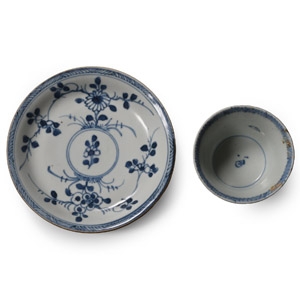
Ca Mau Cargo Shipwreck Glazed Blue and White Tea Cup and Saucer
Early 18th century A.D.Sold for (Inc. bp): £52
Comprising a shallow saucer with flowers and tendrils, brown glaze to the outer face; a bell-shaped cup with a lake scenery showing a fisherman to the outer face and painted border to the inner face. 100 grams total, 6.5-11.3 cm
Ex Sotheby's, Amsterdam, 29-31 January 2007. Accompanied by an illustrated information sheet about the Ca Mau shipwreck. This lot is accompanied by an illustrated lot declaration signed by the Head of the Antiquities Department, Dr Raffaele D'Amato.
The Ca Mau shipwreck refers to a cargo of Chinese porcelain sunk between 1723 and 1735 off the coast of Vietnam. The wreck was discovered by Vietnamese fishermen in 1998. It is believed the wreck was a merchant’s junk on its way from Canton (Guangzhou) to Batavia when it caught fire and sank. The ship was carrying goods destined for Dutch traders who had limited access to China and its ports.
