
Loading, please wait...
LOT 2017
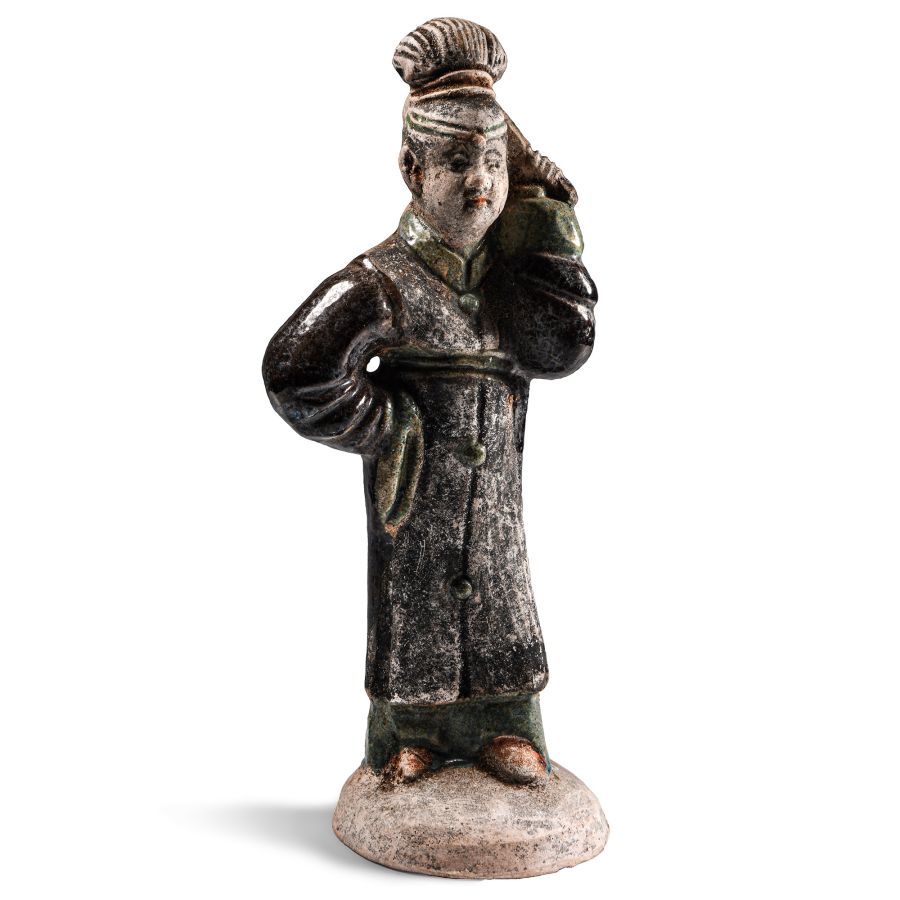
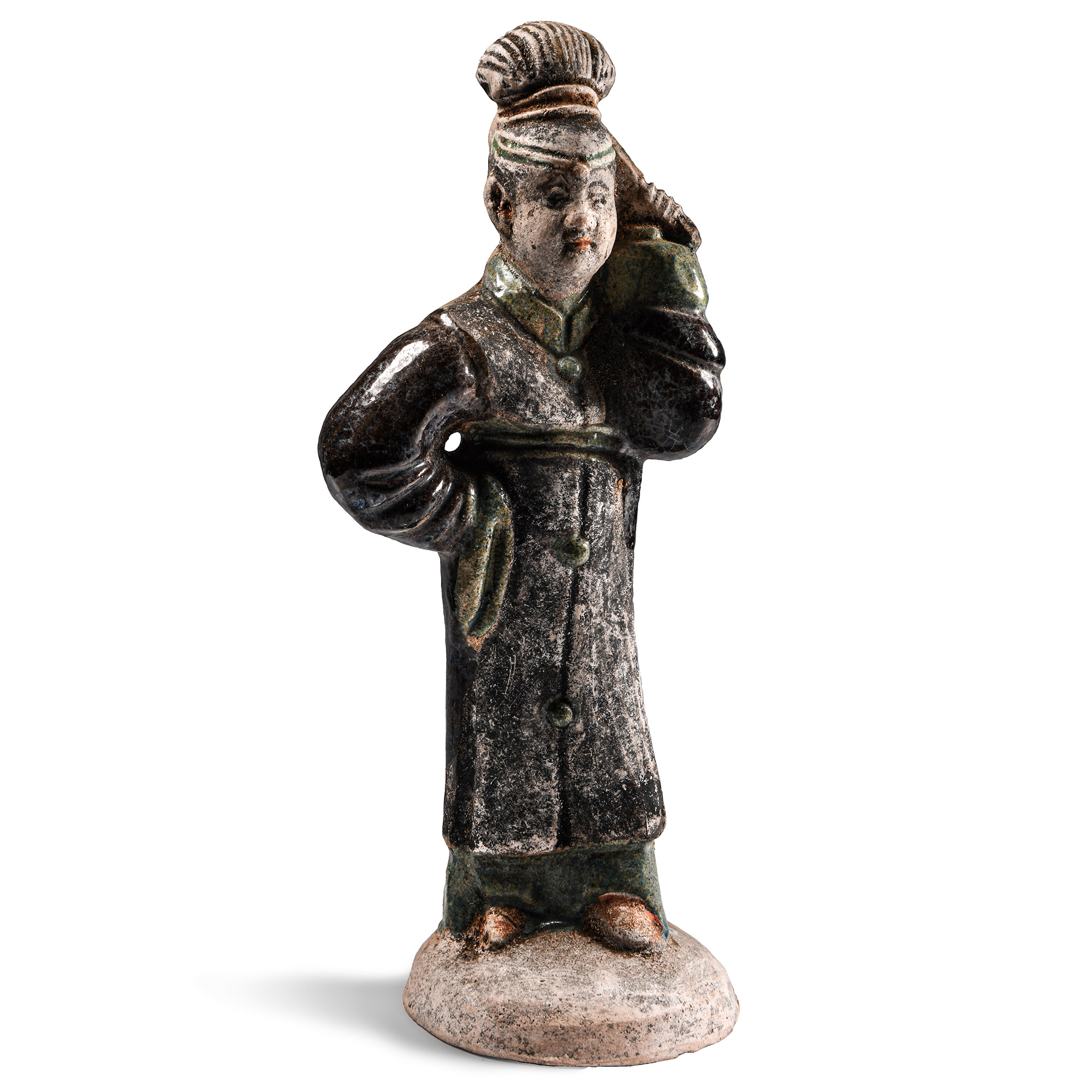
Chinese Qing Glazed Female Figure
QING DYNASTY, 1644-1911 A.D.
8 7/8 in. (445 grams, 22.5 cm high).
Hollow-formed ceramic figure of a lady holding a palmette fan to her head in her left hand, right hand inside the long sleeve of her chang'ao on her hip, buttoned at the front and worm with a saah below the bust; domed base.
ProvenanceEx Hong Kong collection, 1990s.
CONDITIONTimeLine Auctions follows a vetting process to ensure the authenticity and legality of all items, reinforcing our commitment to integrity and responsible trading. Each antiquity, antique, and coin lot undergoes thorough examination by a vetting committee of at least ten external specialists, professional trade association members, scientists, and archaeologists: Our Vetting Process
AUCTIONS:
TimeLine is a leading auction house specialising in antiquities, ancient art, collectables, natural history, coins, medals, and books. Our auctions offer museums, collectors, historians, and enthusiasts the opportunity to acquire unique and historically significant pieces.
LOT 2017
Chinese Qing Glazed Female Figure
Estimate £100 - 140€120 - 160 (for guidance only)$140 - 190 (for guidance only)
-
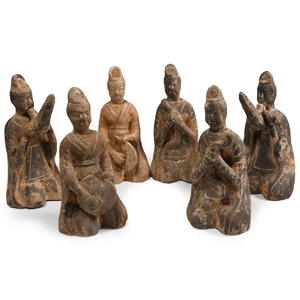
Chinese Han Terracotta Musician Group
Han Dynasty, 206 B.C.-220 A.D. or laterSold for (Inc. bp): £845
Comprising six hollow-formed figures of kneeling musicians with various percussion and other instruments. 1.4 kg total, 14.5 cm each
Ex Edmond Wong Antiques, Hollywood Road, Hong Kong, 2003. Accompanied by the original invoice dated 10 July 2003. -

Chinese Gilt Copper Crouching Camel
Song Dynasty, 960-1279 A.D. or earlierEstimate: £2,000 - 3,000 (+bp*)
Opening Bid: £1,000
Modelled in the round with a double hump, neck gracefully resting against the back, and legs folded beneath the body. 164 grams, 56 mm
Acquired in the 1960s. From the collection of Mr Jay Gluck (1927-2000) & Mrs Sumi Hiramoto Gluck. This lot has been checked against the Interpol Database of stolen works of art and is accompanied by search certificate no.12063-214191.
Camel-shaped water droppers would have been perfect not only for dispensing water onto the inkstone, but also because the humps could form as a brush rest too. The form of our artefact showcases the rapid cultural interaction and integration between China and Central Asia during the early dynasties of China. By the Tang Dynasty, China was one of the most cosmopolitan empires on earth with traders and missionaries from across Asia, Europe and Africa in the capital Chang'an. Depictions of two-humped Bactrian camels in pottery symbolised wealth, trade and international networks. The famous calligrapher and painter Qi Gong (1912-2005) owned a similar gilt-bronze camel paperweight, who according to his records purchased it in an antique shop in Japan. Qi Gong even renamed his studio 'The Little Bronze Camel Studio' (xiao tong luo guan’). -

Chinese Ming Glazed Lion Candlestick Pair
Ming Dynasty, 1368-1644 A.D. or laterSold for (Inc. bp): £117
Matched pair of glazed candlesticks, each formed as a crouching lion on a rectangular socle plinth with trumpet-shaped stem to the back; chipped, usage wear. 882 grams total, 16 cm each
From a collection acquired on the UK art market from various auction houses and collections mostly before 2000. From an important Cambridgeshire estate; thence by descent.
