
Loading, please wait...
LOT 2184
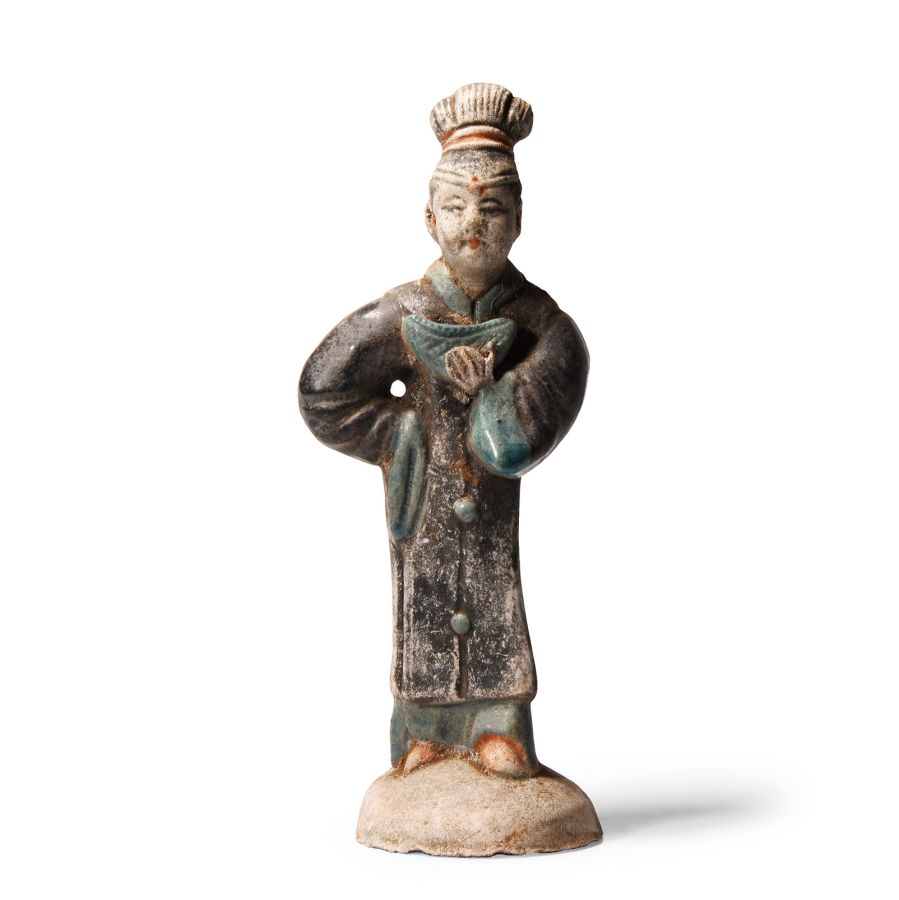
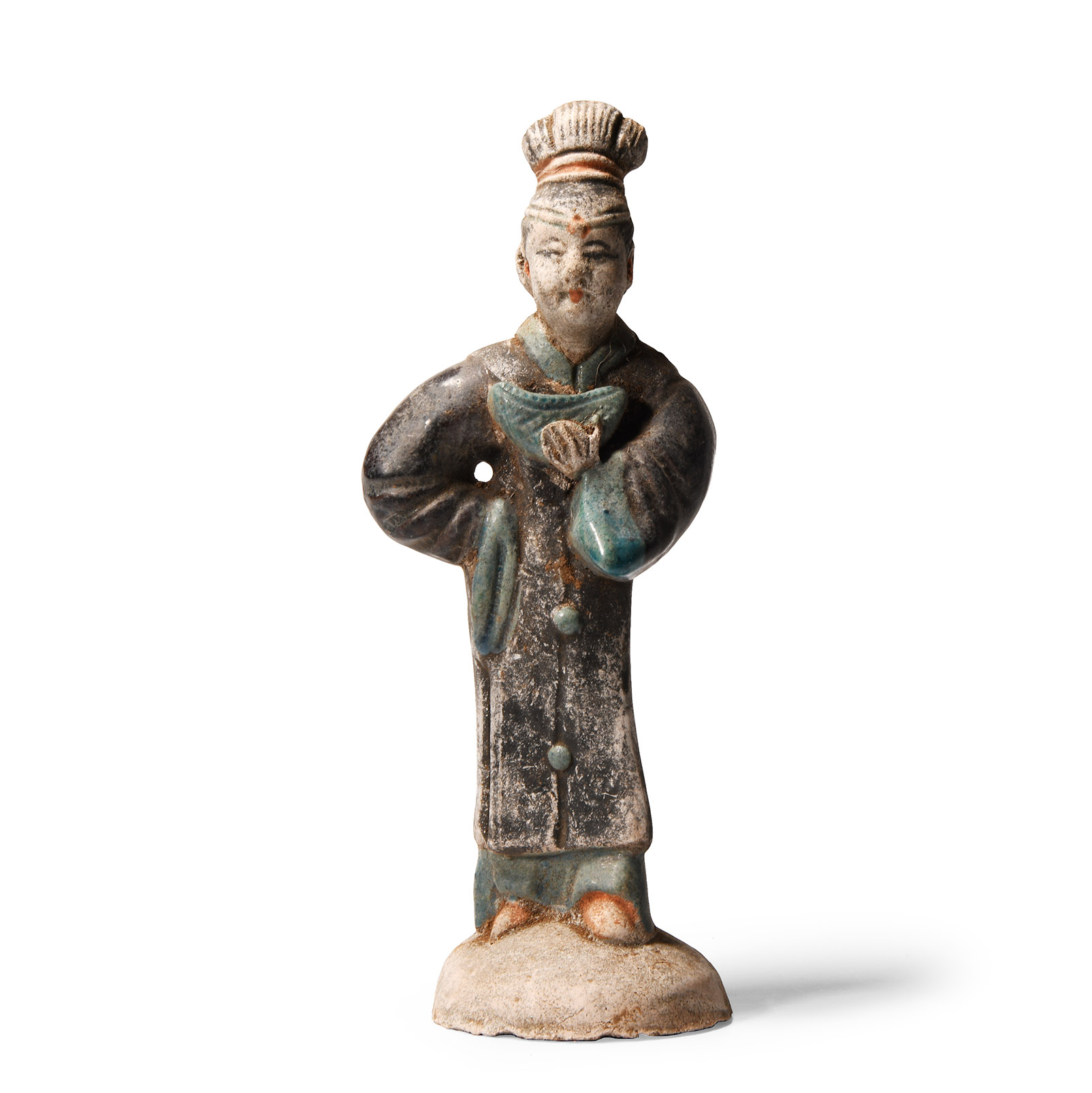
Chinese Qing Glazed Ceramic Female Attendant
QING DYNASTY, 1644-1911 A.D.
8 5/8 in. (488 grams, 22.2 cm high).
Modelled in the round standing on a domed base, wearing floor length robes with voluminous sleeves, hair dressed in an elaborate style, holding a crescentic dish; remains of polychrome pigmentation.
ProvenanceEx Cotswold, UK, collection, 1970-1990.
CONDITIONTimeLine Auctions follows a vetting process to ensure the authenticity and legality of all items, reinforcing our commitment to integrity and responsible trading. Each antiquity, antique, and coin lot undergoes thorough examination by a vetting committee of at least ten external specialists, professional trade association members, scientists, and archaeologists: Our Vetting Process
AUCTIONS:
TimeLine is a leading auction house specialising in antiquities, ancient art, collectables, natural history, coins, medals, and books. Our auctions offer museums, collectors, historians, and enthusiasts the opportunity to acquire unique and historically significant pieces.
LOT 2184
Chinese Qing Glazed Ceramic Female Attendant
Estimate £100 - 140€120 - 160 (for guidance only)$140 - 190 (for guidance only)
-
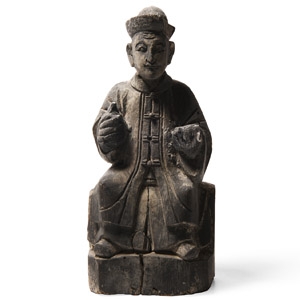
Chinese Qing Wooden House God
17th-19th century A.D.Sold for (Inc. bp): £117
Treen figure in seated pose on a raised niche dais, clothed in floor-length robe and long-sleeved coat with fastenings; brimmed cap to the head; socket to the rear of the body and carved bar and slot to the reverse of the base. 283 grams, 20.3 cm high
Ex North Yorkshire deceased estate, 1990s. -
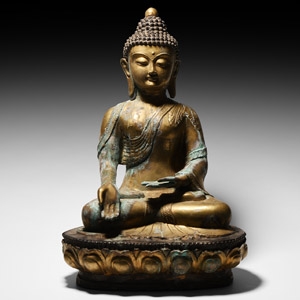
Chinese Sino-Tibetan Gilt Bronze Buddha
Circa 20th century A.D.Estimate: £1,800 - 2,400 (+bp*)
Opening Bid: £970
Hollow-formed and sitting cross-legged on a lotus-flower dais with left hand resting palm-upward in the lap to accept a bumpa vessel. 6.85 kg, 45 cm high
French collection, 1960s-early 2000s. From an important Paris gallery, France. with Ogotai (?) Auctions, Paris, France, 22 January 2016, lot 5. This lot has been checked against the Interpol Database of stolen works of art and is accompanied by search certificate number no.11712-199349. -
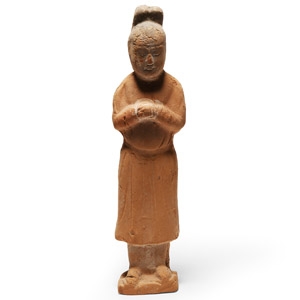
Chinese Tang Terracotta Figure
Tang Dynasty, 618-907 A.D.Estimate: £200 - 300 (+bp*)
Opening Bid: £100
Modelled in the round, standing on a rectangular base, hands held before the chest, hair dressed in an elaborate style; remains of polychrome pigmentation. 404 grams, 23.5 cm
Ex Desond Morris collection, pre 2000.
