
Loading, please wait...
LOT 2052
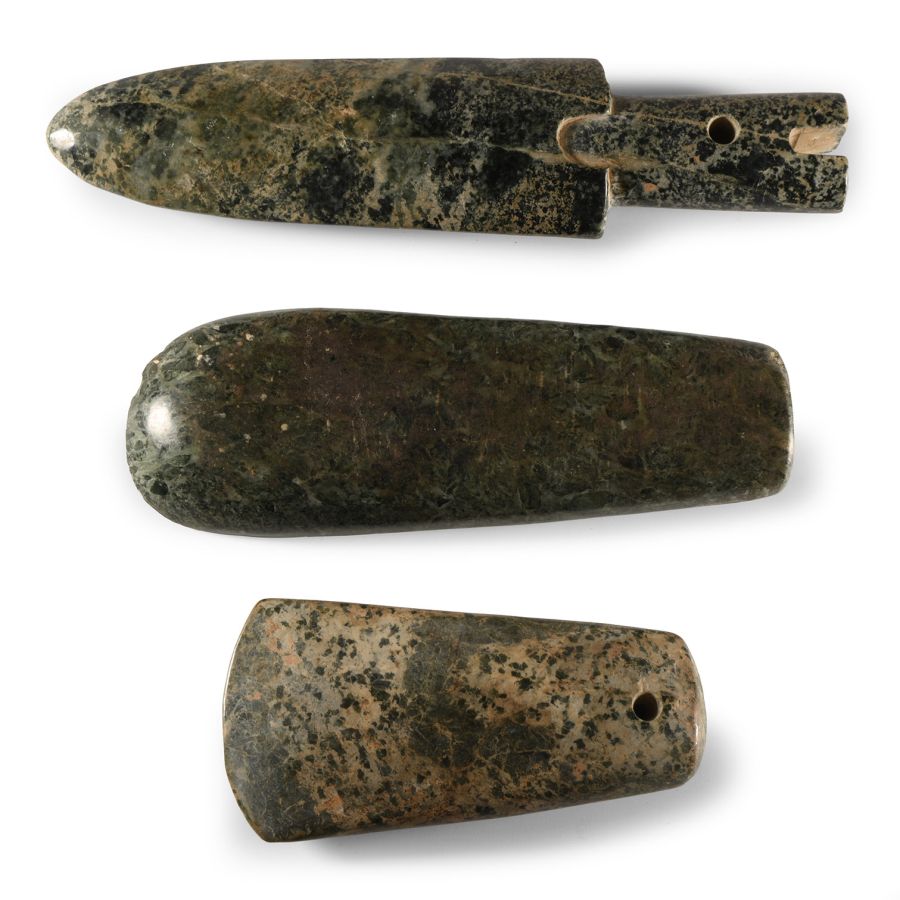
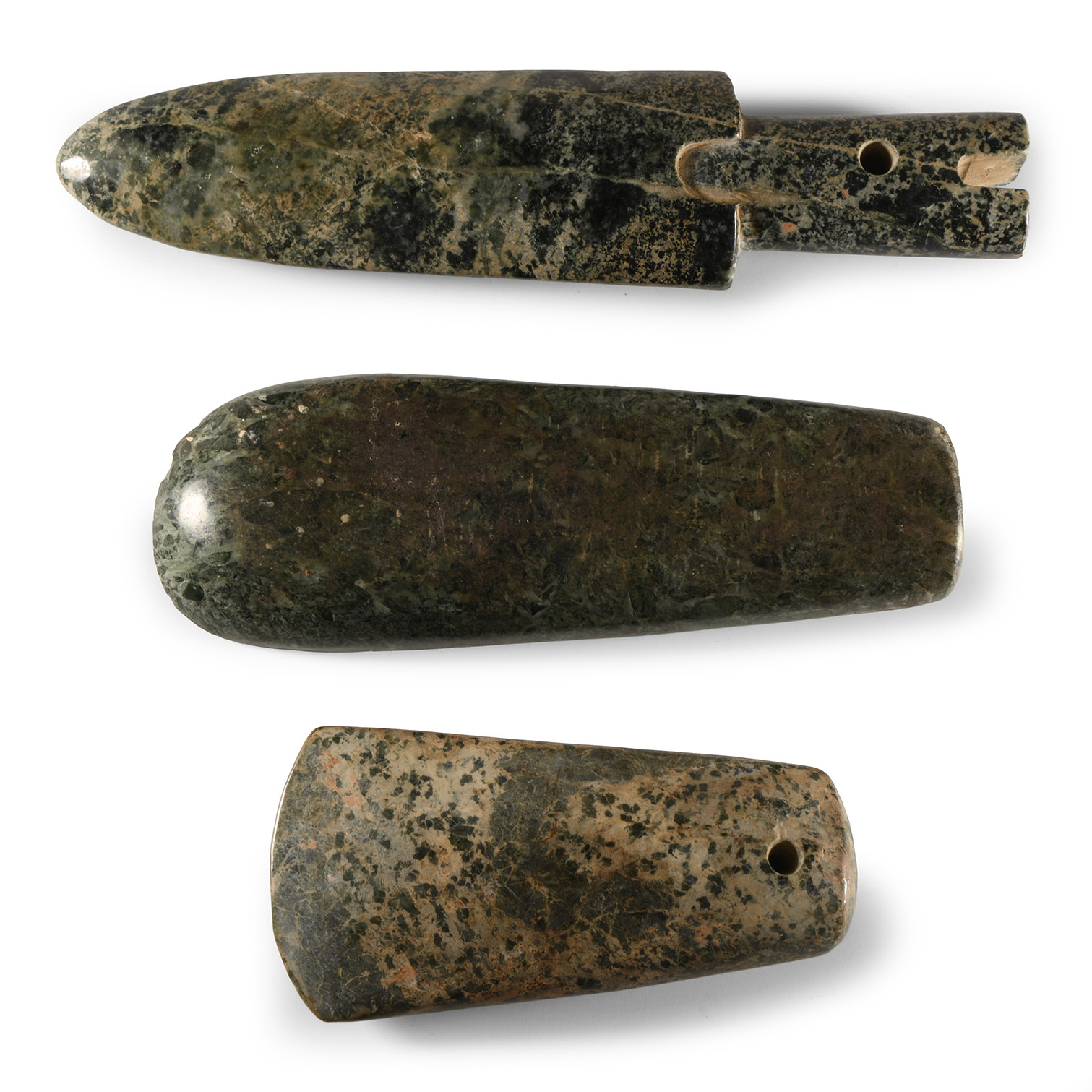
Chinese Polished Green Stone Tool Collection
20TH CENTURY A.D. OR EARLIER
4 3/8 - 7 5/8 in. (880 grams total, 11.2 - 19.5 cm).
Comprising: a gouge with rounded cutting edge, axehead with pierced butt and spearhead with recessed neck. [3, No Reserve]
ProvenanceFrom a collection acquired on the UK art market from various auction houses and collections mostly before 2000.
From an important Cambridgeshire estate; thence by descent.
TimeLine Auctions follows a vetting process to ensure the authenticity and legality of all items, reinforcing our commitment to integrity and responsible trading. Each antiquity, antique, and coin lot undergoes thorough examination by a vetting committee of at least ten external specialists, professional trade association members, scientists, and archaeologists: Our Vetting Process
AUCTIONS:
TimeLine is a leading auction house specialising in antiquities, ancient art, collectables, natural history, coins, medals, and books. Our auctions offer museums, collectors, historians, and enthusiasts the opportunity to acquire unique and historically significant pieces.
-
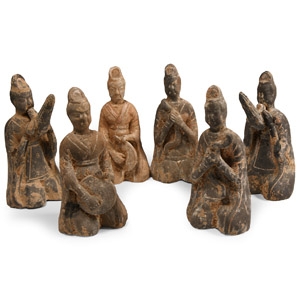
Chinese Han Terracotta Musician Group
Han Dynasty, 206 B.C.-220 A.D. or laterSold for (Inc. bp): £845
Comprising six hollow-formed figures of kneeling musicians with various percussion and other instruments. 1.4 kg total, 14.5 cm each
Ex Edmond Wong Antiques, Hollywood Road, Hong Kong, 2003. Accompanied by the original invoice dated 10 July 2003. -
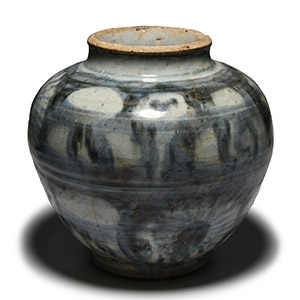
Chinese Blue and White Jar
15th-17th century A.D.Estimate: £100 - 140 (+bp*)
Opening Bid: £50
Glazed with carinated profile, deep shoulder and narrow raised rim, dense dark blue floral motifs and shallow foot. 1.6 kg, 19.5 cm wide
Ex Hong Kong collection, 1970-1990s. -
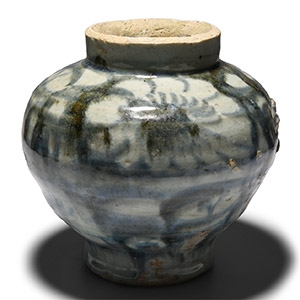
Chinese Blue and White Jar
15th-17th century A.D.Estimate: £100 - 140 (+bp*)
Opening Bid: £50
Glazed with carinated profile, deep shoulder and narrow raised rim, dense dark blue floral motifs and shallow foot. 1.27 kg, 18 cm cm wide
Ex Hong Kong collection, 1970-1990s.
