
Loading, please wait...
LOT 2050
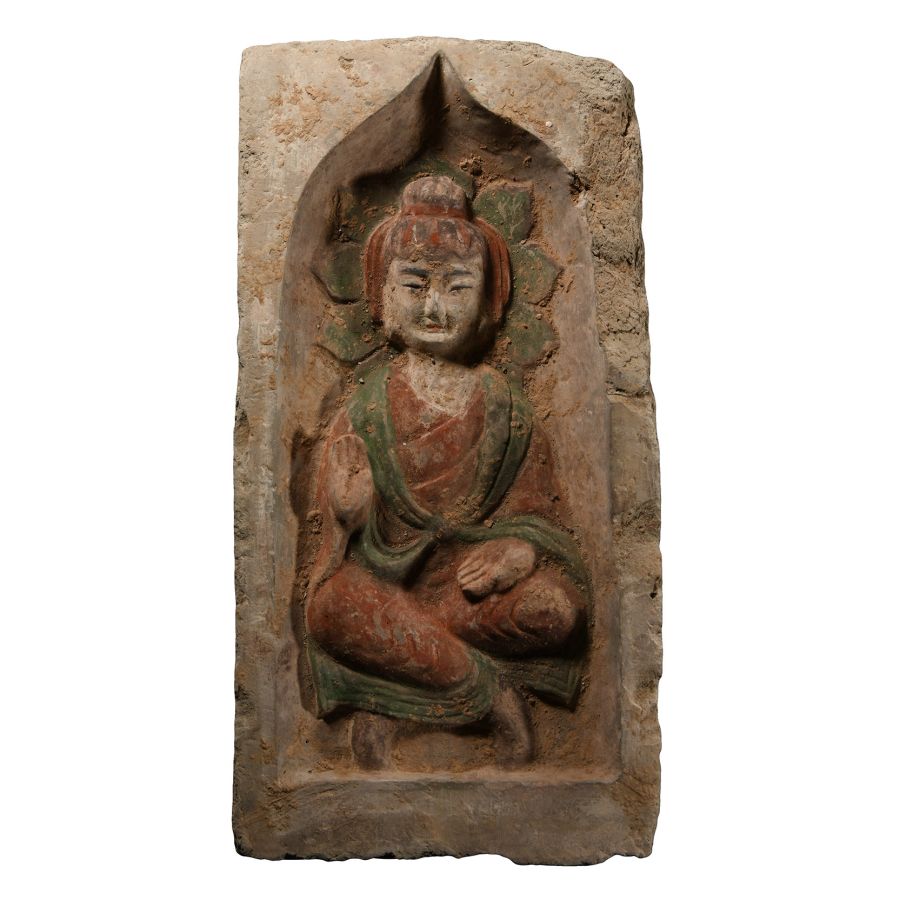
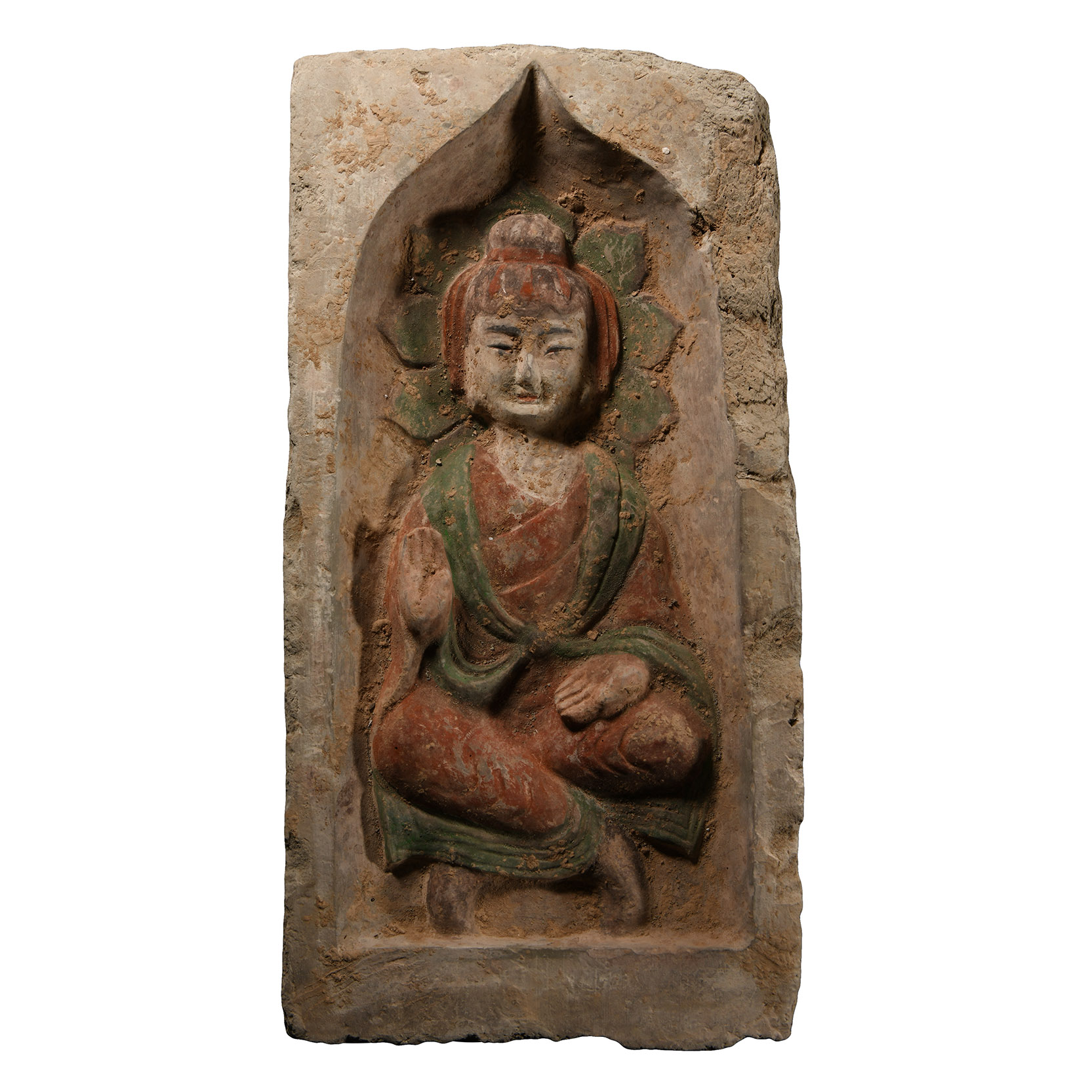
Chinese Northern Wei Painted Buddha Brick
NORTHERN WEI DYNASTY, 386-534 A.D.
13 in. (4.16 kg, 33 cm).
With arched recess, high-relief seated figure of Buddha with one hand raised in the gesture of reassurance.
ProvenanceEx Hong Kong collection, 1980-1990.
CONDITIONTimeLine Auctions follows a vetting process to ensure the authenticity and legality of all items, reinforcing our commitment to integrity and responsible trading. Each antiquity, antique, and coin lot undergoes thorough examination by a vetting committee of at least ten external specialists, professional trade association members, scientists, and archaeologists: Our Vetting Process
AUCTIONS:
TimeLine is a leading auction house specialising in antiquities, ancient art, collectables, natural history, coins, medals, and books. Our auctions offer museums, collectors, historians, and enthusiasts the opportunity to acquire unique and historically significant pieces.
-
.jpg)
Pair of Large Chinese Tang Terracotta Musicians
Tang Dynasty, 618-907 A.D.Estimate: £3,000 - 4,000 (+bp*)
Opening Bid: £1,600
Two mounted musicians comprising: the horse standing on a rectangular base with painted harness, bridle and saddle detailing; the integral rider in loose coat and riding boots, wearing a floppy cap and playing a p'i-p'a (Chinese lute); the other similar, playing a ling-gu tambour held in the left hand. 5.35 kg total, 38.5 cm high each
Acquired 1990s. West Country, UK, collection. Accompanied by a copy of a thermoluminescence analysis report no.13CM180321 from Laboratory Kotalla for one of the figures. This lot has been checked against the Interpol Database of stolen works of art and is accompanied by search certificate no.11990-209554. -
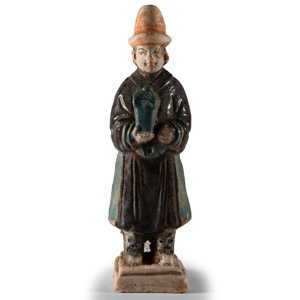
Chinese Ming Glazed Terracotta Tomb Attendant
Ming Dynasty, 1368-1644 A.D. or laterSold for (Inc. bp): £59
Modelled standing with the hands to the chest holding a casket; on a tiered base. 298 grams, 17 cm
North Yorkshire, UK, collection, 1990s. -
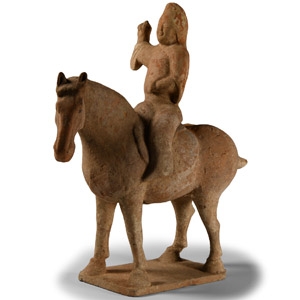
Chinese Tang Terracotta Horse and Rider
Tang Dynasty, 618-907 A.D. or laterEstimate: £350 - 450 (+bp*)
Opening Bid: £175
Modelled on a rectangular base, the horse standing with a rounded saddlecloth; the rider modelled seated in the saddle, right arm raised and left arm held before the body; right hand modelled empty to accept a bow or other weapon; some restoration. 1.54 kg, 29.5 cm
Ex North Yorkshire, UK, collection, 1990s.
Many horses, in the Tang graves, have been found with a runnel down the length of the upper neck, and a hole at the end of the spine. These cavities were surely meant to take real horsehair manes and tails, as some later porcelain figures are adorned with wisps of real human hair threaded through holes under the nose and the chin.
