
Loading, please wait...
LOT 2012
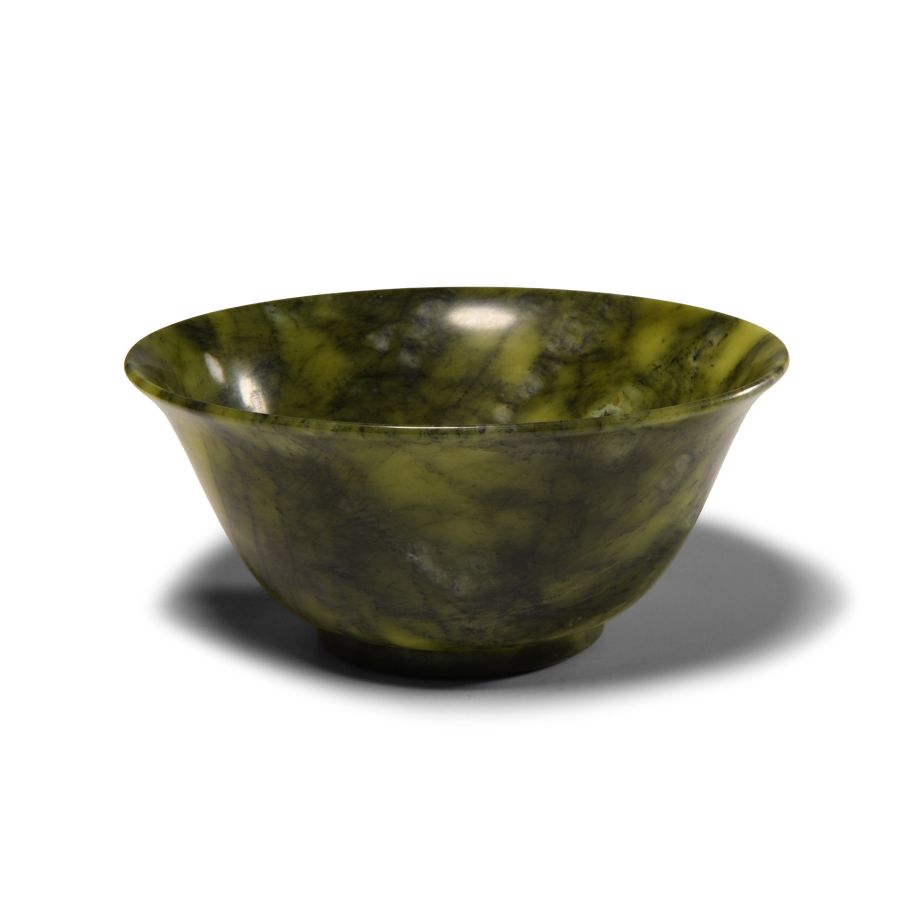
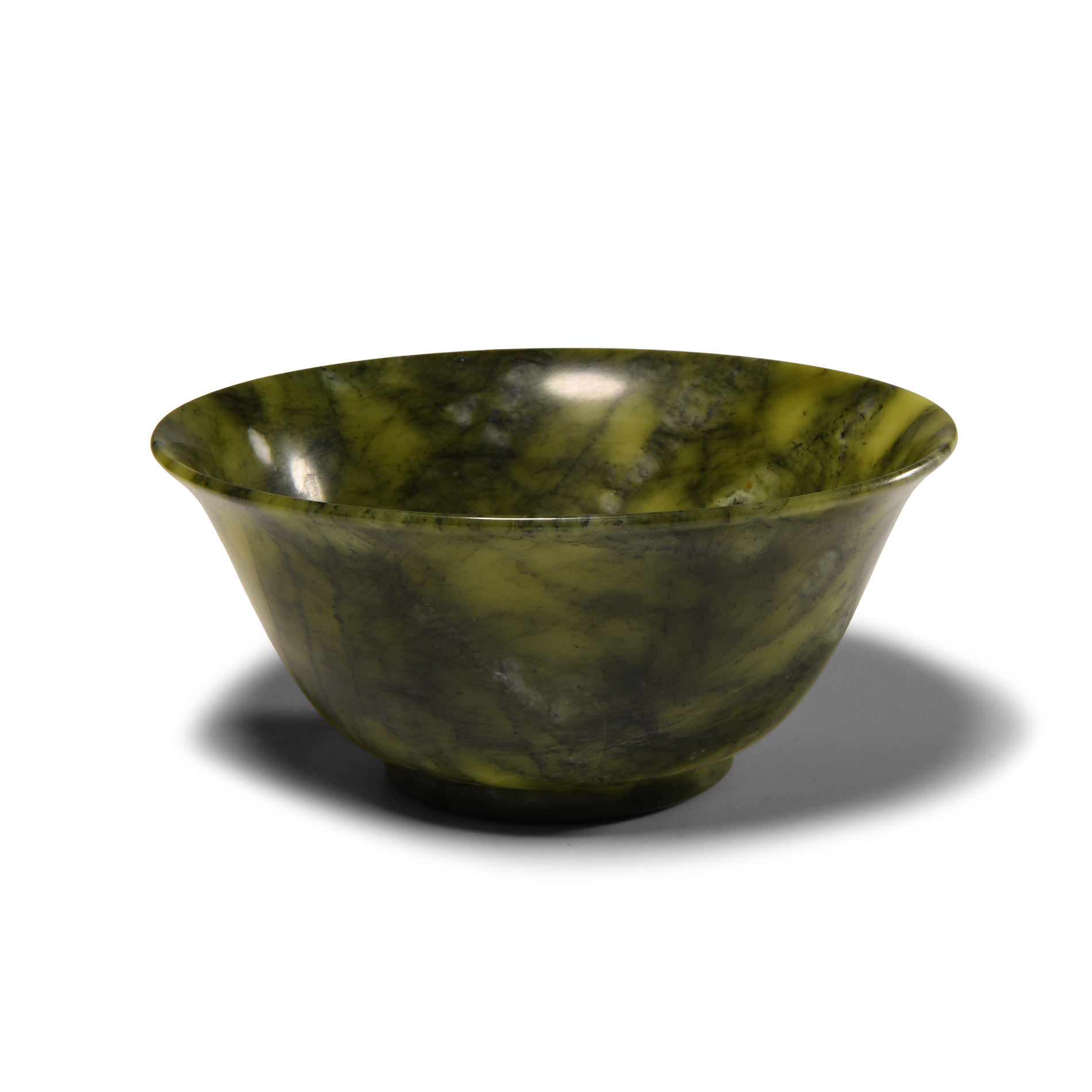
Chinese Mottled Green Jade Bowl
20TH CENTURY A.D.
5 in. (122 grams, 12.4 cm).
Polished with bell-shaped body, everted rim and shallow foot.
ProvenanceEx Hong Kong collection, 1980s.
CONDITIONTimeLine Auctions follows a vetting process to ensure the authenticity and legality of all items, reinforcing our commitment to integrity and responsible trading. Each antiquity, antique, and coin lot undergoes thorough examination by a vetting committee of at least ten external specialists, professional trade association members, scientists, and archaeologists: Our Vetting Process
AUCTIONS:
TimeLine is a leading auction house specialising in antiquities, ancient art, collectables, natural history, coins, medals, and books. Our auctions offer museums, collectors, historians, and enthusiasts the opportunity to acquire unique and historically significant pieces.
LOT 2012
Chinese Mottled Green Jade Bowl
Estimate £100 - 140€120 - 160 (for guidance only)$140 - 190 (for guidance only)
-
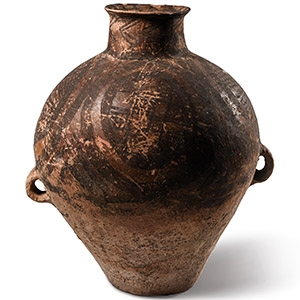
Chinese Painted Neolithic Jar
3rd-2nd millennium B.C.Sold for (Inc. bp): £208
With piriform body, short neck, everted rim and rectangular-section loop handles, the upper body painted with ovals filled with various geometric motifs and hatched lines, contained between plain bands, swags below, chevrons at the neck. 3.2 kg. 35.5 cm high
Ex West Country, UK, collection, 1990s. -
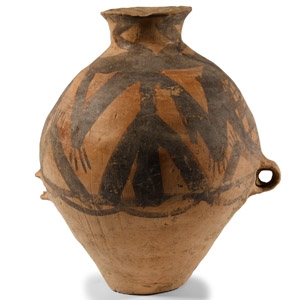
Chinese Neolithic Terracotta Jar
3rd-2nd millennium B.C.Estimate: £250 - 350 (+bp*)
Opening Bid: £125
With piriform body, waisted neck, everted rim and integral rectangular-section loop handles, circumferential bands of painted geometric motifs of hatched circles, chevrons and hands; one handle absent. 2.8 kg, 31 cm high
From a West Country, UK, collection, formed in the 1990s. -
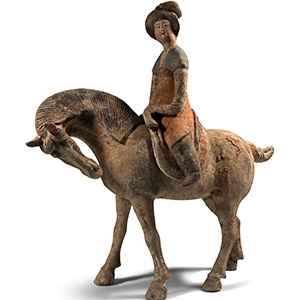
Chinese Tang Terracotta Courtly Lady on Horseback
Tang Dynasty, 618-907 A.D.Sold for (Inc. bp): £7,150
Modelled as a standing horse with detachable female rider; rider with dressed hair, ample sleeves, layered robes and painted face; horse with curved neck and bowed head, ears pricked; painted face, bridle, harness and saddle blanket. 4.25 kg total, 43.5 cm high
From a Hong Kong Collection, 1990s. Accompanied by a thermoluminescence analysis report no.C124a6 from Oxford Authentication. This lot has been checked against the Interpol Database of stolen works of art and is accompanied by search certificate no.12098-213520.
