
Loading, please wait...
LOT 2290
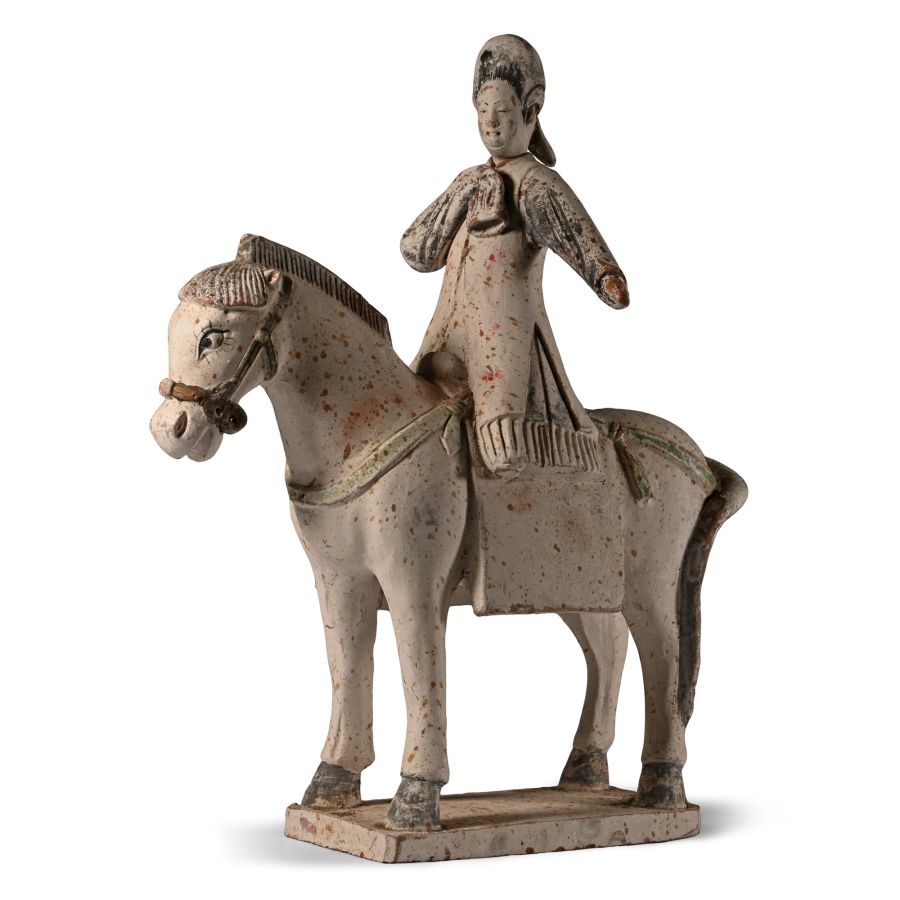
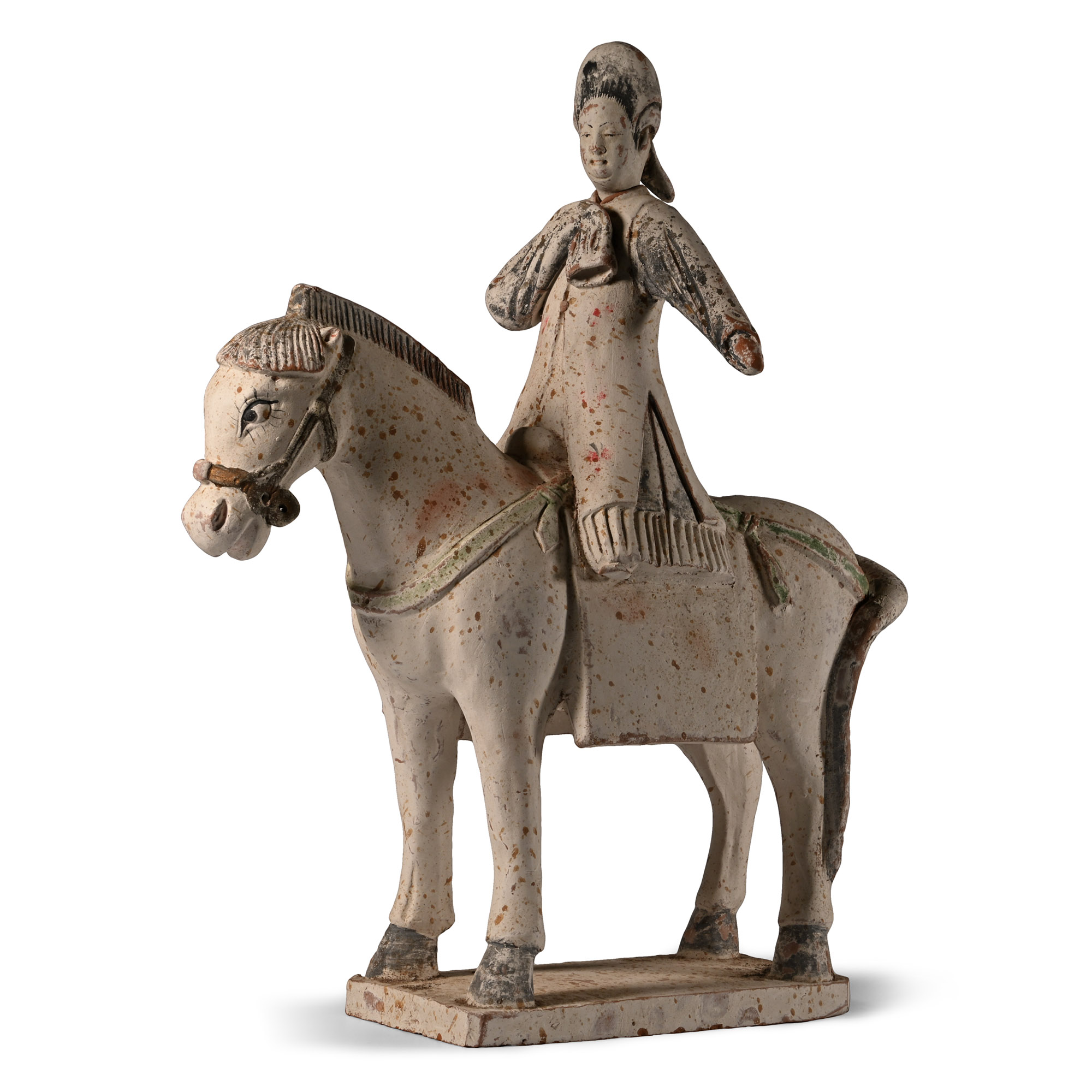
Chinese Ming Horse and Rider
LATE MING DYNASTY, 17TH CENTURY A.D. OR LATER
14 in. (2.6 kg, 35.5 cm high).
Unglazed ceramic figure of horse and rider; the horse standing on a rectangular base with brown bridle and green harness; female rider in flared riding coat with right hand within a long sleeve held at the chest, left arm extended; with speckled effect across the surface; separate head.
ProvenanceEx Cotswold, UK, collection, 1970-1990.
CONDITIONTimeLine Auctions follows a vetting process to ensure the authenticity and legality of all items, reinforcing our commitment to integrity and responsible trading. Each antiquity, antique, and coin lot undergoes thorough examination by a vetting committee of at least ten external specialists, professional trade association members, scientists, and archaeologists: Our Vetting Process
AUCTIONS:
TimeLine is a leading auction house specialising in antiquities, ancient art, collectables, natural history, coins, medals, and books. Our auctions offer museums, collectors, historians, and enthusiasts the opportunity to acquire unique and historically significant pieces.
LOT 2290
Chinese Ming Horse and Rider
Estimate £400 - 600€460 - 700 (for guidance only)$540 - 810 (for guidance only)
-
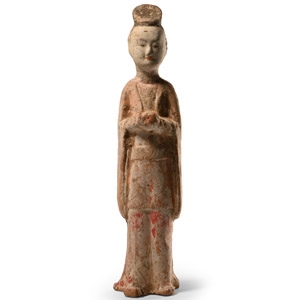
Chinese Tang Terracotta Courtly Figure
Tang Dynasty, 618-907 A.D. or laterSold for (Inc. bp): £117
Figure of a courtly lady in floor-length robes with hands clasped at the chest; delicately painted facial detailing and hair dressed in a high coiffure. 260 grams, 22 cm
From a West Country, UK, collection, 1990s. -
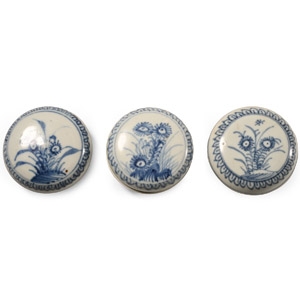
Ca Mau Cargo Shipwreck Glazed Blue and White Lidded Box Set of Three
Early 18th century A.D.Sold for (Inc. bp): £221
Comprising three powder boxes with painted floral motif to the lid and radiating petals around the low foot. 224 grams total, 64-67 mm
Ex Sotheby's, Amsterdam, 29-31 January 2007. Accompanied by an illustrated information sheet about the Ca Mau shipwreck.
The Ca Mau shipwreck refers to a cargo of Chinese porcelain sunk between 1723 and 1735 off the coast of Vietnam. The wreck was discovered by Vietnamese fishermen in 1998. It is believed the wreck was a merchant’s junk on its way from Canton (Guangzhou) to Batavia when it caught fire and sank. The ship was carrying goods destined for Dutch traders who had limited access to China and its ports. -
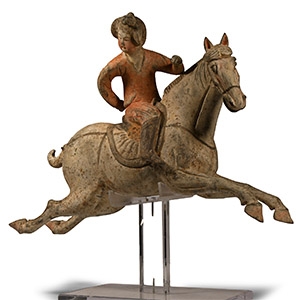
Chinese Tang Terracotta Polo Player
Tang Dynasty, 618-907 A.D.Sold for (Inc. bp): £2,600
The white horse in a dynamic pose with its legs and head extended, painted detailing to the harness and saddle blanket; female rider in a tight-fitting red robe with long sleeves, left arm raised and the right arm held behind her back; accompanied by a custom-made display stand. 6 kg total, 47.5 cm long
From a West Country, UK, collection, 1990s. Accompanied by a thermoluminescence analysis report no.09C26042024 from Laboratory Kotalla.
