
Loading, please wait...
LOT 2010
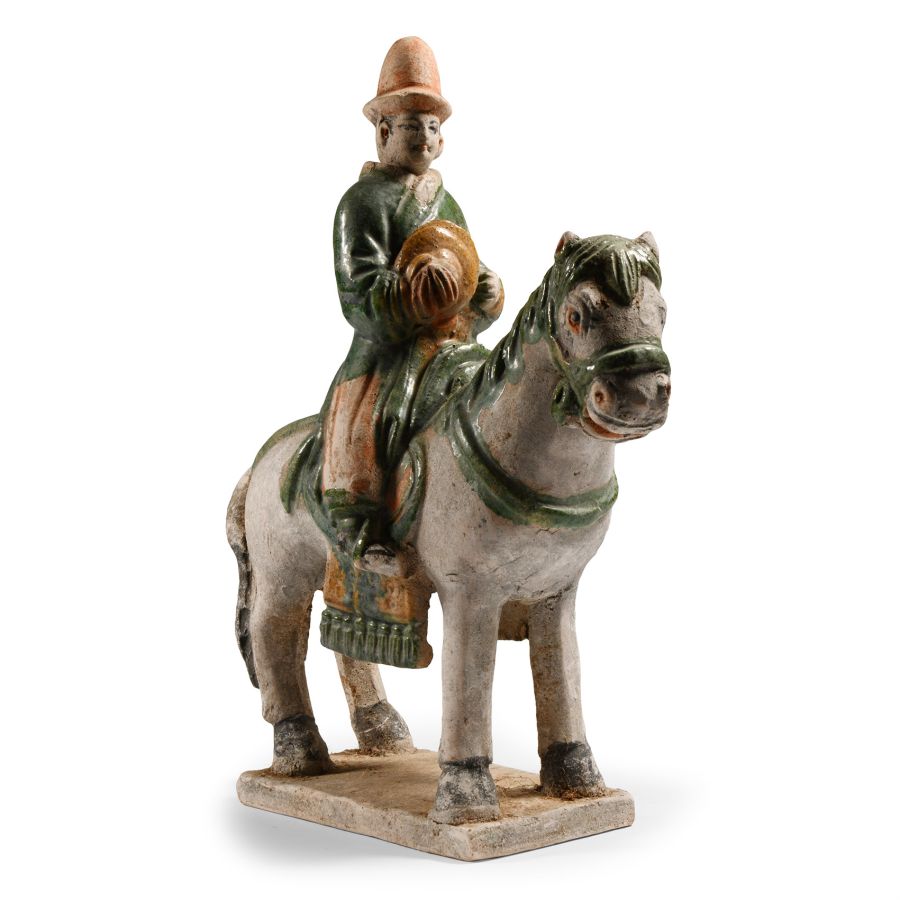
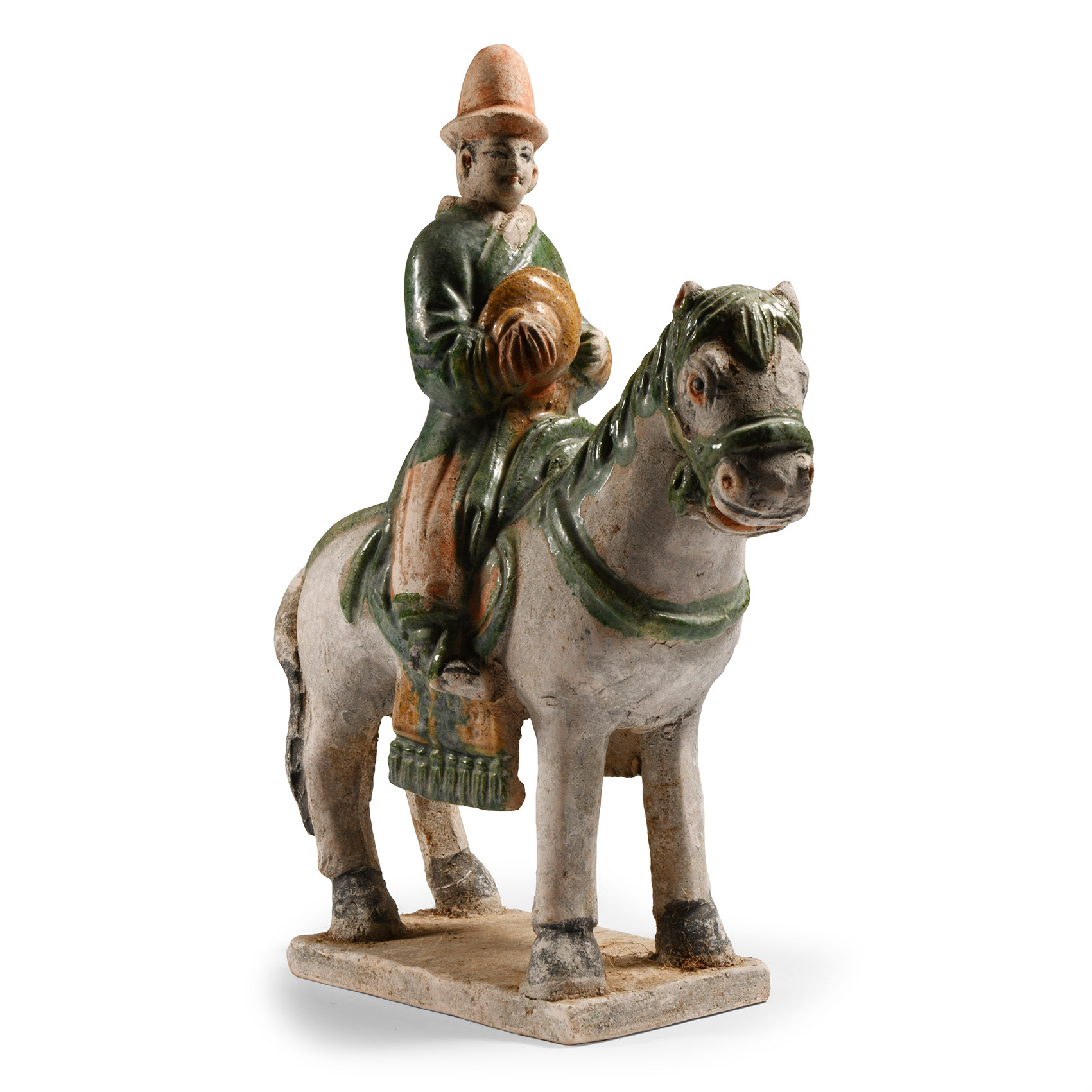
Chinese Ming Glazed Terracotta Horse and Rider
MING DYNASTY, 1368-1644 A.D. OR LATER
10 1/4 in. (1.18 kg, 26 cm high).
Modelled on a rectangular base, the horse standing in harness and with a long saddlecloth; the rider modelled seated in the saddle, arms held before the body, holding cymbals. [No Reserve]
ProvenanceNorth Yorkshire, UK, collection, 1990s.
CONDITIONTimeLine Auctions follows a vetting process to ensure the authenticity and legality of all items, reinforcing our commitment to integrity and responsible trading. Each antiquity, antique, and coin lot undergoes thorough examination by a vetting committee of at least ten external specialists, professional trade association members, scientists, and archaeologists: Our Vetting Process
AUCTIONS:
TimeLine is a leading auction house specialising in antiquities, ancient art, collectables, natural history, coins, medals, and books. Our auctions offer museums, collectors, historians, and enthusiasts the opportunity to acquire unique and historically significant pieces.
-
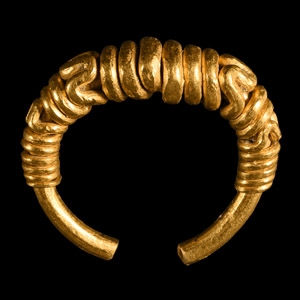
South East Asian Majapahit Gold Wire-Wrapped Ring
Java, 3rd-8th century A.D.Sold for (Inc. bp): £1,300
Comprising a penannular shank with a complex applied wound and twisted rod design. 13.6 grams, 26.73 mm overall, 18.60 mm internal diameter (approximate size British O 1/2, USA 7 1/4, Europe 15.61, Japan 15)
Private collection of Mr & Mrs Fischer, Munich, Germany, 1958-1998. London collection, 1999. -
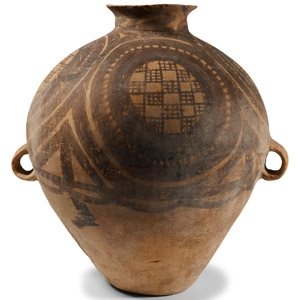
Chinese Neolithic Terracotta Jar
3rd-2nd millennium B.C.Estimate: £250 - 350 (+bp*)
Opening Bid: £125
With flared rim and two loop handles below the equator, bands of painted hatched ornament to the shoulders. 5 kg, 37.8 cm high
From a West Country, UK, collection, formed in the 1990s. -
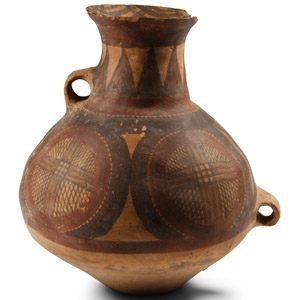
Chinese Painted Terracotta Neolithic Jar
3rd-2nd millennium B.C.Sold for (Inc. bp): £195
With broad shoulder and tapering walls, short cylindrical neck with everted rim; one loop handle to the equator and another to the shoulder; painted geometric motifs to the rim interior and upper body; rim chipped. 914 grams, 23.5 cm high
North Yorkshire, UK, collection, 1990s.
