
Loading, please wait...
LOT 2027
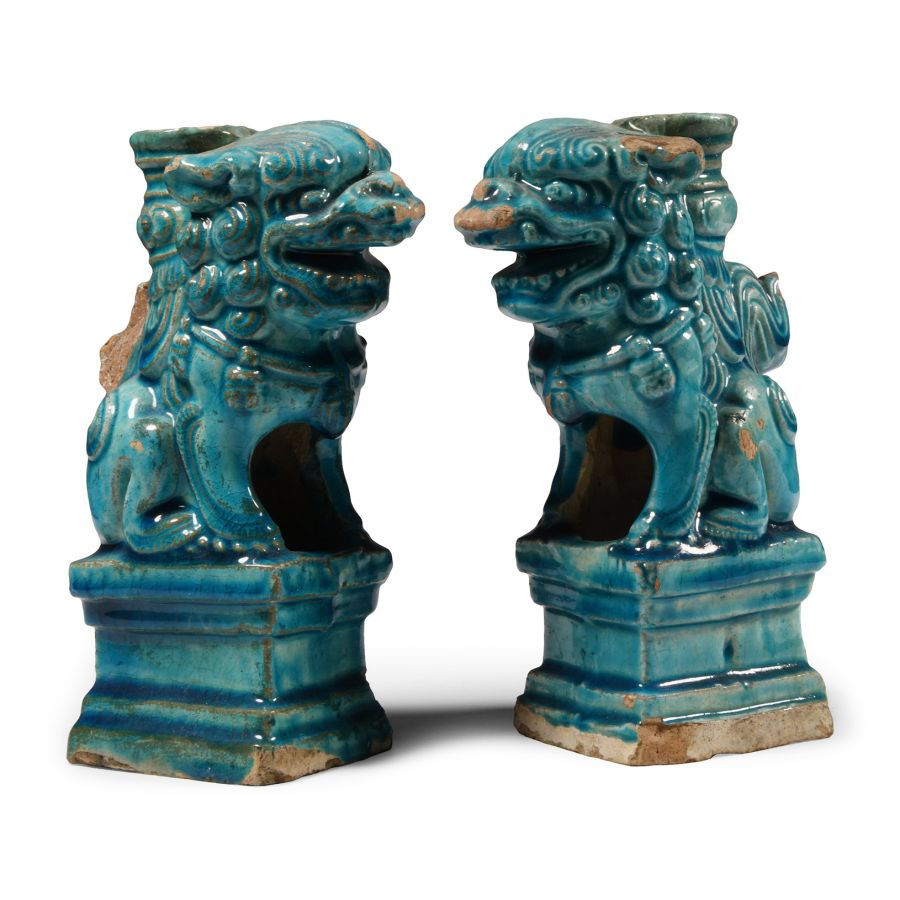
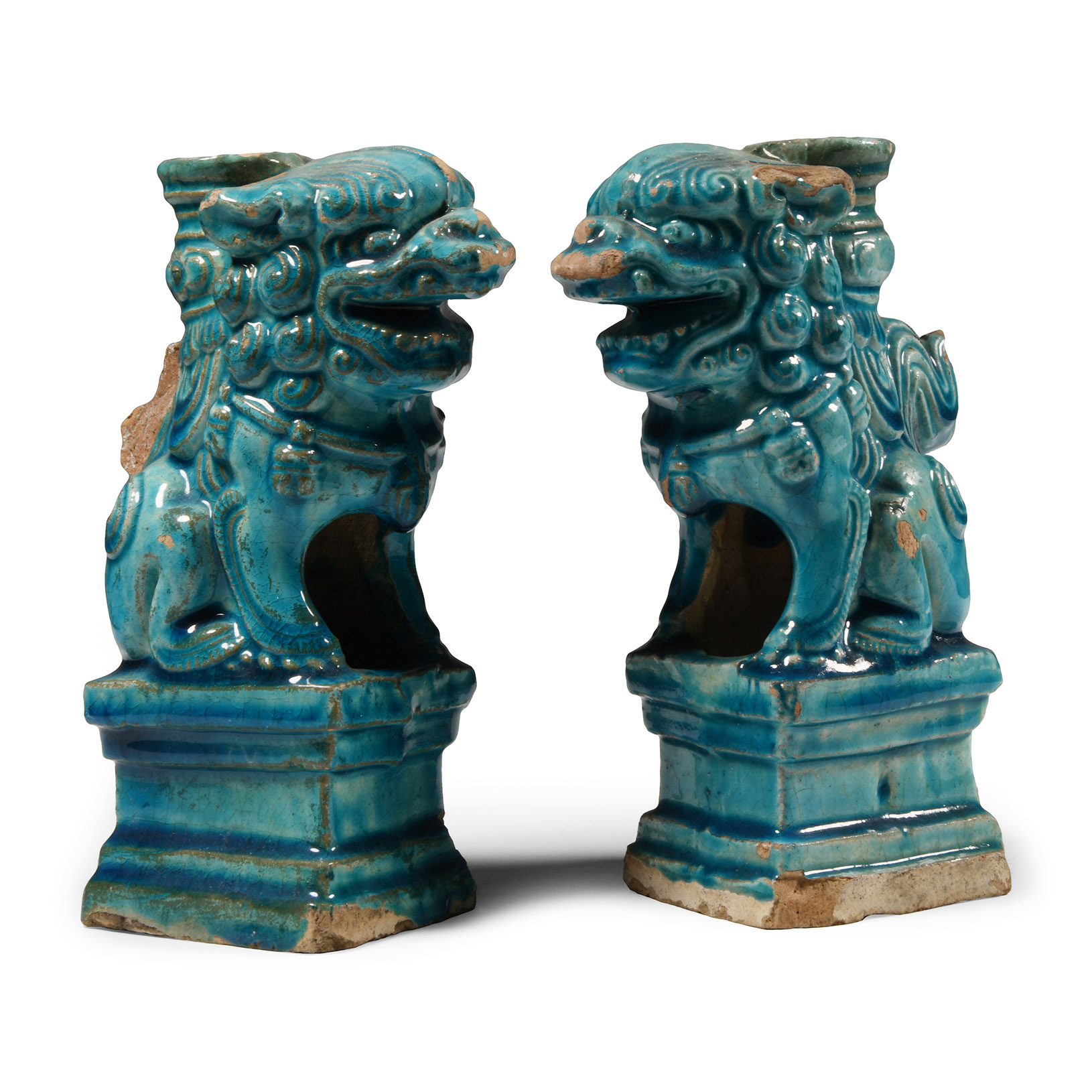
Chinese Ming Glazed Lion Candlestick Pair
MING DYNASTY, 1368-1644 A.D. OR LATER
6 1/4 in. (882 grams total, 16 cm each).
Matched pair of glazed candlesticks, each formed as a crouching lion on a rectangular socle plinth with trumpet-shaped stem to the back; chipped, usage wear. [2, No Reserve]
ProvenanceFrom a collection acquired on the UK art market from various auction houses and collections mostly before 2000.
From an important Cambridgeshire estate; thence by descent.
TimeLine Auctions follows a vetting process to ensure the authenticity and legality of all items, reinforcing our commitment to integrity and responsible trading. Each antiquity, antique, and coin lot undergoes thorough examination by a vetting committee of at least ten external specialists, professional trade association members, scientists, and archaeologists: Our Vetting Process
AUCTIONS:
TimeLine is a leading auction house specialising in antiquities, ancient art, collectables, natural history, coins, medals, and books. Our auctions offer museums, collectors, historians, and enthusiasts the opportunity to acquire unique and historically significant pieces.
-
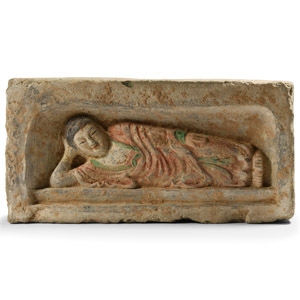
Large Chinese Wei Terracotta Brick with Lying Buddha
Northern Wei Dynasty, 386-534 A.D.Sold for (Inc. bp): £260
With recess to the obverse, high-relief reclining figure of Buddha with one hand supporting his head. 4.2 kg, 32.5 cm wide
From a West Country, UK, collection, formed in the 1990s. -
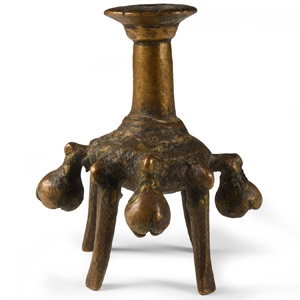
South East Asian Bronze Kohl Pot
18th-19th century A.D.Sold for (Inc. bp): £13
Rectangular reservoir with four spindle legs, conical neck and flared rim to the mouth, four angled spurs ending in crotal bells. 280 grams, 96 mm
From the H.N. collection, Milton Keynes, Berkshire, UK, 1990s. -
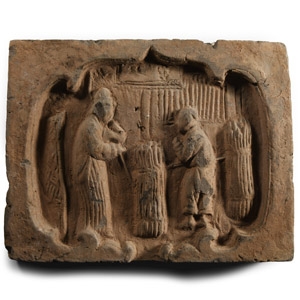
Chinese Song Terracotta Tile
Song Dynasty, circa 960-1279 A.D.Sold for (Inc. bp): £117
Rectangular wall tile with recess, two figures in a domestic setting. 1.49 kg, 24 cm
Ex Cotswold collection, UK, 1990s.
