
Loading, please wait...
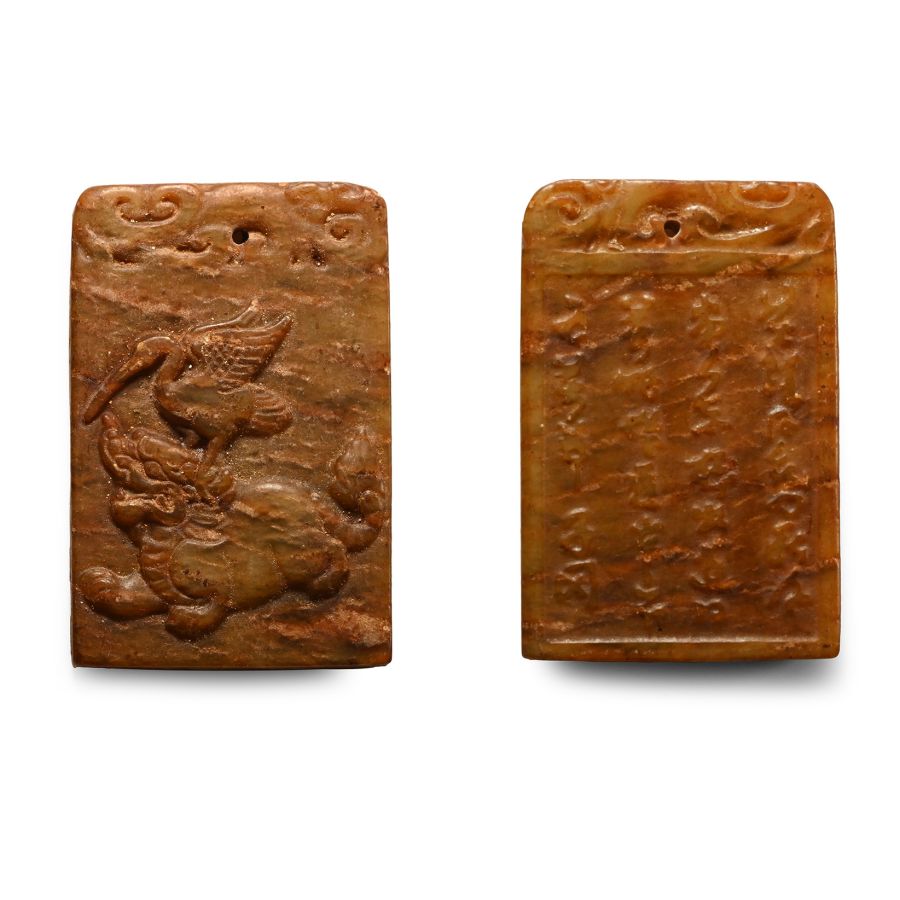

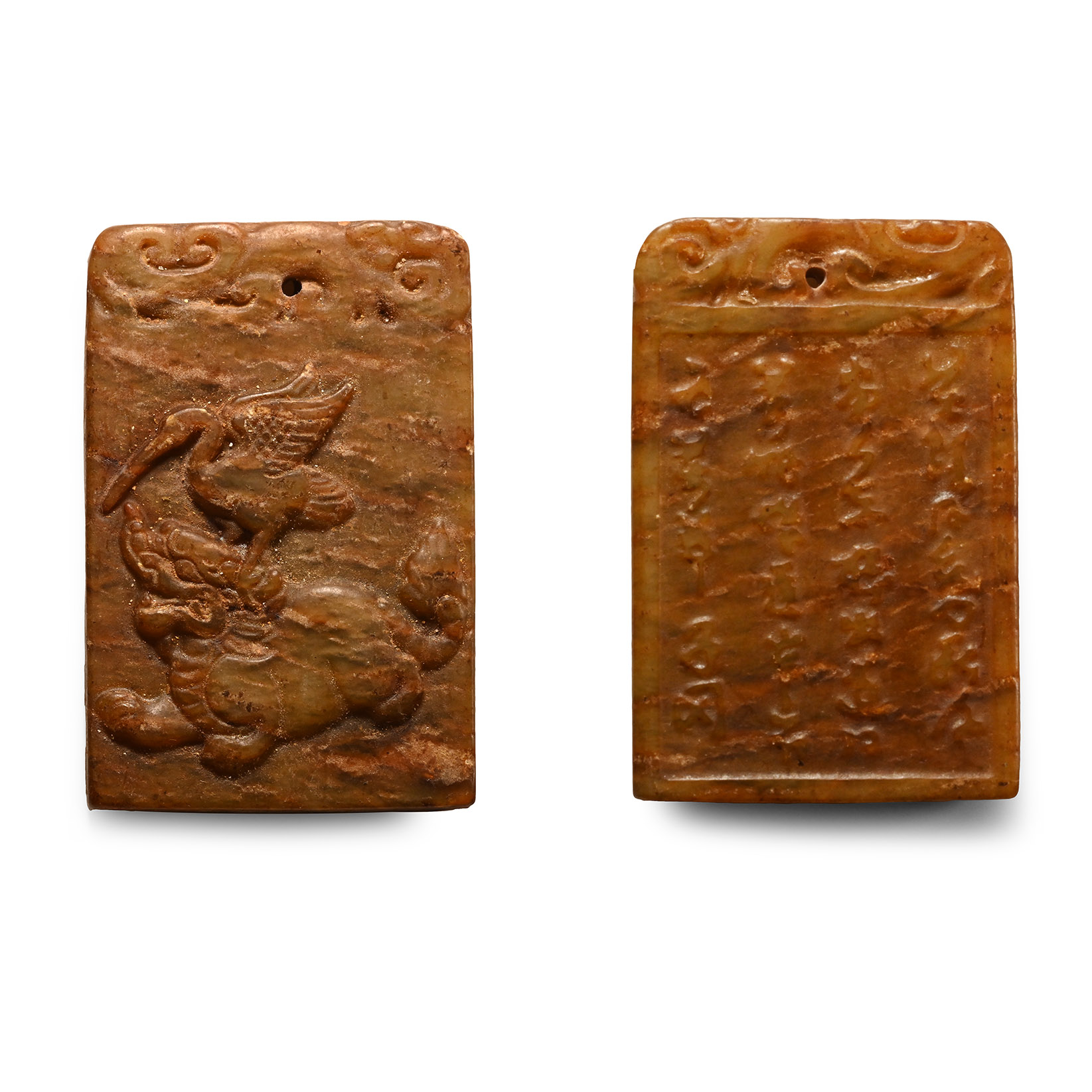
LOT 1974
Chinese Hardstone Plaque Pendant
20TH CENTURY A.D.
2 3/8 x 1 1/2 in. (46 grams, 59 x 39 mm).
Obverse with high-relief scene of a crane and a running dog, reverse with recessed panel and four columns of reserved text. [No Reserve]
ProvenanceEx Paris gallery, 1980-1990.
From a Parisian collection.
TimeLine Auctions follows a vetting process to ensure the authenticity and legality of all items, reinforcing our commitment to integrity and responsible trading. Each antiquity, antique, and coin lot undergoes thorough examination by a vetting committee of at least ten external specialists, professional trade association members, scientists, and archaeologists: Our Vetting Process
AUCTIONS:
TimeLine is a leading auction house specialising in antiquities, ancient art, collectables, natural history, coins, medals, and books. Our auctions offer museums, collectors, historians, and enthusiasts the opportunity to acquire unique and historically significant pieces.
-
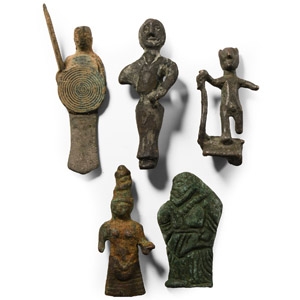
Bronze Figurine Group
20th century A.D. or earlierSold for (Inc. bp): £33
Including a warrior with spear and shield, D-section plaque with bound captive and other types. 319 grams total, 62-92 mm
From a collection acquired on the UK art market from various auction houses and collections mostly before 2000. From an important Cambridgeshire estate; thence by descent. -
.jpg)
Indus Valley Style Terracotta Bull Figure
20th century A.D.Sold for (Inc. bp): £59
Model zebu with applied black linear ornament. 350 grams, 16 cm
From the property of the late Mr SM, London, UK, 1969-1999. -
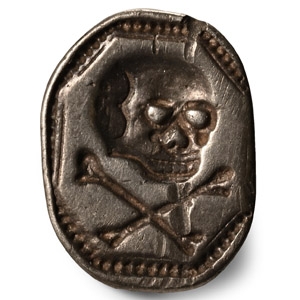
Tudor Silver Seal Matrix Head with Skull and Crossed Bones
16th-17th century A.D.Sold for (Inc. bp): £650
Ellipsoid in plan with domed upper section (shank absent), incuse skull in three-quarter view and over crossed long bones within a border. 1.56 grams, 12 mm
From an old jewellery collection. Property of an Essex, UK, gentleman.
