
Loading, please wait...
LOT 2210
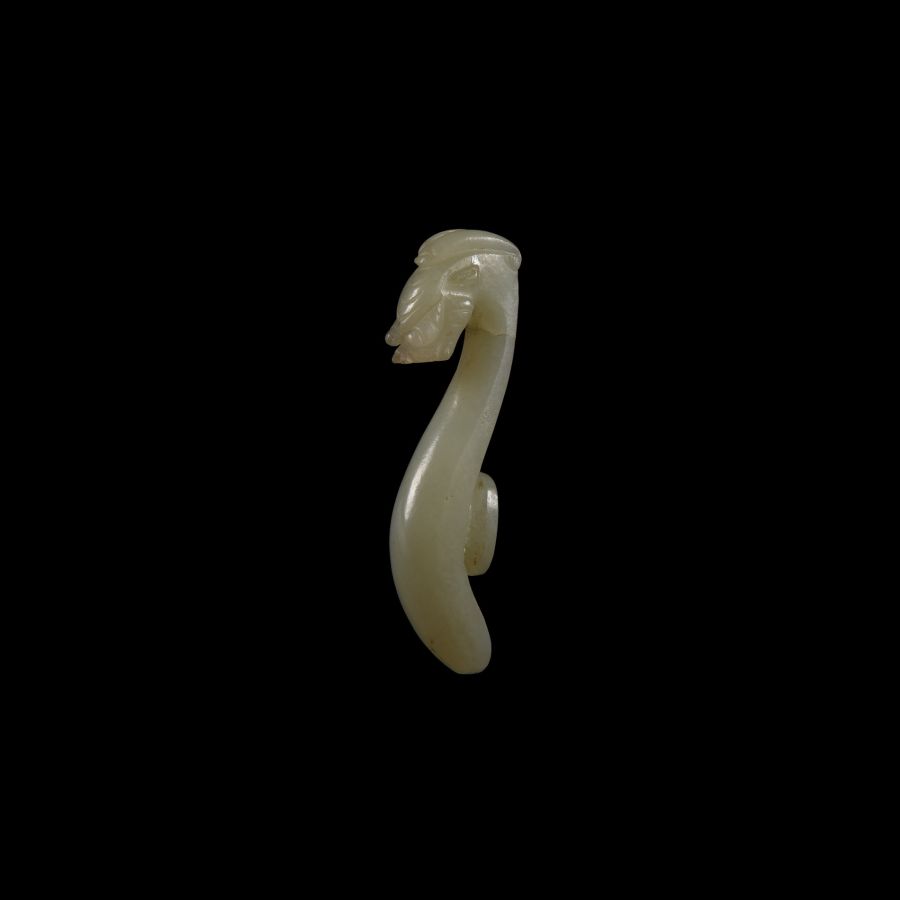
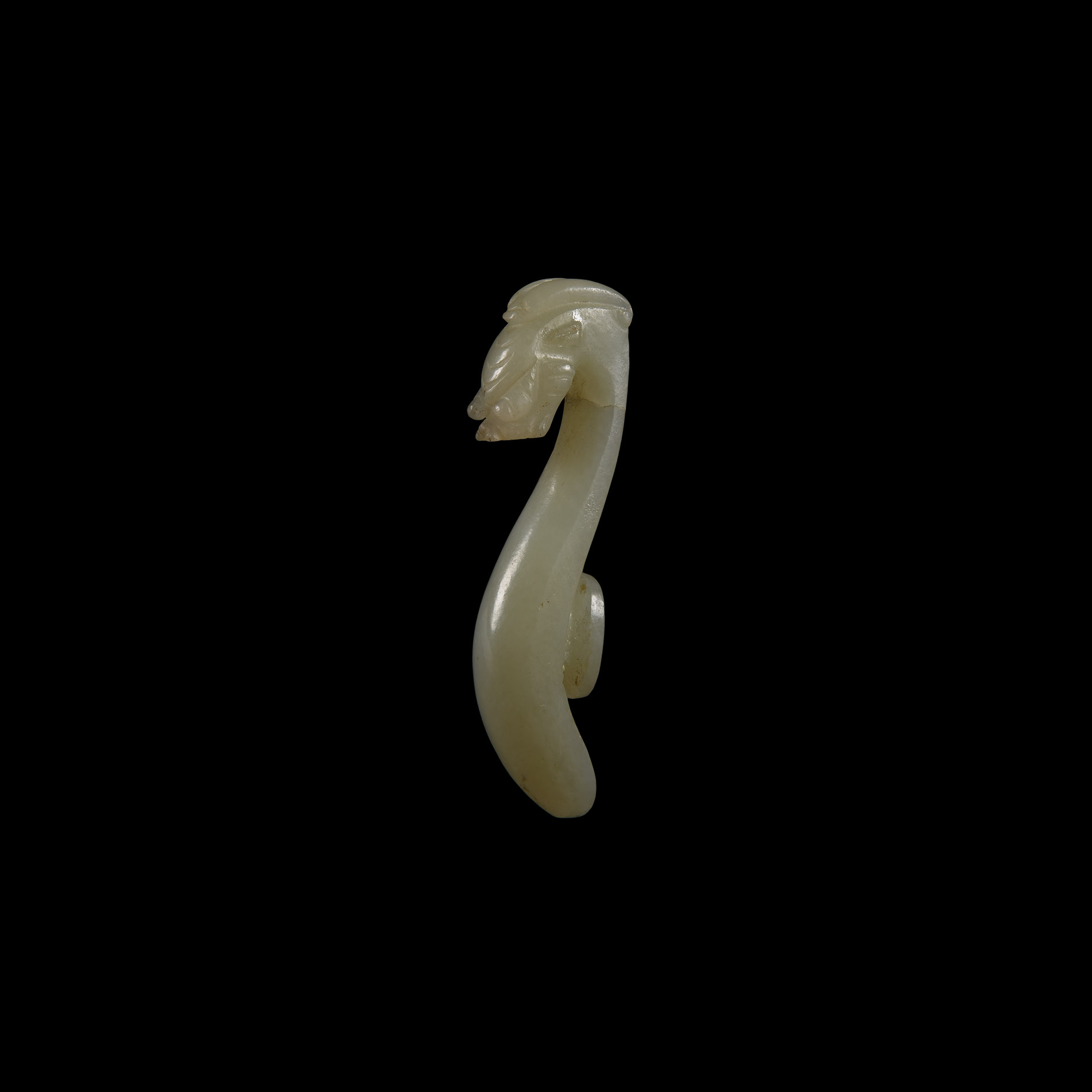
Chinese Han Style White Jade Garment Fastener
19TH CENTURY A.D.
3 in. (32.3 grams, 78 mm).
With a roughly S-shaped profile, one terminal carved as a dragon's head with bulging eyes and snub nose; oval lug to reverse; repaired.
ProvenanceAcquired 1990s.
Ex French collection.
TimeLine Auctions follows a vetting process to ensure the authenticity and legality of all items, reinforcing our commitment to integrity and responsible trading. Each antiquity, antique, and coin lot undergoes thorough examination by a vetting committee of at least ten external specialists, professional trade association members, scientists, and archaeologists: Our Vetting Process
AUCTIONS:
TimeLine is a leading auction house specialising in antiquities, ancient art, collectables, natural history, coins, medals, and books. Our auctions offer museums, collectors, historians, and enthusiasts the opportunity to acquire unique and historically significant pieces.
LOT 2210
Chinese Han Style White Jade Garment Fastener
Estimate £180 - 240€210 - 280 (for guidance only)$240 - 320 (for guidance only)
-
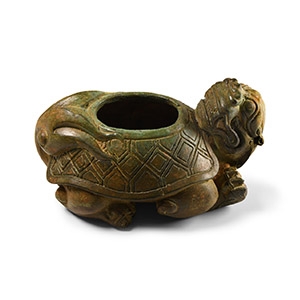
Chinese Han Style Bronze Dragon Turtle
20th century A.D.Estimate: £300 - 400 (+bp*)
Opening Bid: £150
Featuring a turtle's body and dragonesque head and paws, with a flame-like tail; oval vessel opening to apex. 505 grams, 11.3cm wide
Acquired 1970s-1990s. Ex West Country collection. -
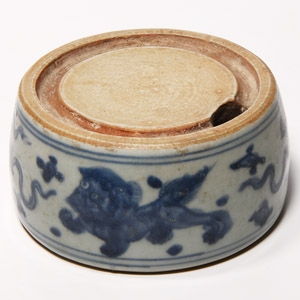
Chinese Ming Blue and White Artist Palette
Qing Dynasty, 18th-19th century A.D.Sold for (Inc. bp): £52
Squat glazed artist's water container with brush-hole and dished palette to the upper face, frieze of lions and flowers to the sidewall, earlier Zhengde four character reign mark to the underside. 535 grams, 11 cm wide
Ex Avon, UK, collection, 1980s. -
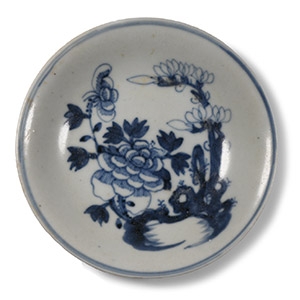
Blue and White Porcelain Tek Sing Shipwreck Bowl
Sunk Belvidere Shoals, 6th February 1822 A.D.Sold for (Inc. bp): £26
Decorated with floral motifs to the interior and exterior walls, within plain circumferential borders; with original Nagel Auctions label, Stuttgart, Germany. 205 grams, 15.4 cm
Ex Nagel Auctions, Stuttgart, Germany, November 2000.
The Tek Sing (True Star) wreck is one of the famous recovery stories of the 20th century. Sailing from the port of Xiamen (then known as Amoy) in February 1822 the vessel Tek Sing was bound for Jakarta, Indonesia laden with porcelain goods and 1600 Chinese emigrants. The captain decided to pass through the Gaspar Strait, between the Bangka-Belitung Islands, and ran aground on a reef. The vessel sank in about 100 feet of water. The next morning, February 7, an English East Indian vessel captained by James Pearl, passing through the same waters, encountered debris and some survivors and managed to rescue about 190 of the latter.
