
Loading, please wait...
LOT 2237
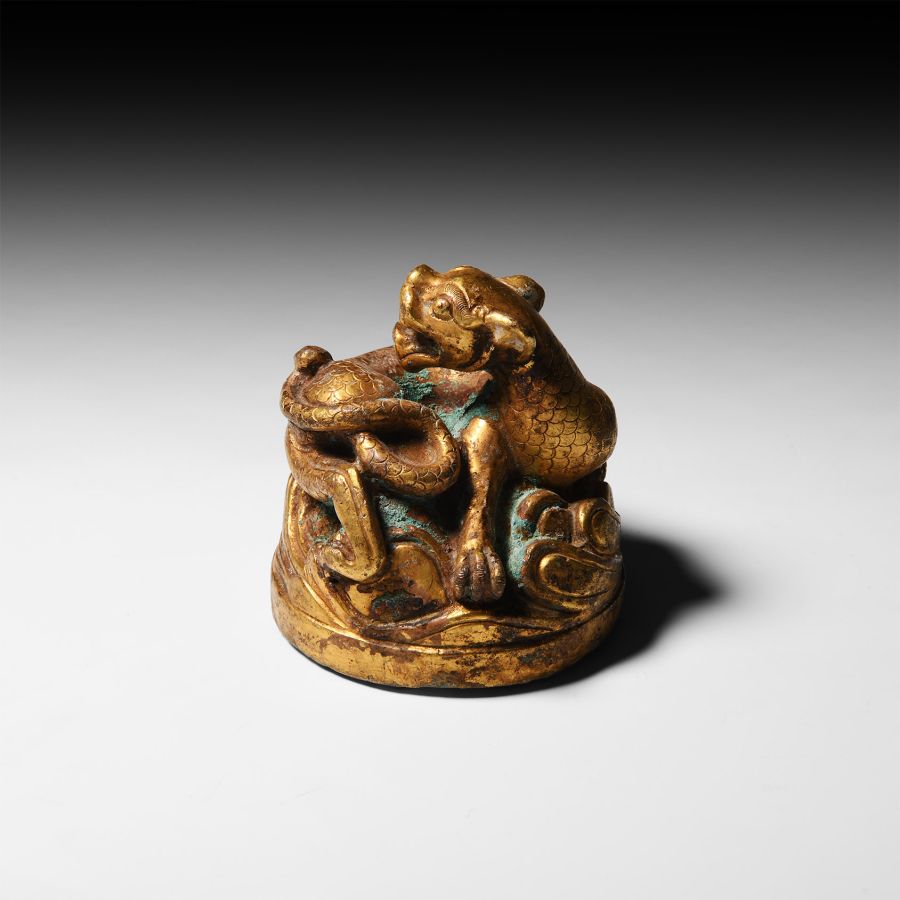
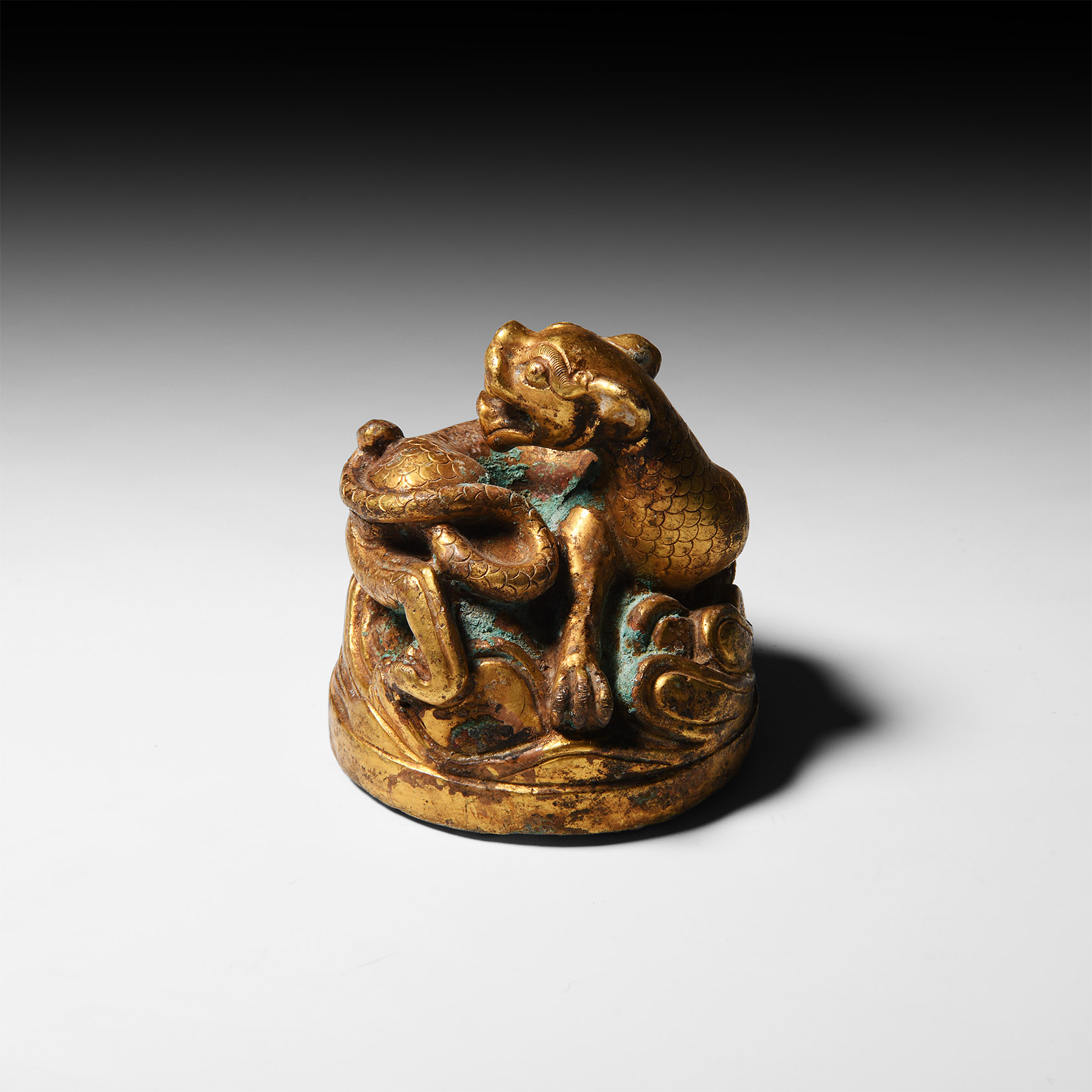
Chinese Han Style Gilt Bronze Coiled Dragonesque Scroll Weight
20TH CENTURY A.D. OR EARLIER
2 5/8 in. (367 grams, 66 mm).
Modelled in a dynamic coiled posture on a circular base from which fingers of water rise in response to the animal's muscular movements, its slender body with a dense covering of scales, its long and scaly tail curled upwards and its roaring mouth ajar, revealing a row of squared teeth and a protruding tongue, its eyes bulbous and large ears pricked.
ProvenanceAcquired 1970s.
West Country, UK, collection.
TimeLine Auctions follows a vetting process to ensure the authenticity and legality of all items, reinforcing our commitment to integrity and responsible trading. Each antiquity, antique, and coin lot undergoes thorough examination by a vetting committee of at least ten external specialists, professional trade association members, scientists, and archaeologists: Our Vetting Process
AUCTIONS:
TimeLine is a leading auction house specialising in antiquities, ancient art, collectables, natural history, coins, medals, and books. Our auctions offer museums, collectors, historians, and enthusiasts the opportunity to acquire unique and historically significant pieces.
LOT 2237
Chinese Han Style Gilt Bronze Coiled Dragonesque Scroll Weight
Estimate £180 - 240€210 - 280 (for guidance only)$240 - 320 (for guidance only)
-
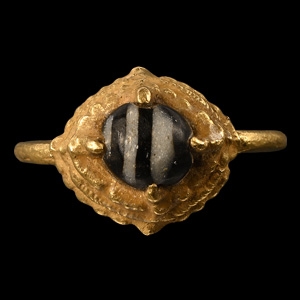
South East Asian Javanese Gold Ring with Gemstone
Circa 13th-15th century A.D.Sold for (Inc. bp): £1,170
Comprising a slender hoop supporting an ellipsoid bezel with granulated tiers and claw setting, inset black and white glass or quartz oblate bead. 6.07 grams, 25.7 mm overall, 17.20 mm internal diameter (approximate size British M 1/2, USA 6 1/4, Europe 13.09, Japan 12)
Acquired 1970-2010. Collection of a late Japanese gentleman. -
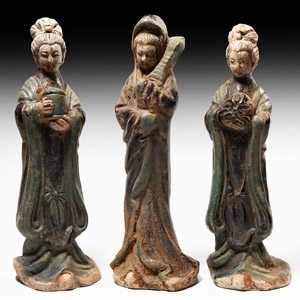
Chinese Late Ming Glazed Ceramic Lady Group
Late Ming Dynasty-early Qing Dynasty, 16th-17th century A.D.Estimate: £300 - 400 (+bp*)
Opening Bid: £150
Comprising: standing female in blue robe holding a stringed instrument to her shoulder; similar standing female holding a gourd to her chest; similar standing female holding a lidded casket. 1.5 kg total, 23-24 cm
Acquired 1970s. West Country, UK, collection. -
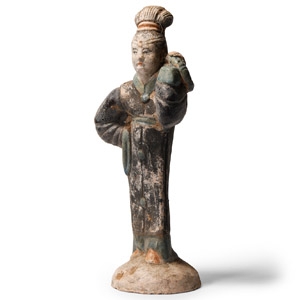
Chinese Qing Glazed Ceramic Female Attendant
Qing Dynasty, 1644-1911 A.D.Estimate: £100 - 140 (+bp*)
Opening Bid: £50
Modelled in the round standing on a domed base, wearing floor length robes with voluminous sleeves, hair dressed in an elaborate style, holding a wreath in one hand over the shoulder; remains of polychrome pigmentation. 505 grams, 22.8 cm high
Ex Cotswold, UK, collection, 1970-1990.
