
Loading, please wait...
LOT 2173
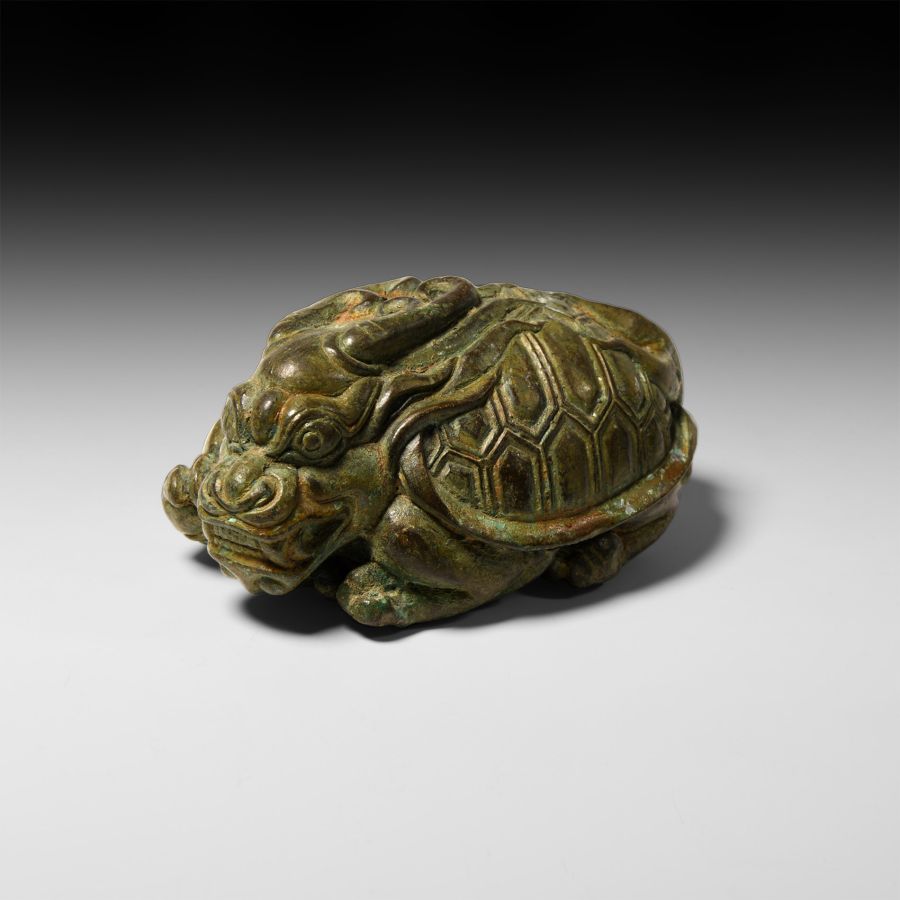
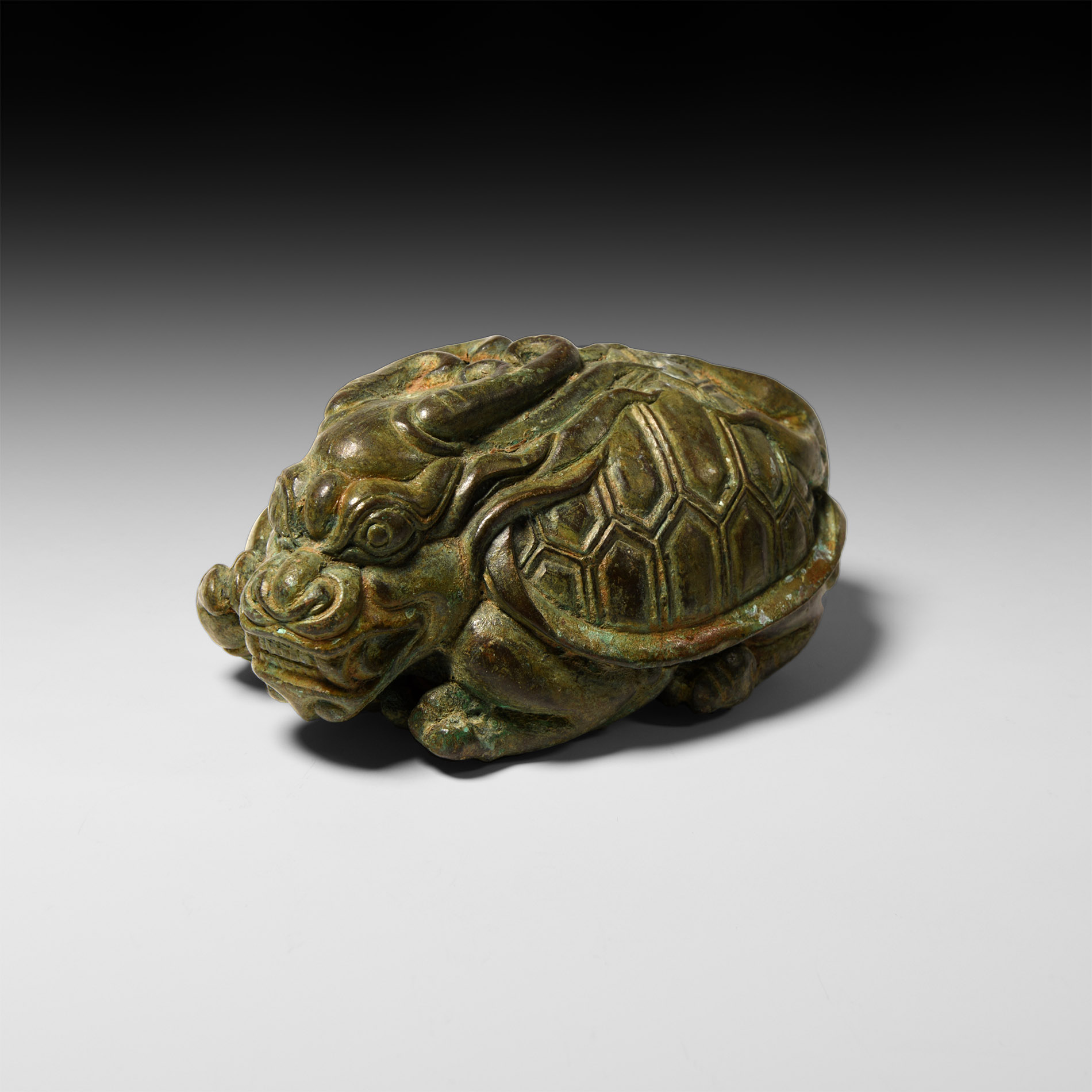
Chinese Han Style Bronze Weight
20TH CENTURY A.D.
4 1/4 in. (447 grams, 10.9 cm).
In the form of a chimera, with a tortoise-like shell, dragonesque head and claws and flaming tail; hollow-formed.
ProvenanceAcquired 1980-1990s.
From a West Country collection.
TimeLine Auctions follows a vetting process to ensure the authenticity and legality of all items, reinforcing our commitment to integrity and responsible trading. Each antiquity, antique, and coin lot undergoes thorough examination by a vetting committee of at least ten external specialists, professional trade association members, scientists, and archaeologists: Our Vetting Process
AUCTIONS:
TimeLine is a leading auction house specialising in antiquities, ancient art, collectables, natural history, coins, medals, and books. Our auctions offer museums, collectors, historians, and enthusiasts the opportunity to acquire unique and historically significant pieces.
LOT 2173
Chinese Han Style Bronze Weight
Estimate £180 - 240€210 - 280 (for guidance only)$240 - 320 (for guidance only)
-
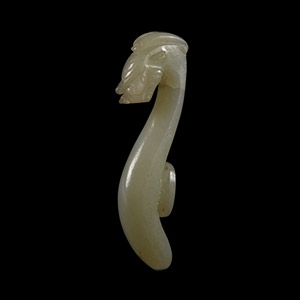
Chinese Han Style White Jade Garment Fastener
19th century A.D.Estimate: £180 - 240 (+bp*)
Opening Bid: £90
With a roughly S-shaped profile, one terminal carved as a dragon's head with bulging eyes and snub nose; oval lug to reverse; repaired. 32.3 grams, 78 mm
Acquired 1990s. Ex French collection. -
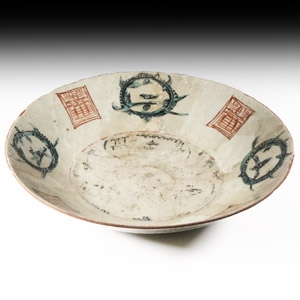
Chinese Ming Ceramic Provincial Charger
Ming Dynasty, 16th-17th century A.D.Sold for (Inc. bp): £78
With hand-painted decoration including chop-seals and landscape vignettes. 1.6 kg, 36 cm wide
Acquired early 2000s. Property of a Suffolk, UK, gentleman. Property of an Essex, UK, gentleman. -
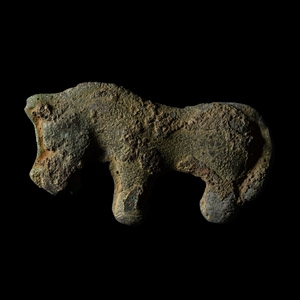
Chinese Ordos Bronze Animal Mount
6th-2nd century B.C. or laterEstimate: £80 - 100 (+bp*)
Opening Bid: £40
Formed as a standing horse, its head facing downwards; some remaining detailing to the body and tail; two mounting lugs to the reverse. 75 grams, 86 mm
Fine condition.
Acquired 1980-2015. Ex Abelita family collection.
