
Loading, please wait...
LOT 2201
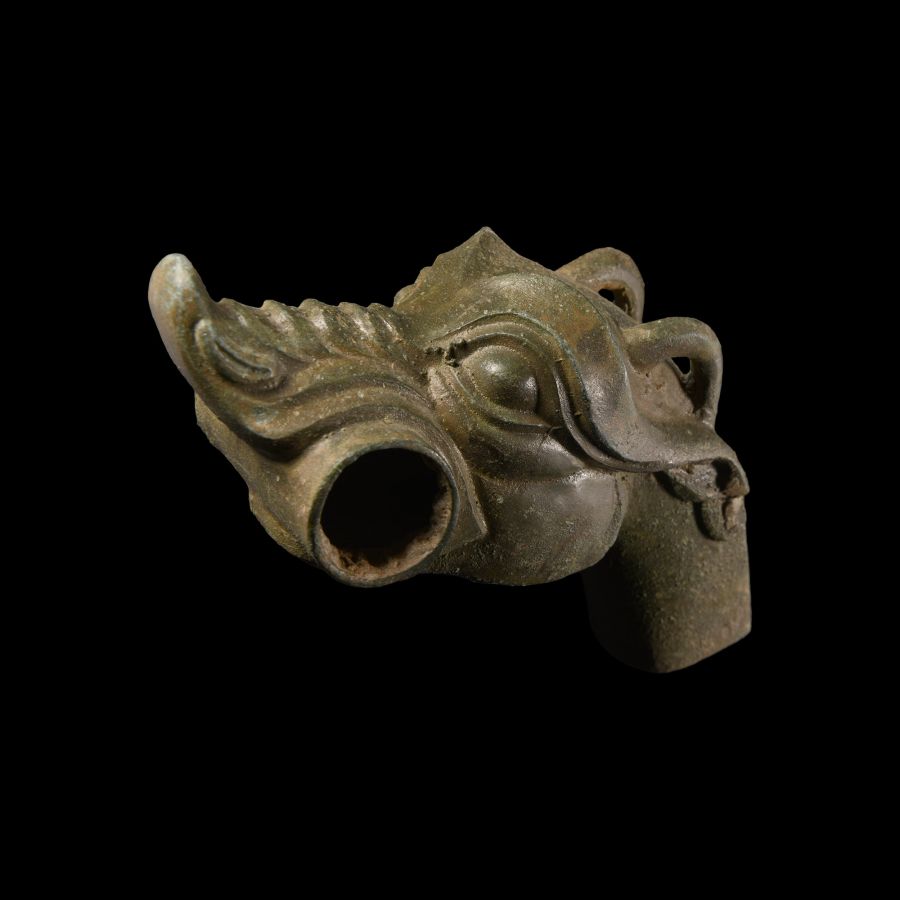
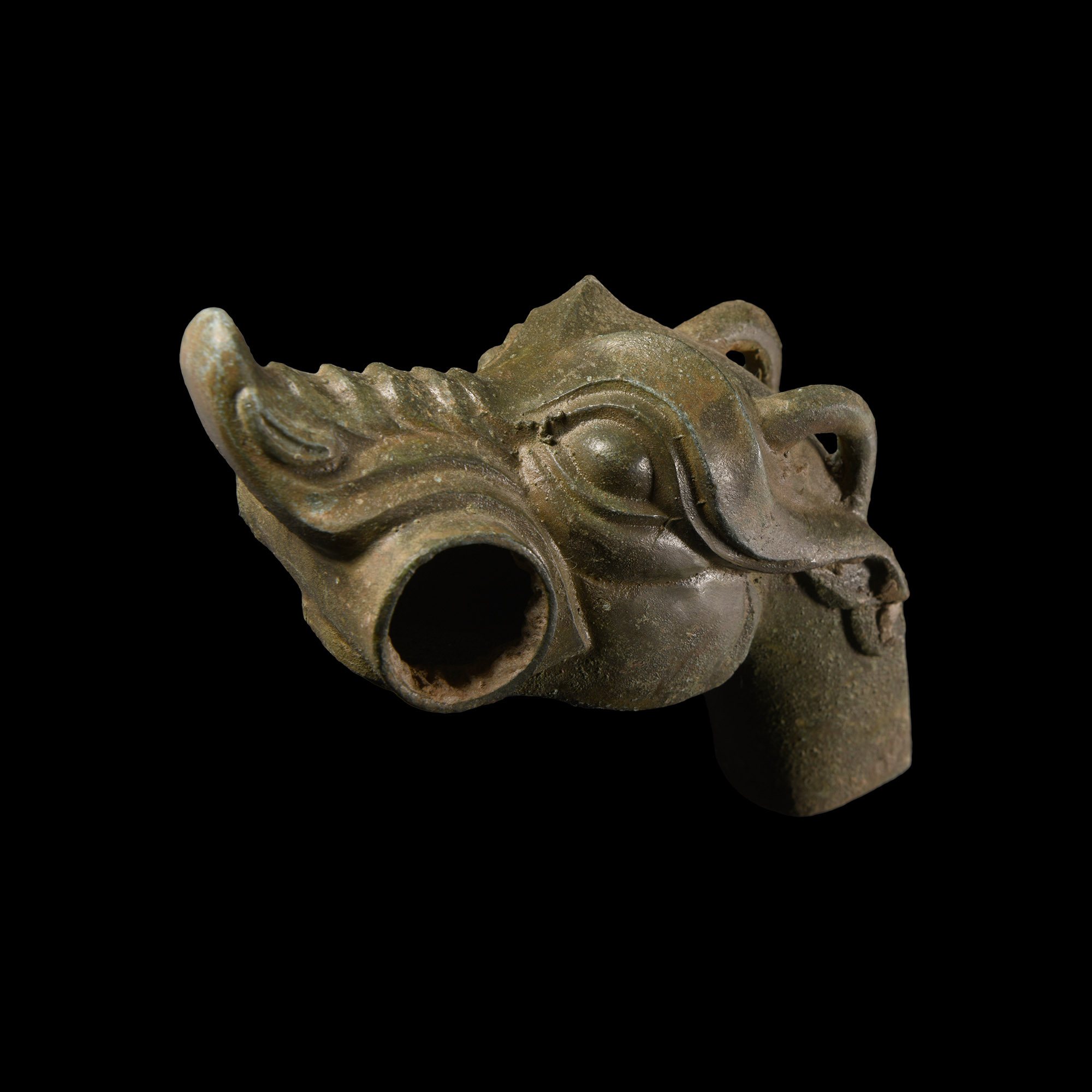
Chinese Han Style Bronze Dragon's Head Finial
20TH CENTURY A.D.
4 in. (292 grams, 10 cm).
Formed as a beast head with stylised features, ears formed as suspension loops and tubular socket held in the animal's mouth; neck forming a semi-circular socket.
ProvenanceAcquired 1980-1990s.
Ex West Country, UK, collection.
TimeLine Auctions follows a vetting process to ensure the authenticity and legality of all items, reinforcing our commitment to integrity and responsible trading. Each antiquity, antique, and coin lot undergoes thorough examination by a vetting committee of at least ten external specialists, professional trade association members, scientists, and archaeologists: Our Vetting Process
AUCTIONS:
TimeLine is a leading auction house specialising in antiquities, ancient art, collectables, natural history, coins, medals, and books. Our auctions offer museums, collectors, historians, and enthusiasts the opportunity to acquire unique and historically significant pieces.
LOT 2201
Chinese Han Style Bronze Dragon's Head Finial
Estimate £200 - 300€230 - 350 (for guidance only)$270 - 410 (for guidance only)
-
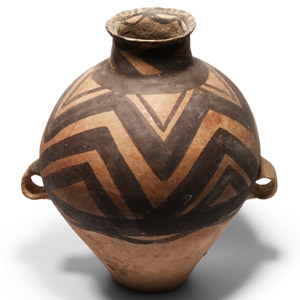
Chinese Neolithic Painted Ceramic Jar
3rd-2nd millennium B.C.Sold for (Inc. bp): £293
Piriform bodied and decorated with a frieze of chevrons to the upper body and neck; loop handles to the equator. 2.7 kg, 31.5 cm high
Ex Bath, Avon, UK, collection, 1990s. -
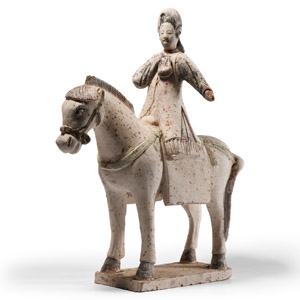
Chinese Ming Glazed Ceramic Horse and Rider
Late Ming Dynasty, 17th century A.D. or laterEstimate: £300 - 400 (+bp*)
Opening Bid: £167
Unglazed ceramic figure of horse and rider; the horse standing on a rectangular base with brown bridle and green harness; female rider in flared riding coat with right hand within a long sleeve held at the chest, left arm extended; with speckled effect across the surface; separate head. 2.6 kg, 35.5 cm high
Ex Cotswold, UK, collection, 1970-1990. -
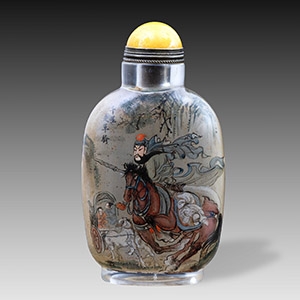
Chinese Glass Warrior on Horseback Snuff Bottle, Signed Ye Zhongsan
Dated 1900-1910 A.D.Estimate: £600 - 800 (+bp*)
Opening Bid: £240
The scene painted on the interior of one face, Chinese characters painted to the reverse, yellow cabochon to the lid. 75.6 grams, 92 mm high
Property of a lady, from her grandfather's collection, 1960s-1970s; thence by descent.
