
Loading, please wait...
LOT 2026
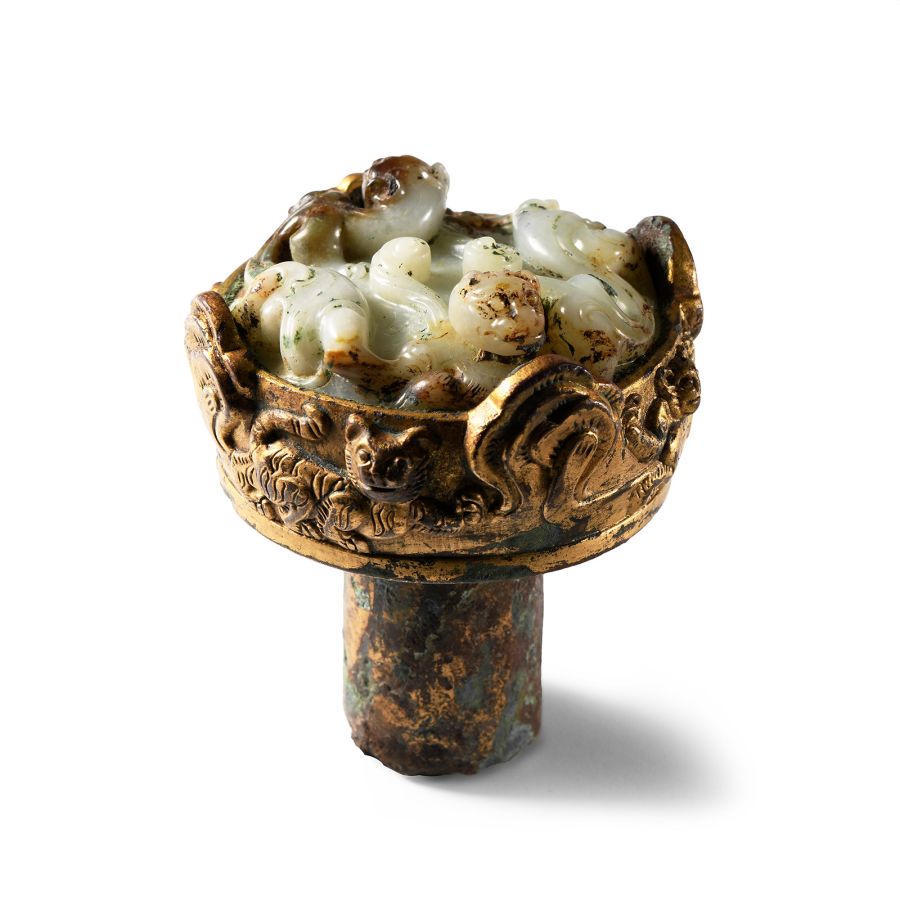
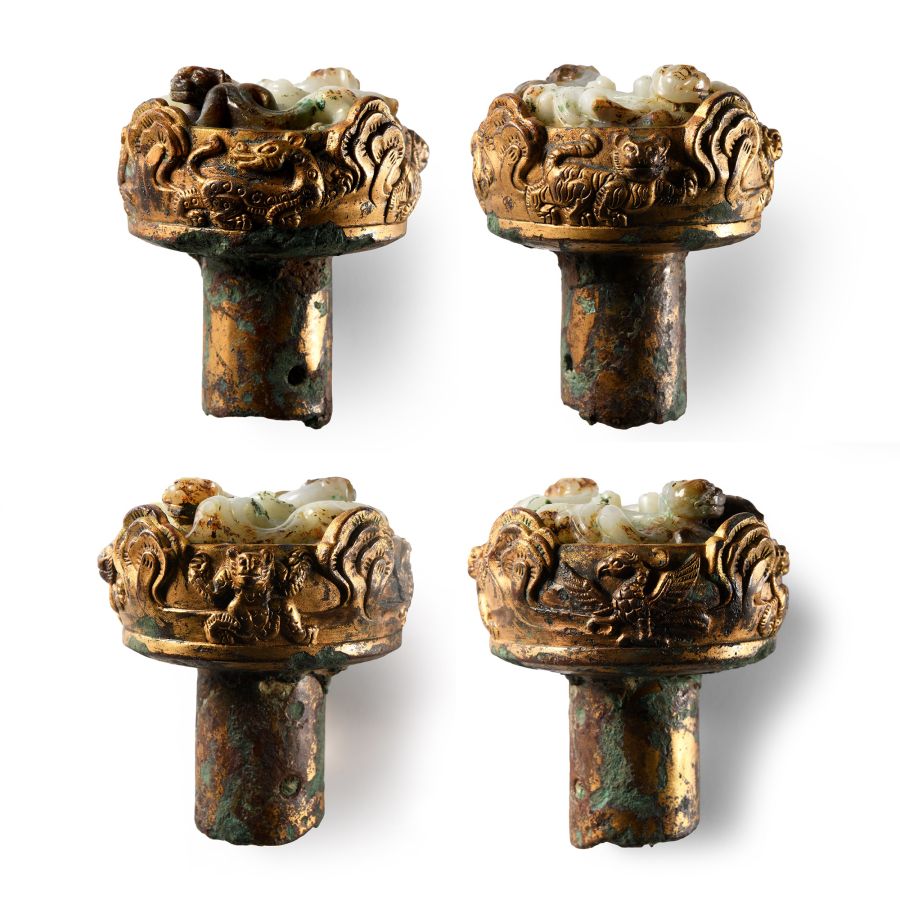
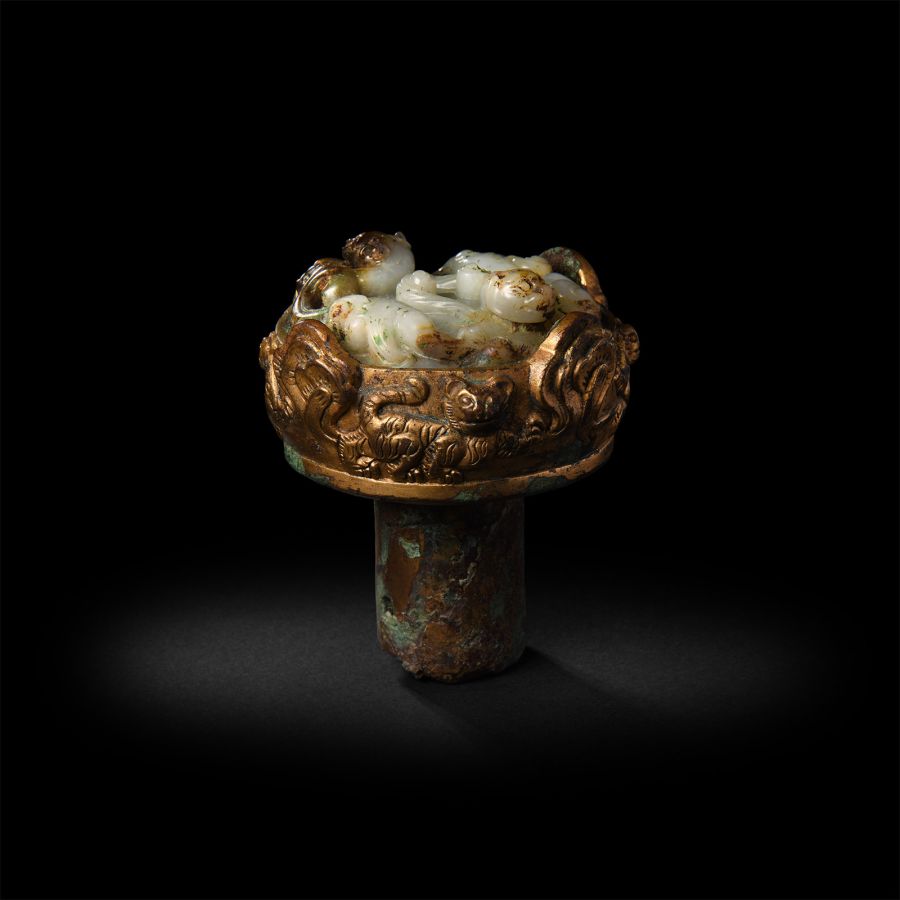
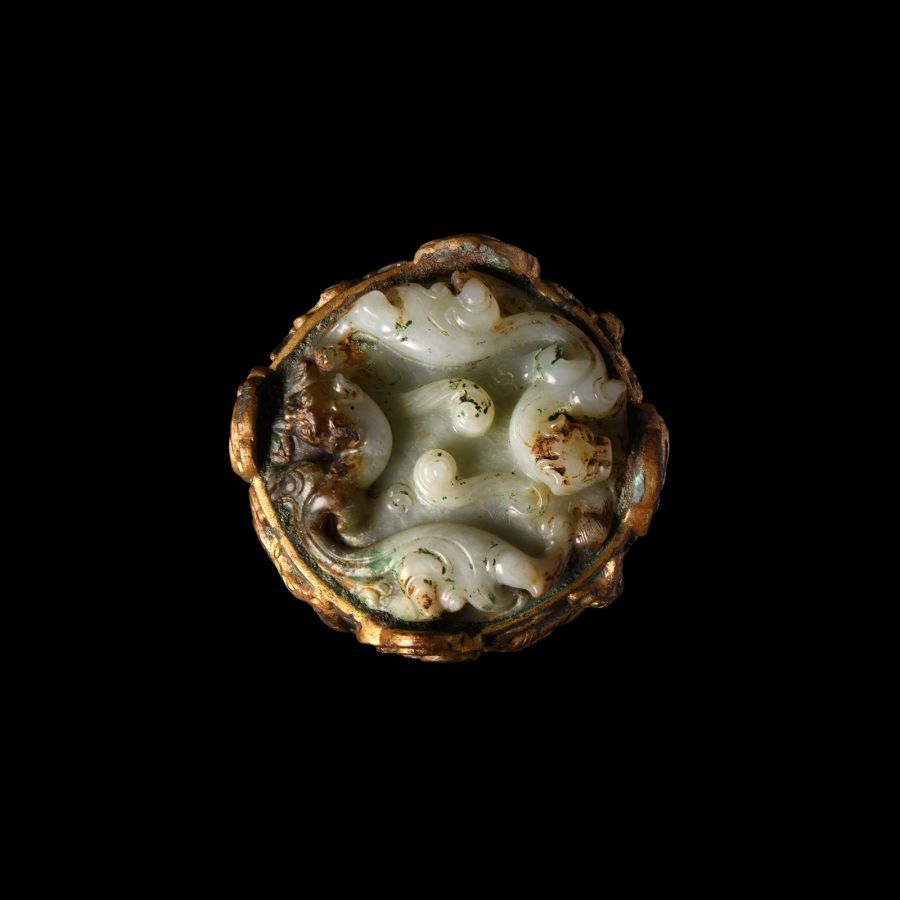
Chinese Han Gilded Bronze Sword Pommel with Jade
HAN DYNASTY, 2ND CENTURY B.C.-1ST CENTURY A.D.
3 in. (387 grams, 76 mm).
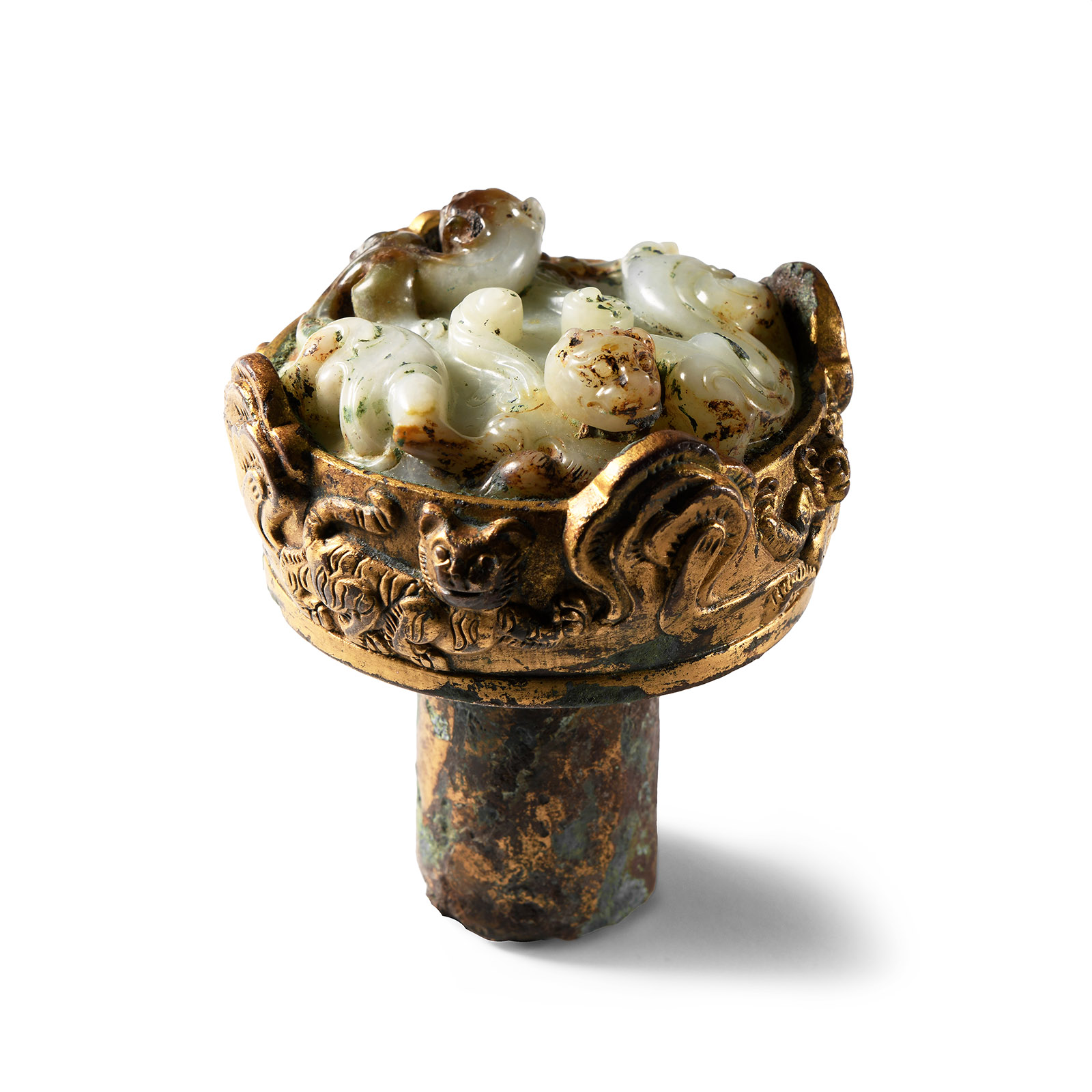
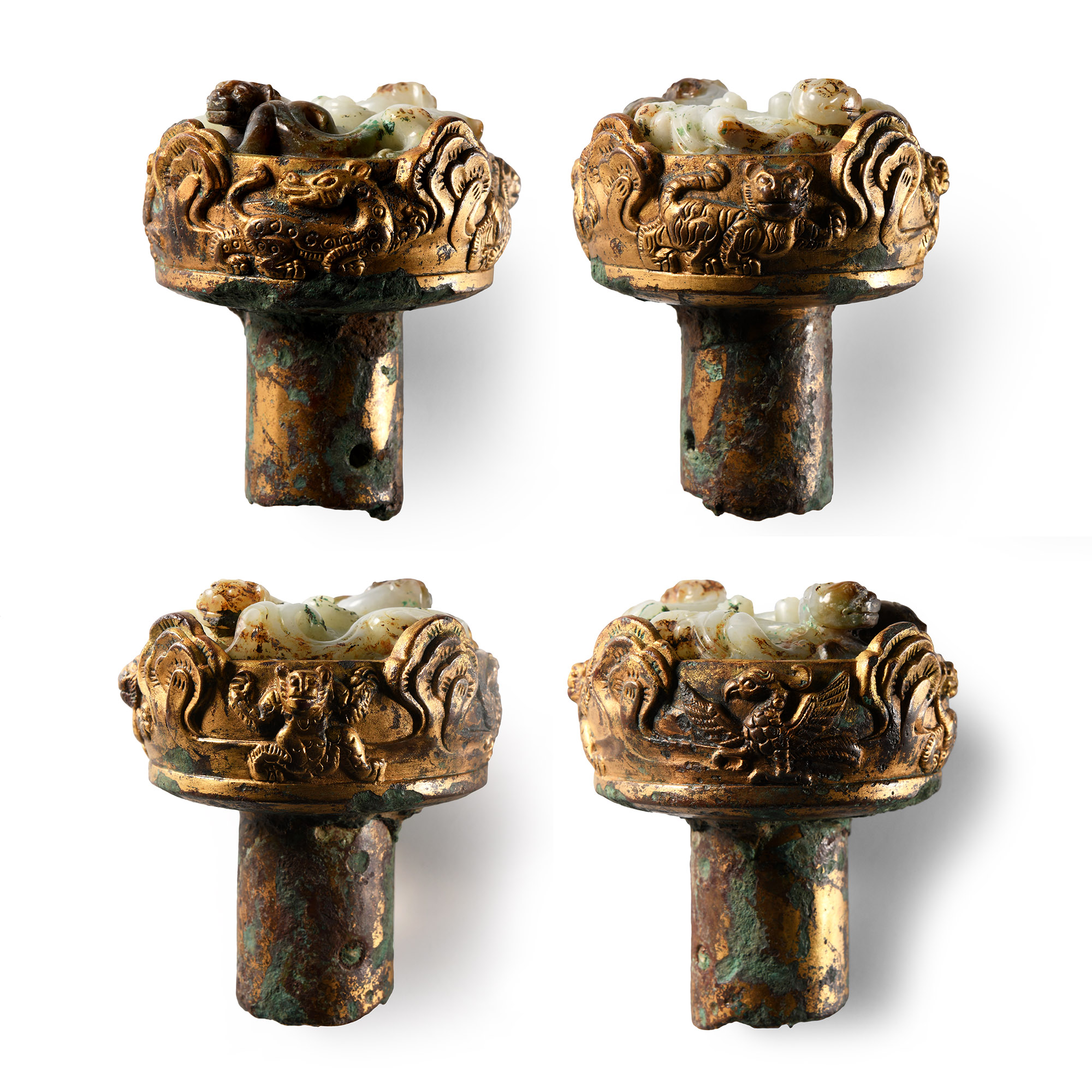
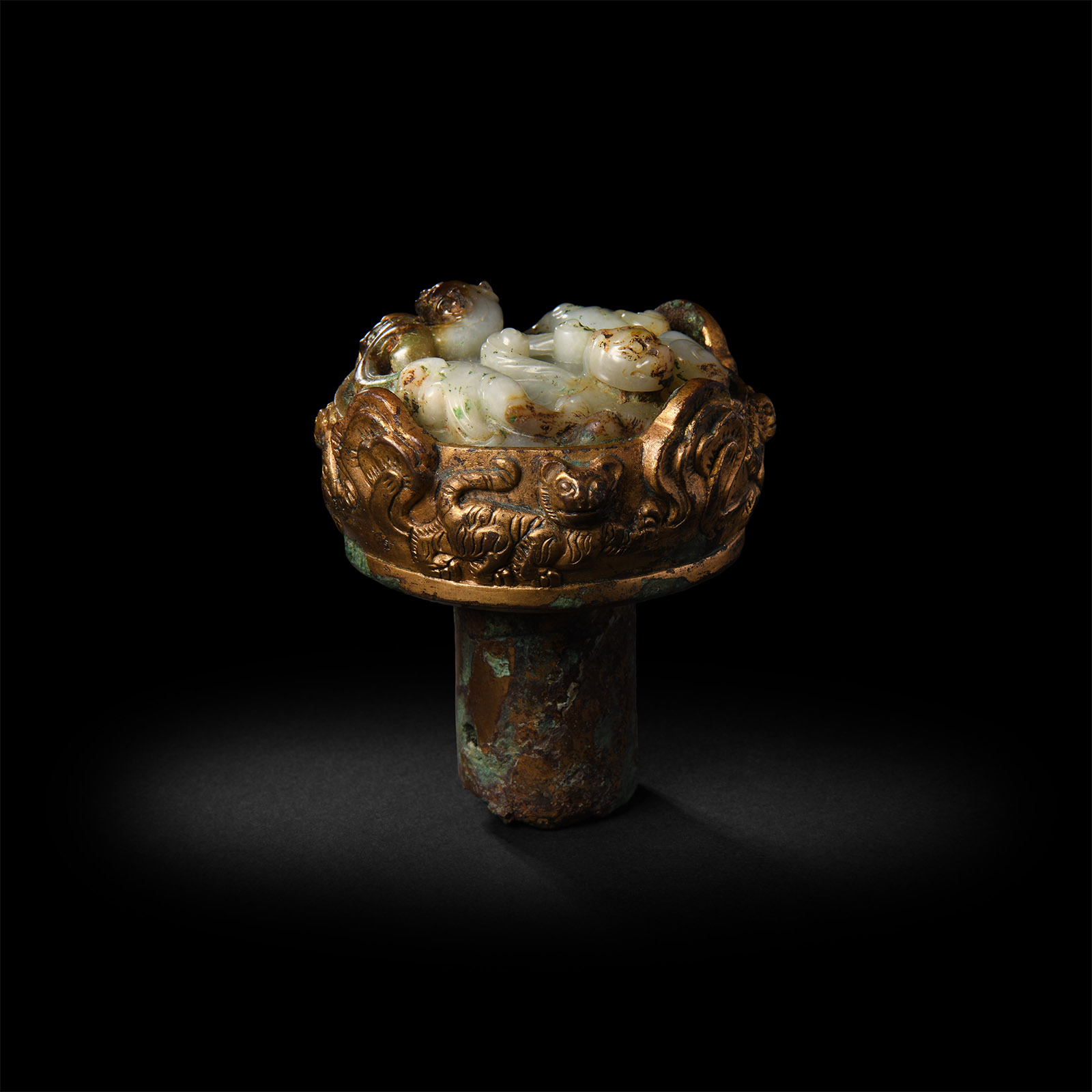
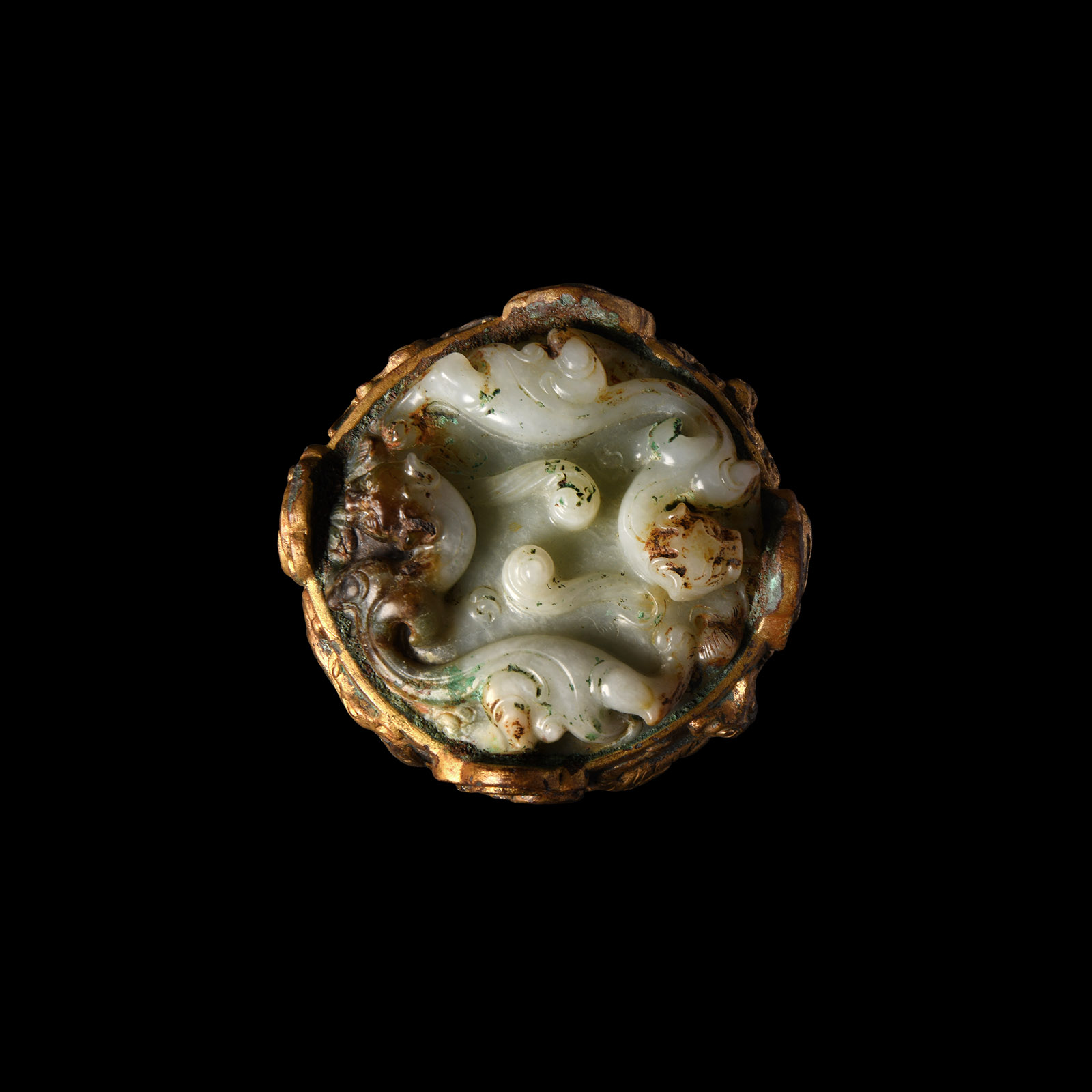
Comprising a discoid body and cylindrical socket pierced twice for attachment (one piercing occluded); a circumferential zoomorphic frieze in high-relief to the exterior, displaying a procession of vegetal forms alternating with real and mythical creatures, each with stylised anatomical detailing: a monkey; a fenghuang; a leopard (or other feline); a tiger; set with a moonstone-quality khotain jade roundel, carved in high-relief with two sinuous fantastical beasts, swirling clouds in the field; minor restoration.
ProvenanceAcquired from Dandelion Fine Arts, Hollywood Road, Hong Kong, 1970s.
Ex Prof. David Anderson collection.
UK private collection, circa 2010.
Accompanied by a copy of metallurgic analytical results, written by metallurgist Dr Peter Northover (ex Department of Materials, Materials Science-Based Archaeology Group & Department of Materials, University of Oxford).
Accompanied by an academic report by Dr Raffaele D'Amato.
This lot has been checked against the Interpol Database of stolen works of art and is accompanied by search certificate number no.12036-211774.
Cf. James, C.S.Lin, The search for immortality – tomb treasures of the Han China, New Haven, 2012, fig.147, p.270, for similar jade pommel; fig. 20, for jade sword fittings; Chu A. and G., The collector’s book of Jade, New York, 1978, fig.20 a-f, for jade fittings and pommel of a sword; for similar types see also Gorelik, M., Weapons of Ancient East, IV millennium BC-IV century BC, Saint Petersburg, 2003, in Russian, see pl.XIII, nos.41,56.
FootnotesThe Khotain jade was the best 'moonstone' quality used for gilded-bronzes, and came from the White Jade River, available after the signature of a military treaty in about 69BC to 101AD. This object is believed to have been produced for a notable client, likely even for a royal given the item's similarity to a finial excavated from the tomb of a Prince of Zhongshan.
CONDITIONTimeLine Auctions follows a vetting process to ensure the authenticity and legality of all items, reinforcing our commitment to integrity and responsible trading. Each antiquity, antique, and coin lot undergoes thorough examination by a vetting committee of at least ten external specialists, professional trade association members, scientists, and archaeologists: Our Vetting Process
AUCTIONS:
TimeLine is a leading auction house specialising in antiquities, ancient art, collectables, natural history, coins, medals, and books. Our auctions offer museums, collectors, historians, and enthusiasts the opportunity to acquire unique and historically significant pieces.
-
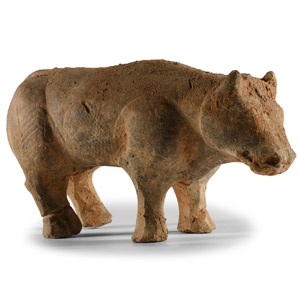
Chinese Tang Terracotta Bull
Tang Dynasty, 618-907 A.D. or laterSold for (Inc. bp): £104
Hollow-formed bull modelled in the round with vent to the underside. 980 grams, 22 cm long
North Yorkshire, UK, collection, 1990s. -
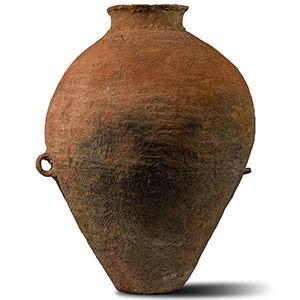
Very Large Chinese Neolithic 'Leather Look' Amphora
3rd-2nd millennium B.C.Sold for (Inc. bp): £91
With piriform body and trumpet-shaped mouth, two loop handles to the equator; hatching to the shoulder and ring of pricking below the neck. 12.6 kg, 58 cm
From a collection acquired on the UK art market from various auction houses and collections mostly before 2000. From an important Cambridgeshire estate; thence by descent. -
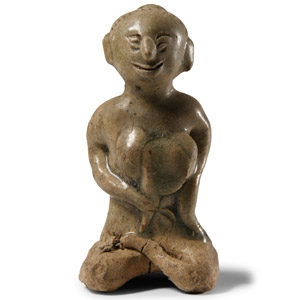
Thai Green-Glazed Mother and Child Figurine
14th-16th century A.D.Sold for (Inc. bp): £26
Of a nude seated female with bun to the back of the head, suckling a baby. 134 grams, 10 cm
From a collection acquired on the UK art market from various auction houses and collections mostly before 2000. From an important Cambridgeshire estate; thence by descent.
