
Loading, please wait...
LOT 2074
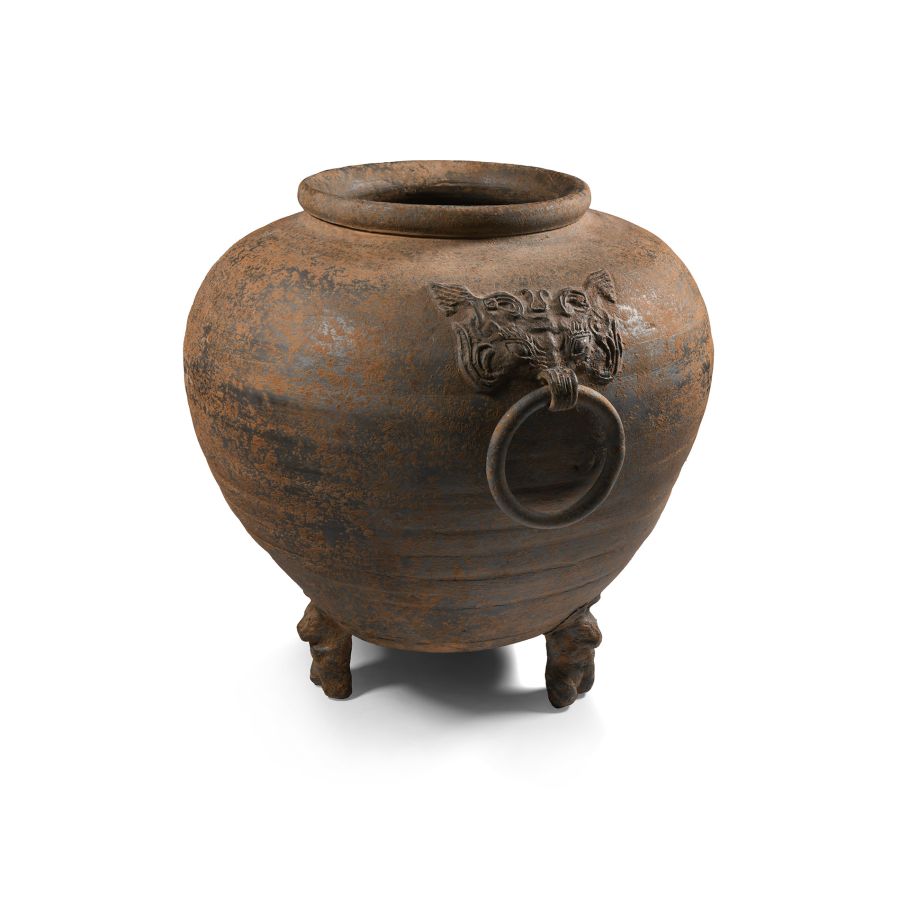
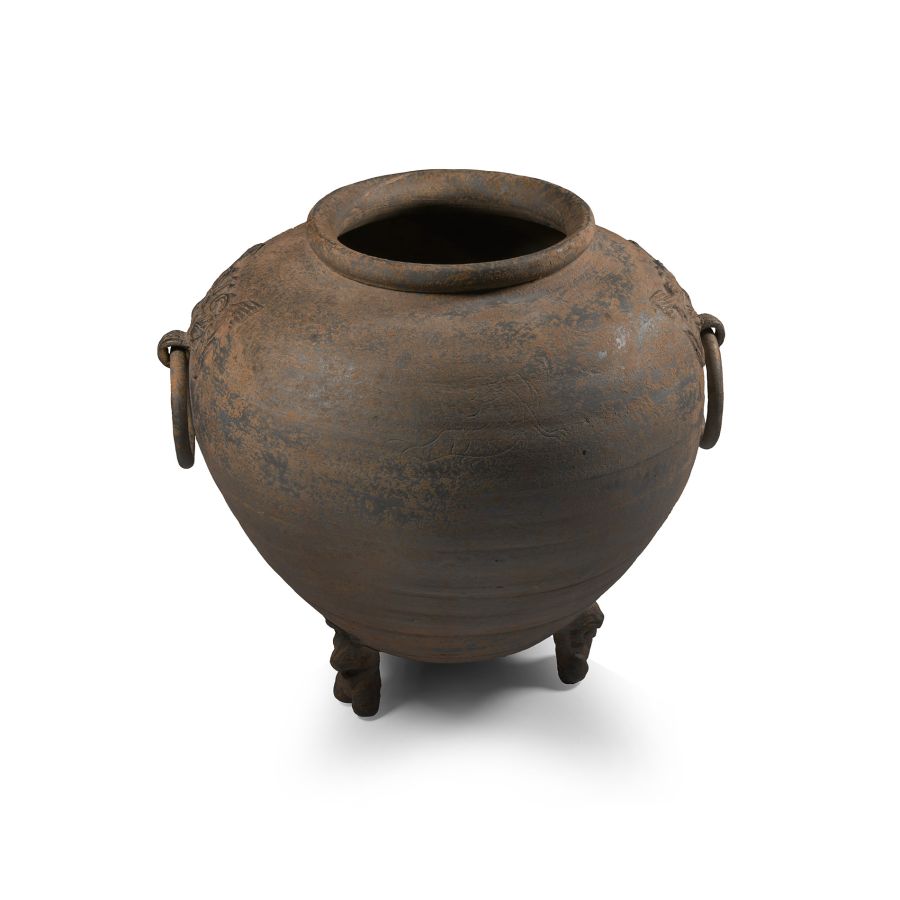
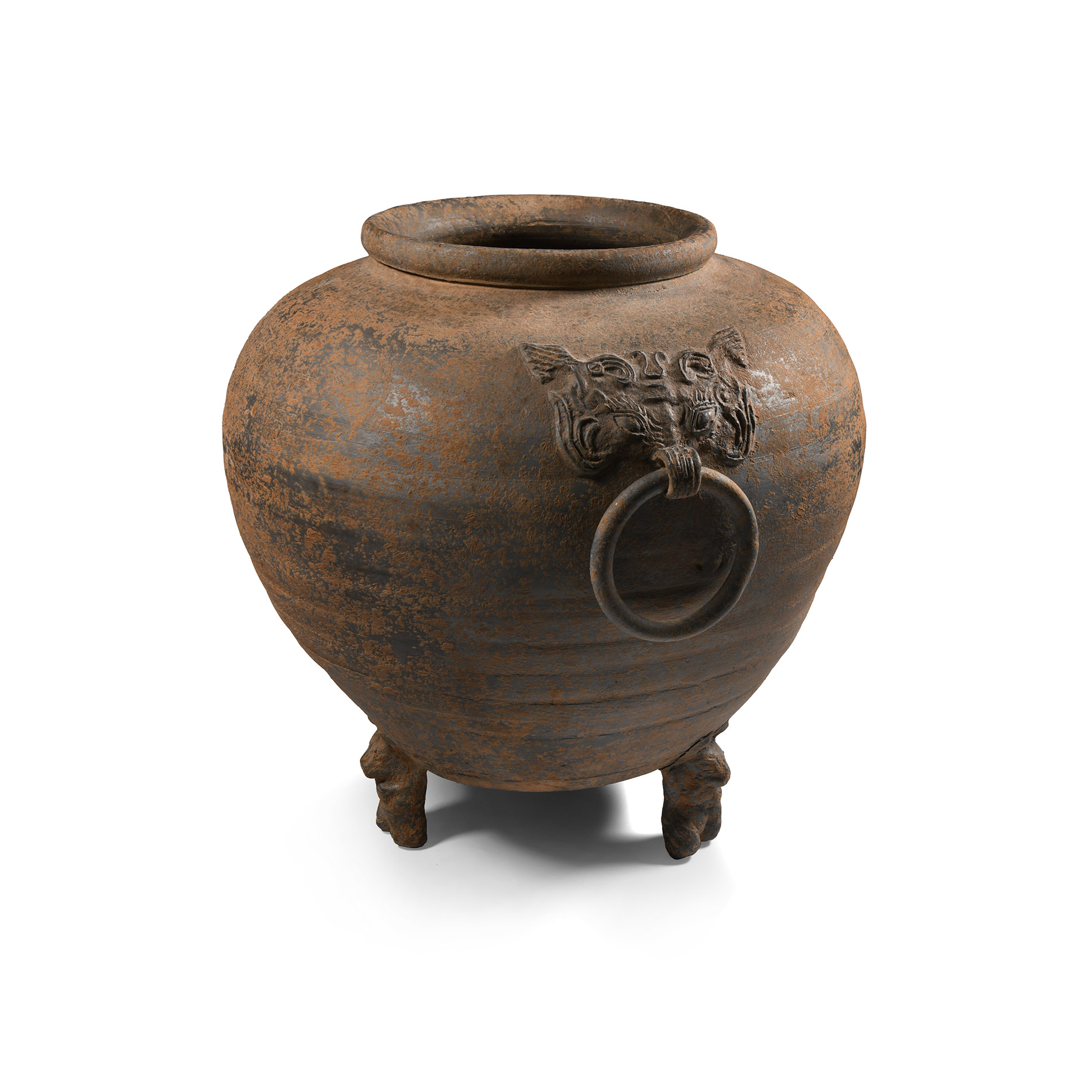
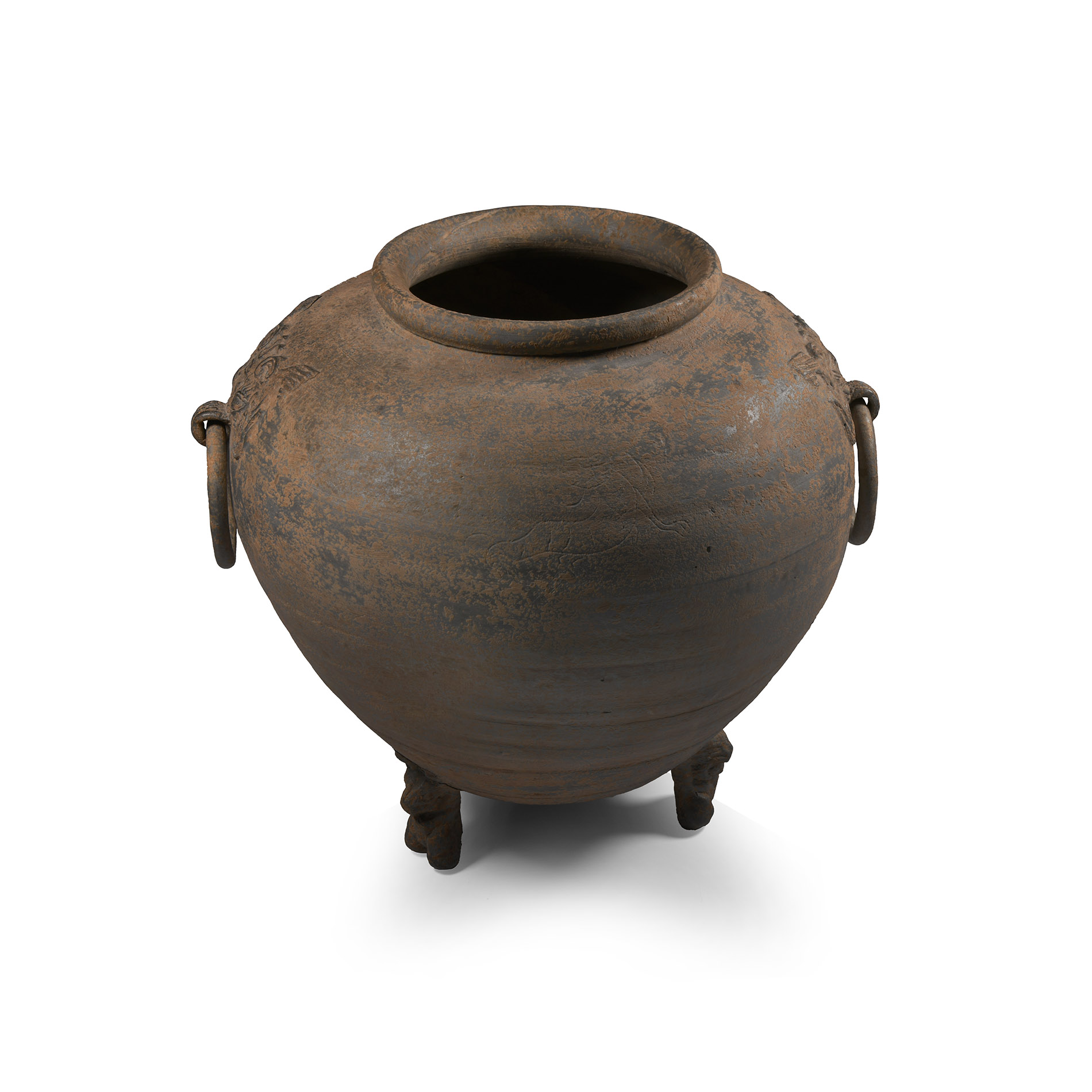
Chinese Han Ceramic Tripod Vessel
HAN DYNASTY, 206 B.C.-220 A.D.
12 in (3.8 kg, 35.5 cm high).
Piriform bodied with two opposed Tao Tie, each holding a free-running ring in its mouth, further decorated with a shallow incised dragon to one face and a figure holding a cup on the other, together with an inscription in Chinese; tripod feet formed as squatting animals; restoration to the rings and feet.
Provenancewith Galerie Golconda May 2006.
Ex private collection, London, UK.
Accompanied by a thermoluminescence report no.11270306 from Laboratory Ralf Kotalla dated 5 May 2006.
Dragons in ancient Chinese art could be religious symbols, representatives of clans and creatures linking man to the spirit world. The Tao Tie often evoked mystery and beauty.
CONDITIONTimeLine Auctions follows a vetting process to ensure the authenticity and legality of all items, reinforcing our commitment to integrity and responsible trading. Each antiquity, antique, and coin lot undergoes thorough examination by a vetting committee of at least ten external specialists, professional trade association members, scientists, and archaeologists: Our Vetting Process
AUCTIONS:
TimeLine is a leading auction house specialising in antiquities, ancient art, collectables, natural history, coins, medals, and books. Our auctions offer museums, collectors, historians, and enthusiasts the opportunity to acquire unique and historically significant pieces.
-

Vietnamese Hoi An Blue and White Shipwreck Lidded Pot
14th-15th century A.D.Sold for (Inc. bp): £59
With 'Hoi An Hoard' numbered sticker to the underside and auction label. 36.9 grams, 43 mm wide
Ex ArtAncient Ltd, London, SW6, in 2012, with stock no.6105. From the private collection of Mr A Hills, Kent, UK. Accompanied by a copy of an ArtAncient certificate of authenticity.
In the mid-fifteenth century a freighting junk loaded with fine Vietnamese pottery sank in an area of the South China Sea called the 'Dragon’s Embrace.' This vase is part of the shipwreck cargo recovered off the coast of Vietnam at Hoi An. The ceramics themselves were probably made in the area of Chu Dau. -
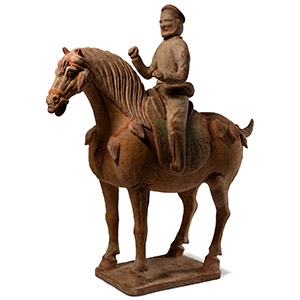
Large Chinese Tang Terracotta Horse and Rider
Tang Dynasty, 618-907 A.D.Sold for (Inc. bp): £2,470
Modelled standing on a rectangular base, wearing a harness adorned with pendants and an 'animal skin' saddlecloth; the rider modelled seated in the saddle, arms held before the body, gesturing to hold reins (absent); semi-naturalistic anatomical detailing to both figures; extensive remains of polychrome pigmentation. 3.65 kg, 41 cm high
From a West Country, UK, collection, formed in the 1990s. Accompanied by an original thermoluminescence analysis report no.C122f86 from Oxford Authentication. This lot has been checked against the Interpol Database of stolen works of art and is accompanied by search certificate number no.11703-199229. -
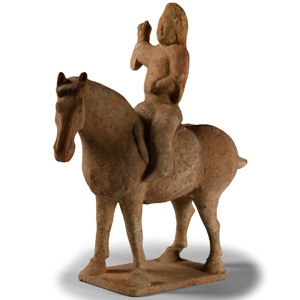
Chinese Tang Terracotta Horse and Rider
Tang Dynasty, 618-907 A.D. or laterEstimate: £350 - 450 (+bp*)
Opening Bid: £175
Modelled on a rectangular base, the horse standing with a rounded saddlecloth; the rider modelled seated in the saddle, right arm raised and left arm held before the body; right hand modelled empty to accept a bow or other weapon; some restoration. 1.54 kg, 29.5 cm
Ex North Yorkshire, UK, collection, 1990s.
Many horses, in the Tang graves, have been found with a runnel down the length of the upper neck, and a hole at the end of the spine. These cavities were surely meant to take real horsehair manes and tails, as some later porcelain figures are adorned with wisps of real human hair threaded through holes under the nose and the chin.
