
Loading, please wait...
_900x900.jpg "Chinese Bronze Tomb Vessel")
_200x200.jpg "Chinese Bronze Tomb Vessel")
.jpg "Chinese Bronze Tomb Vessel")
LOT 2003
Chinese Bronze Tomb Vessel
20TH CENTURY A.D.
8 3/4 in. (488 grams, 22cm wide).
A discoid miniature Tang style table with scrolled rim, five zoomorphic legs, openwork pendants, enamelled image of two fenghuang birds on a field of vegetation. [No Reserve]
ProvenanceEx Hong Kong gallery.
From a West Country, UK, collection.
TimeLine Auctions follows a vetting process to ensure the authenticity and legality of all items, reinforcing our commitment to integrity and responsible trading. Each antiquity, antique, and coin lot undergoes thorough examination by a vetting committee of at least ten external specialists, professional trade association members, scientists, and archaeologists: Our Vetting Process
AUCTIONS:
TimeLine is a leading auction house specialising in antiquities, ancient art, collectables, natural history, coins, medals, and books. Our auctions offer museums, collectors, historians, and enthusiasts the opportunity to acquire unique and historically significant pieces.
-
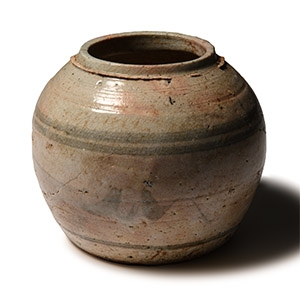
Chinese Ming Glazed Pot
Ming Dynasty, 1368-1644 A.D.Sold for (Inc. bp): £26
A drum-shaped glazed whiteware pot with bands of green detailing to the shoulder; repaired. 308 grams, 10.5 cm wide
UK gallery, early 2000s. -
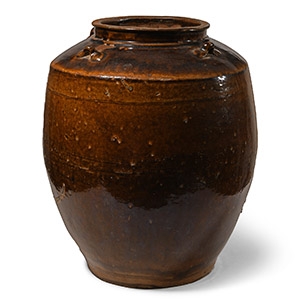
Large Chinese Provincial Glazed Storage Jar
17th-19th century A.D.Sold for (Inc. bp): £216
With rich chocolate-brown glaze, drum-shaped with carinated shoulder and broad mouth; four applied loops to the shoulder. 5.65 kg, 40 cm high
with a London, UK gallery 1971. -
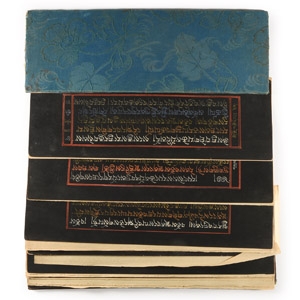
Tibetan Book of Sutras
19th century A.D.Sold for (Inc. bp): £91
With silk-covered boards, thirteen loose leaves of calligraphic script with paper interliners. 275 grams, 10.3 x 30.2 cm
Ex Cummings collection, UK, 1990s.
