
Loading, please wait...
LOT 2206
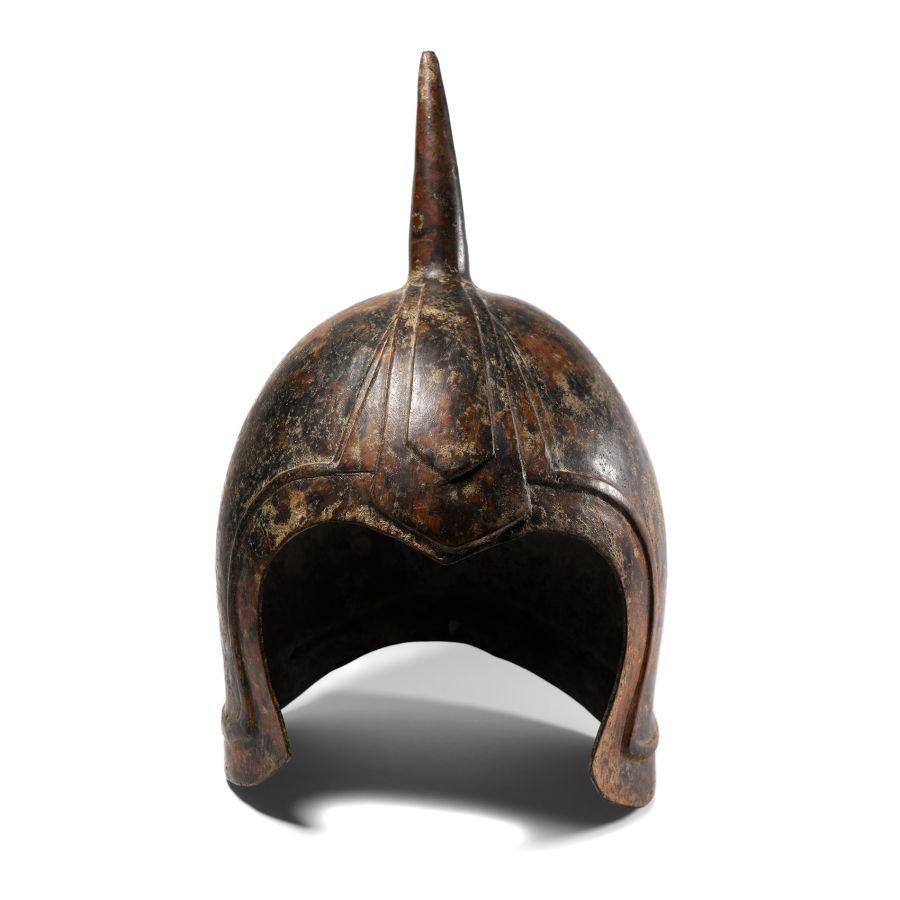
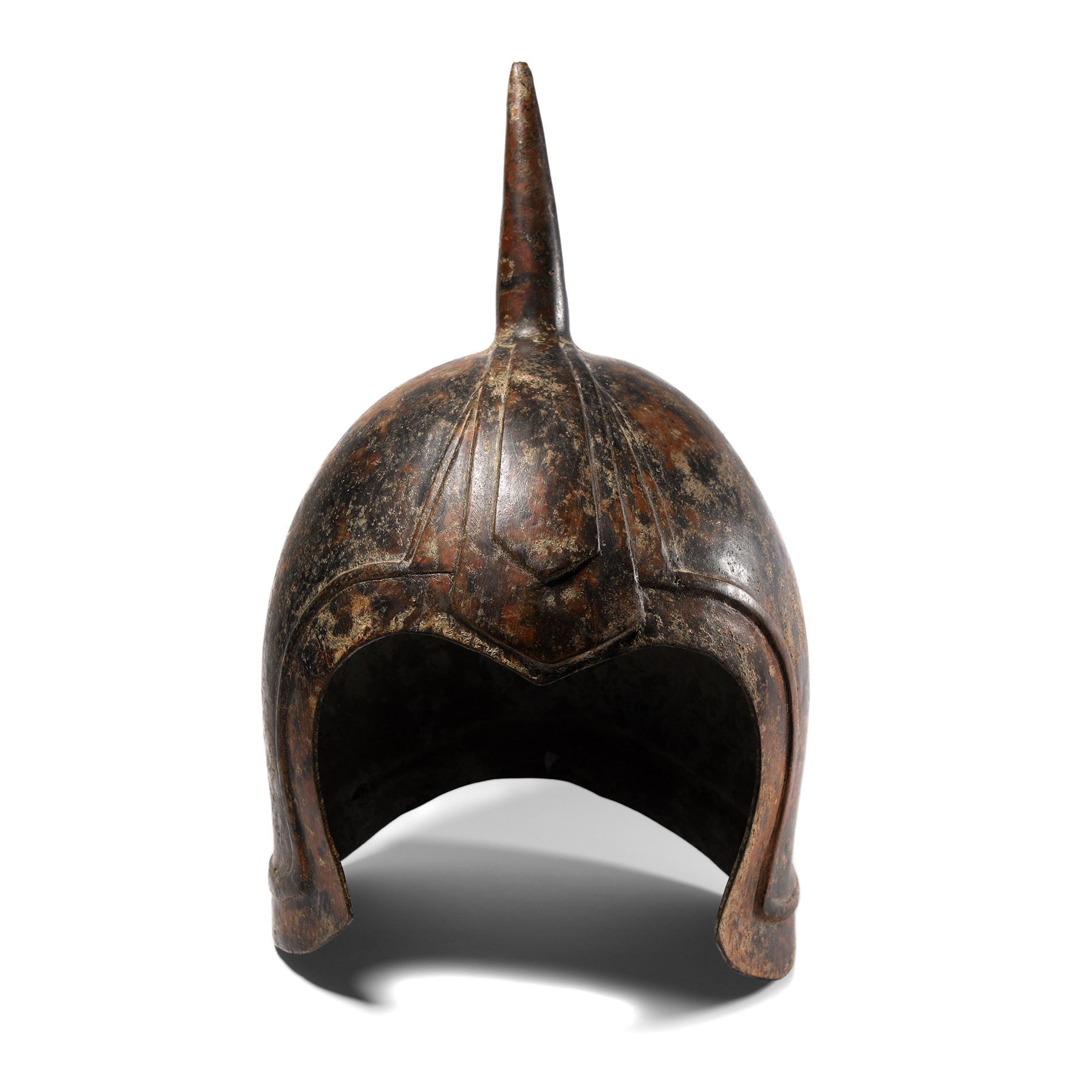
Chinese Bronze Helmet
LATE 20TH CENTURY A.D.
14 1/8 in. (3.07 kg, 36 cm high).
Of Eastern Zhou style helmet from a statue(?), domed with raised panels to the brim and vertical crest, hollow-formed spike above; the face-opening with shallow peak to the upper edge. [No Reserve]
ProvenanceAcquired in the 1990s.
From a UK collection.
Cf. for original similar helmets Cheng Dong and Zhong Shao-yi, Ancient Chinese Weapons - A Collection of Pictures, Beijing, 1990, fig 12, no. 4-157, of 5th-3rd century B.C.
FootnotesThe earliest bronze helmets in China date back to the Shang Dynasty, covered the neck and ears, and were often decorated with taotie masks and animal faces to make the warrior appear fearsome. Chou (Zhou) bronze helmets were similar to the Shang types but less elaborately decorated, and it is thought that the hood-shaped styles of the later Han Dynasty were metal copies of older leather versions.
CONDITIONTimeLine Auctions follows a vetting process to ensure the authenticity and legality of all items, reinforcing our commitment to integrity and responsible trading. Each antiquity, antique, and coin lot undergoes thorough examination by a vetting committee of at least ten external specialists, professional trade association members, scientists, and archaeologists: Our Vetting Process
AUCTIONS:
TimeLine is a leading auction house specialising in antiquities, ancient art, collectables, natural history, coins, medals, and books. Our auctions offer museums, collectors, historians, and enthusiasts the opportunity to acquire unique and historically significant pieces.
-
.jpg)
Chinese Jade Snuff Bottle
19th century A.D.Estimate: £400 - 600 (+bp*)
Opening Bid: £160
Bearing a figural scene in relief of an attendant serving tea to a seated scholar to one face and characters to the other; polished stone cabochon in the stopper. 94.6 grams, 62 mm high
Property of a lady, from her grandfather's collection, 1960s-1970s; thence by descent. -
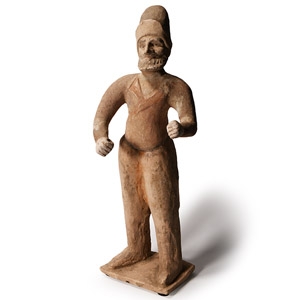
Chinese Tang Terracotta Foreign Groom
Tang Dynasty, 618-907 A.D.Estimate: £500 - 700 (+bp*)
Opening Bid: £250
Wearing a cross-over horseman's jacket, tight trousers and a tall cap with a wide upturned brim; Iranian bearded facial features; repaired. 3 kg, 48.5 cm high
head and arm repaired.
Ex Cotswold, UK, collection, 1970-1990. -
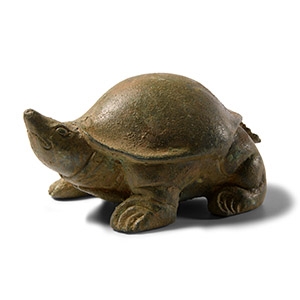
Chinese Han Style Bronze Turtle
20th century A.D.Estimate: £200 - 300 (+bp*)
Opening Bid: £100
With semi-naturalistic detailing, ornate tail; oval void to base giving access to hollow body; possibly a scroll weight. 223 grams, 93 mm
Acquired 1980-1990s. Ex West Country, UK, collection.
