
Loading, please wait...
LOT 1925
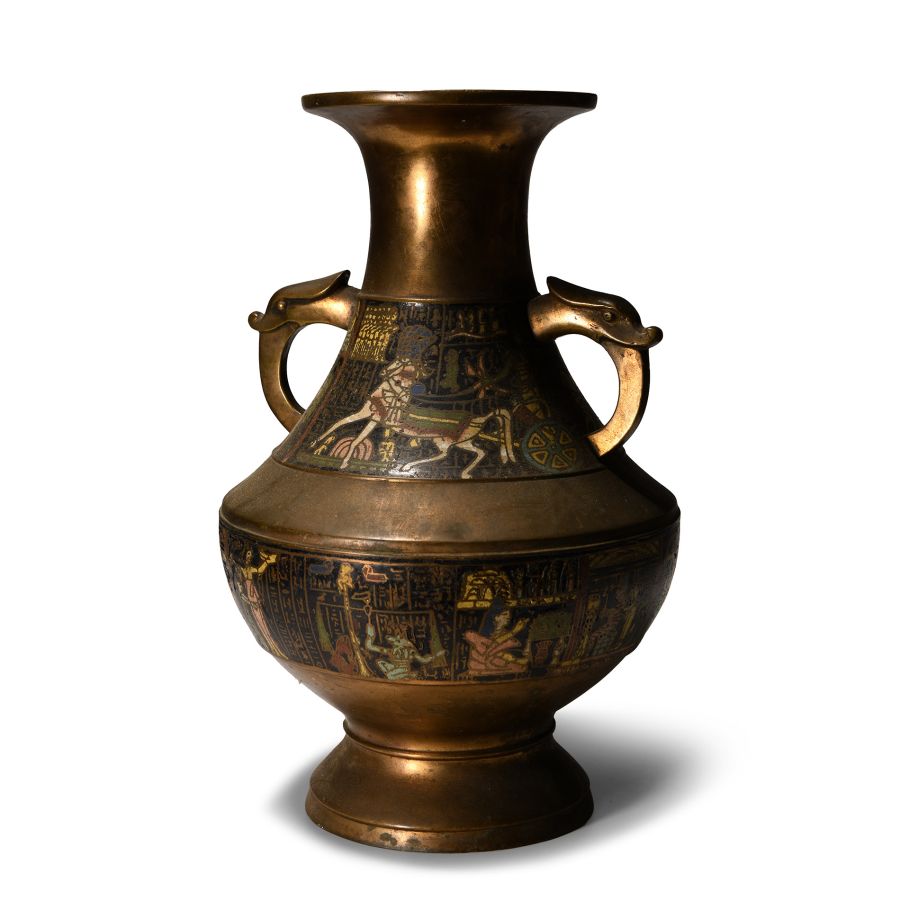
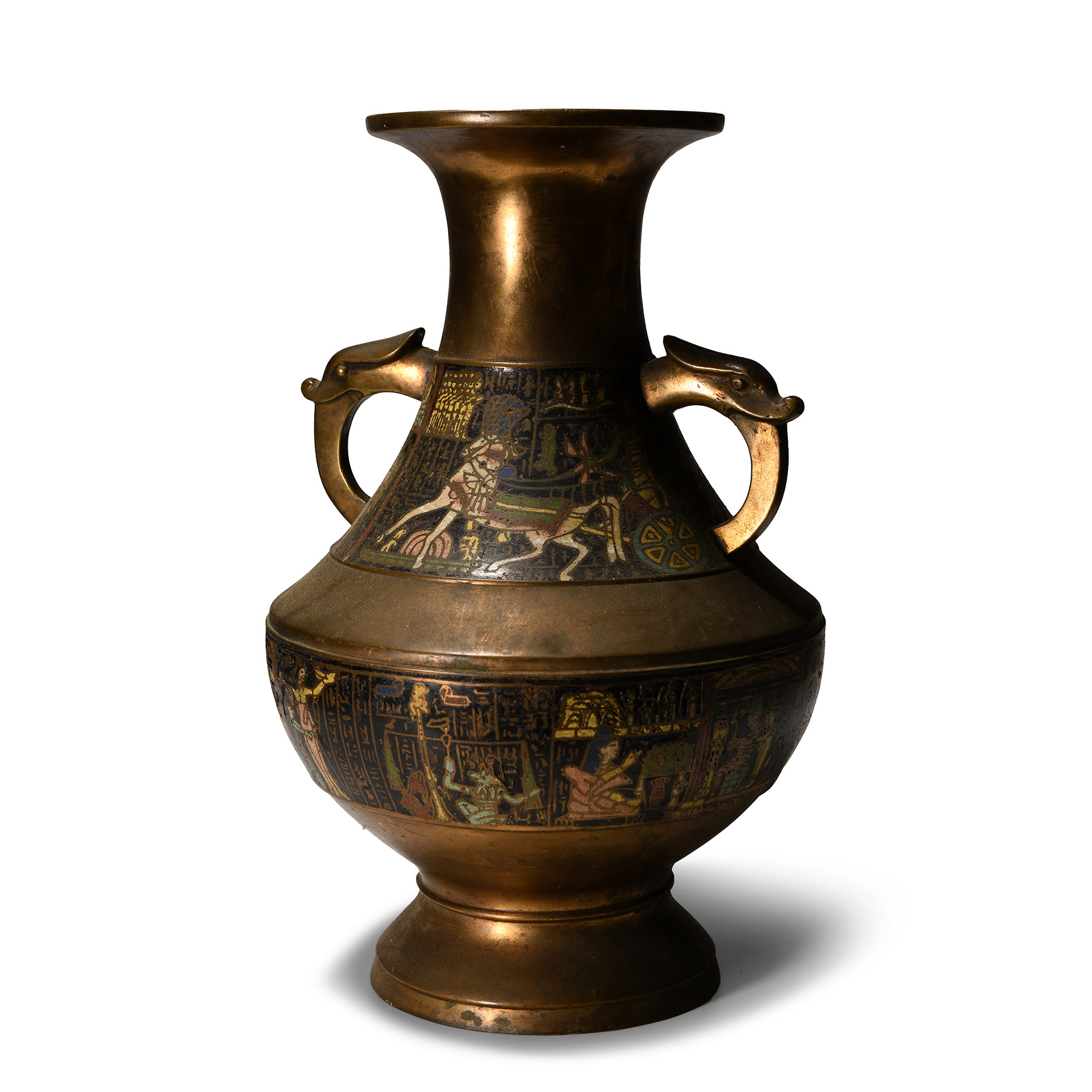
Champleve Enamel Bronze Vessel with Egyptian Procession Scenes
LATE 19TH CENTURY A.D.
14 in. (3.4 kg, 36 cm).
Urn with socle base, rounded body, scooped shoulder and trumpet-shaped neck and mouth, lateral handles formed as beast-heads; the body with polychrome champ levé frieze depicting Egyptian gods and courtly scenes with panels of hieroglyphs, the shoulder with similar frieze of a procession with chariots, horses and objects in the field, row of seated figures above; reserved maker's chop seal to the underside. [No Reserve]
ProvenanceFrom a UK collection, 1990s.
Ex property of a London gentleman.
TimeLine Auctions follows a vetting process to ensure the authenticity and legality of all items, reinforcing our commitment to integrity and responsible trading. Each antiquity, antique, and coin lot undergoes thorough examination by a vetting committee of at least ten external specialists, professional trade association members, scientists, and archaeologists: Our Vetting Process
AUCTIONS:
TimeLine is a leading auction house specialising in antiquities, ancient art, collectables, natural history, coins, medals, and books. Our auctions offer museums, collectors, historians, and enthusiasts the opportunity to acquire unique and historically significant pieces.
LOT 1925
Champleve Enamel Bronze Vessel with Egyptian Procession Scenes
Sold for (Inc. bp): £78
-
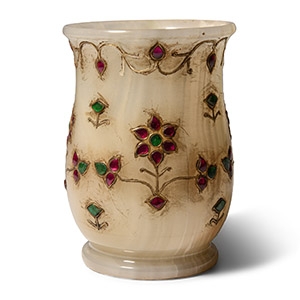
Stone Flower Vase with Rubies
20th century A.D.Sold for (Inc. bp): £546
Bell-shaped in profile with broad foot and carinated rim; at the neck an applied gold-coloured inlaid band of undulating tendrils, with alternating inset ruby petals; at the shoulder, four small applied plants with green lozengiform flowers; at the waist four large plants with laterally-extended shoots, petals with inset rubies and green inlays; below the waist, a similar band of flowers to that at the shoulder; some wire lose or absent. 468 grams, 12.8 cm high
Property of a South West London gentleman. -
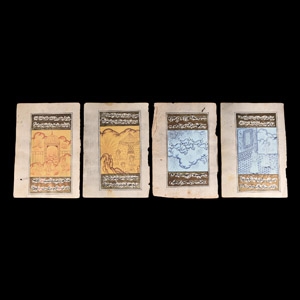
Watercolour Painting Group
India, 19th century A.D.Sold for (Inc. bp): £20
Four bifacial manuscript pages, each with multiple lines of text to recto and a painting between panels of text to the verso, including animal and figural scenes in architectural and landscape settings. 5 grams total, 15 x 10 cm
Fine condition.
Acquired on the UK art market, 1980s-1990s. The Woodbridge collection of Indo-Persian art. -
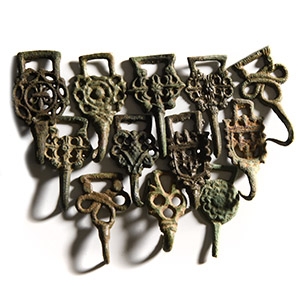
Tudor Bronze Hook Fastener Group
16th century A.D.Sold for (Inc. bp): £39
Group of hooked garment fasteners, mostly with openwork looped body. 31.4 grams total, 27-39 mm
Found near York, UK.
