
Loading, please wait...


LOT 0610
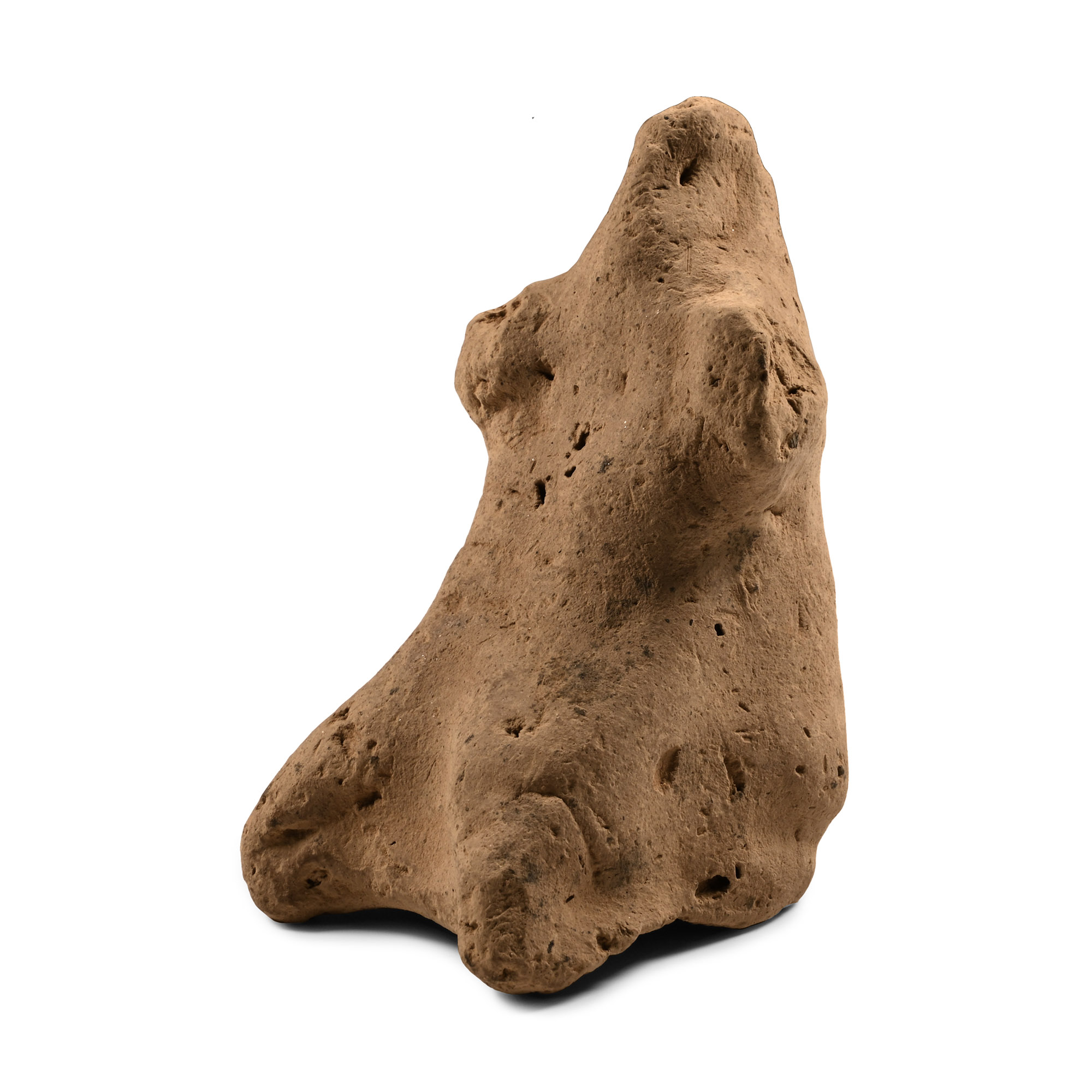
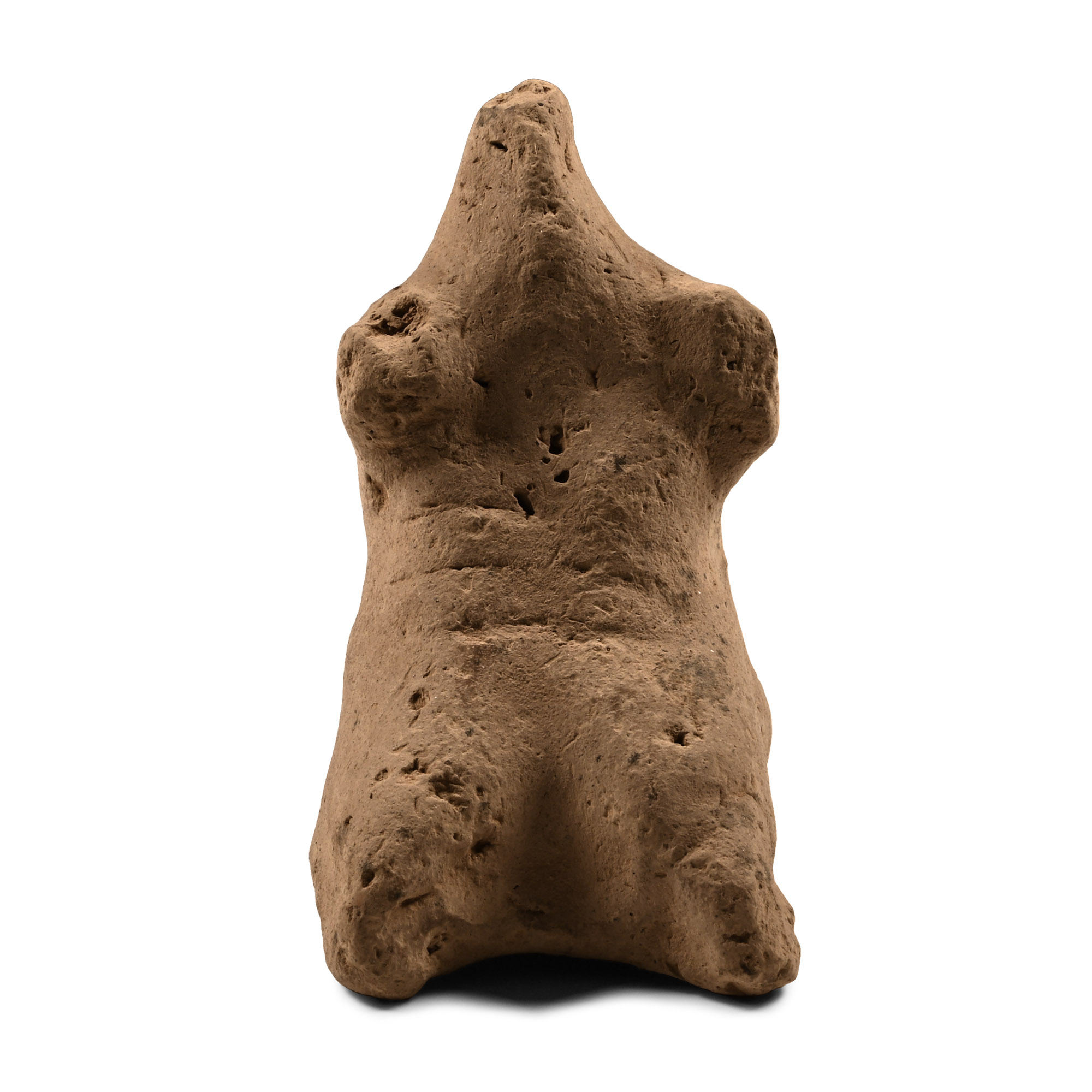
Chalcolithic Terracotta Female Fertility Figure
3RD MILLENNIUM B.C.
3 1/2 in. (165 grams, 89 mm).
Of approximately pyramidal form with stub arms, pinched head, suggestion of incised belt or girdle to the midriff. [No Reserve]
ProvenanceFrom the collection of a late London, UK, gentleman, 1979-1999.
CONDITIONTimeLine Auctions follows a vetting process to ensure the authenticity and legality of all items, reinforcing our commitment to integrity and responsible trading. Each antiquity, antique, and coin lot undergoes thorough examination by a vetting committee of at least ten external specialists, professional trade association members, scientists, and archaeologists: Our Vetting Process
AUCTIONS:
TimeLine is a leading auction house specialising in antiquities, ancient art, collectables, natural history, coins, medals, and books. Our auctions offer museums, collectors, historians, and enthusiasts the opportunity to acquire unique and historically significant pieces.
-
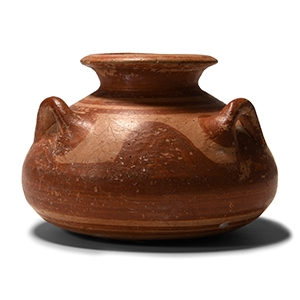
Mycenaean Painted Pottery Alabastron
14th-13th century B.C.Estimate: £1,200 - 1,700 (‡+bp*)
Opening Bid: £667
Formed with a squat globular body, everted rim and three lug handles to the shoulder; painted reddish-brown over a cream slip with concentric bands and rings to the mouth, neck, shoulder and base, larger solid undulating forms covering the lower body. 70 grams, 69 mm
Acquired from Royal Athena Gallery, 2003. This lot has been checked against the Interpol Database of stolen works of art and is accompanied by search certificate number no.11851-206833.
Late Helladic IIIA period of Mycenaean culture. -
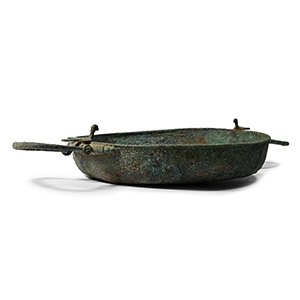
Greek Bronze Phiale with Handles
Archaic, 7th-6th century B.C.Estimate: £3,000 - 4,000 (‡+bp*)
Opening Bid: £1,111
Broad and squat in profile with thickened rim, two lateral omega-shaped drop handles each mounted below the rim on a crescentic bar surmounted by a model bird facing inwards; base damaged. 915 grams, 44 cm wide
Acquired in the mid 1980s-1990s. Private collection, Switzerland, thence by descent. Private collection, since the late 1990s. This lot has been checked against the Interpol Database of stolen works of art and is accompanied by search certificate number no.12210-222327. -
.jpg)
Cypriot Red Polished Ware Bowl
Bronze Age, circa 2000-1600 B.C.Sold for (Inc. bp): £247
Hemispherical in profile with slightly inverted rim, band of circumferential incised lines beneath the rim and concentric zigzags below, roundels to the underside; single small pierced bulb for suspension. 289 grams, 14 cm
Ex Ian Auld collection, 1970s-1990s. Acquired from Bonhams, London, 29 April 2009, no.315 (part). From an important Cambridgeshire estate; thence by descent. Accompanied by copies of the relevant Bonhams catalogue pages.
