
Loading, please wait...
LOT 1188
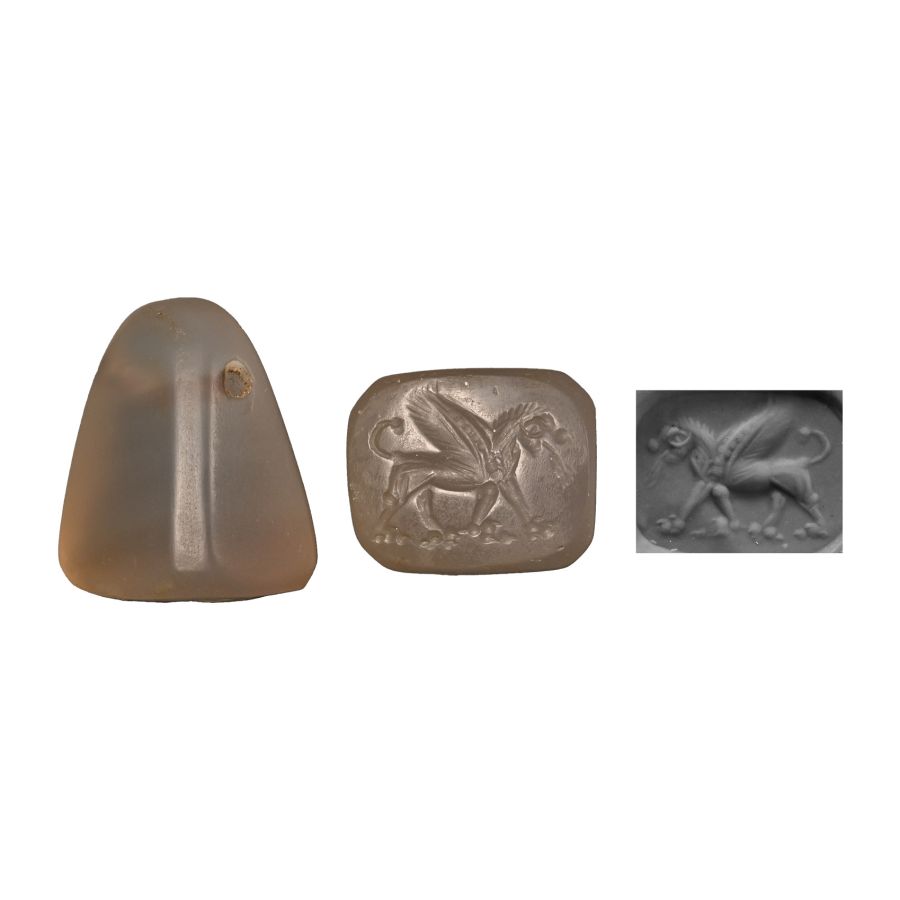
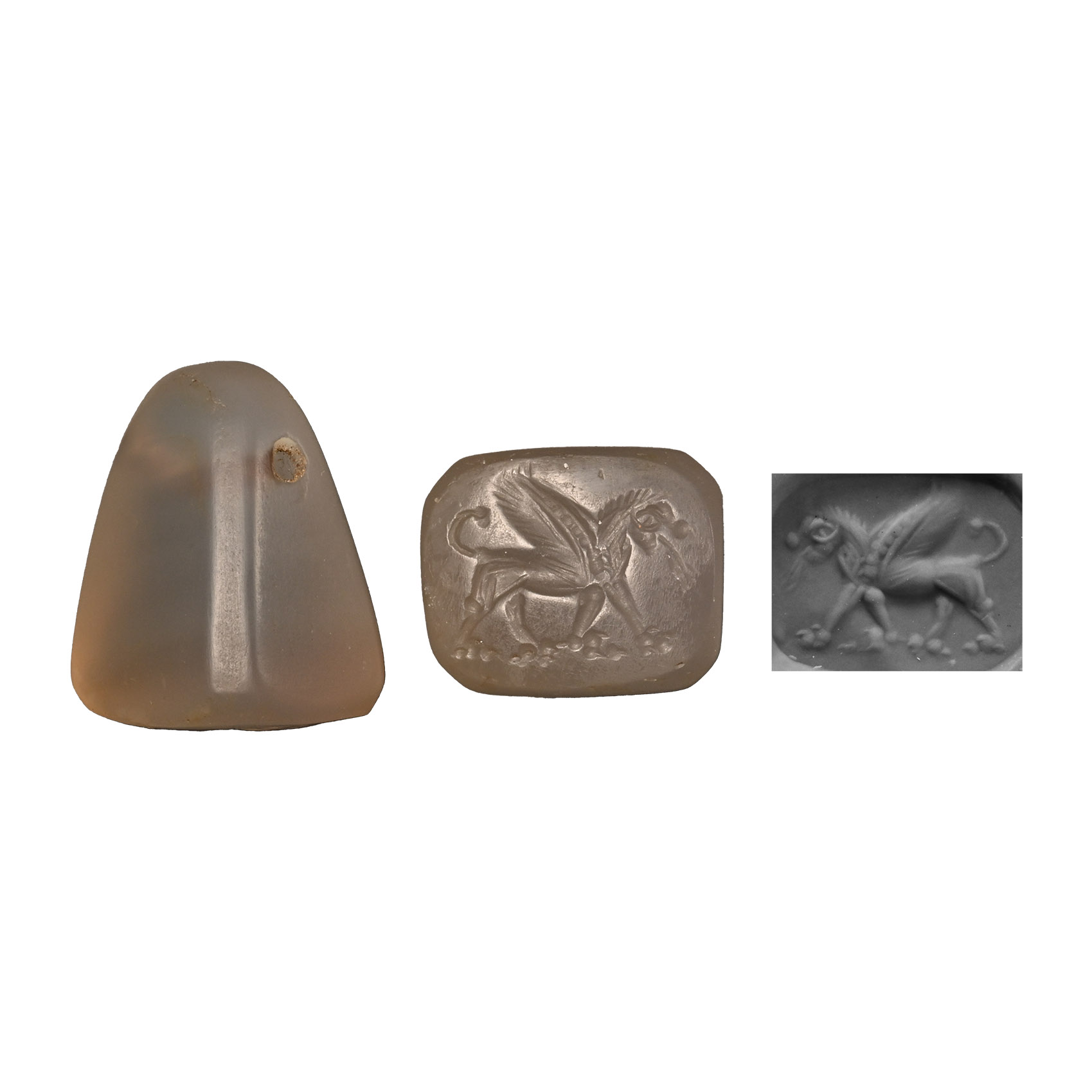
Chalcedony Stamp Seal with Gryphon
NEO BABYLONIAN, 8TH-6TH CENTURY B.C. AND LATER
3/4 in. (7.3 grams, 21 mm).
Trapezoidal rock crystal seal pierced at the apex, with re-engraved intaglio advancing winged gryphon; supplied with a museum-quality impression.
ProvenanceFrom the property of late Mr SM, London, UK, 1969-1999.
CONDITIONTimeLine Auctions follows a vetting process to ensure the authenticity and legality of all items, reinforcing our commitment to integrity and responsible trading. Each antiquity, antique, and coin lot undergoes thorough examination by a vetting committee of at least ten external specialists, professional trade association members, scientists, and archaeologists: Our Vetting Process
AUCTIONS:
TimeLine is a leading auction house specialising in antiquities, ancient art, collectables, natural history, coins, medals, and books. Our auctions offer museums, collectors, historians, and enthusiasts the opportunity to acquire unique and historically significant pieces.
-
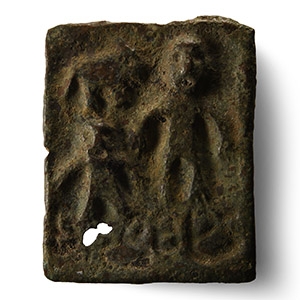
Bactrian Bronze Plaque with Figural Scene
Circa 2000 B.C.Estimate: £300 - 400 (+bp*)
Opening Bid: £167
Of rectangular form, two stylised figures depicted frontally, an animal in profile above the smaller figure. 139 grams, 91 mm
Collected from 1969-1999. From the collection of the late Mr S.M., London, UK. Accompanied by an old collection ticket. -
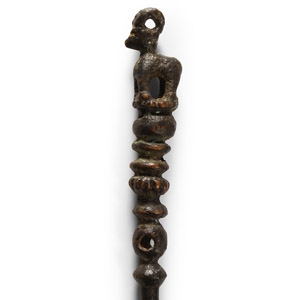
Luristan Bronze Pin with Ibex
1st millennium B.C.Sold for (Inc. bp): £104
With a tapering round-section shank, balustered finial topped with a standing ibex. 11.7 grams, 10.1 cm
UK private collection before 2000. On the UK art market. Property of a London gentleman. -
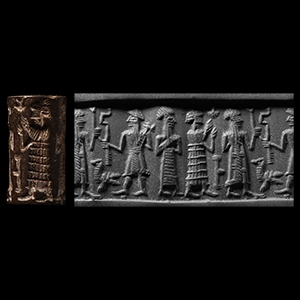
Cappadocian Cylinder Seal with Standing Figures and Lamma
Circa 1900-1800 B.C.Sold for (Inc. bp): £416
Haematite with four standing figures; accompanied by a section of an old typed scholarly note on a collection of 61 seals, typed and unsigned, by W. G. Lambert, late Professor of Assyriology, University of Birmingham, 1970-1993, which states: 'Cappadocian, c. 1900-1800 B.C. Hematite. Figure with axe over shoulder and holding symbol facing (i) figure holding different symbol, (ii) Lamma, and (iii) worshipper; bird, "vessel" and "ball staff".' 4.28 grams, 17 mm
Property of a London gentleman; part of his family collection since the 1970s with collection identification no.39. From a collection acquired from various auction houses in the UK. From the estate of Mr R.W., a private Wiltshire, UK, collector; thence by descent. Accompanied by a copy of an unsigned scholarly note by the late W.G. Lambert, Professor of Assyriology at the University of Birmingham, 1970-1993.
