
Loading, please wait...
LOT 0188
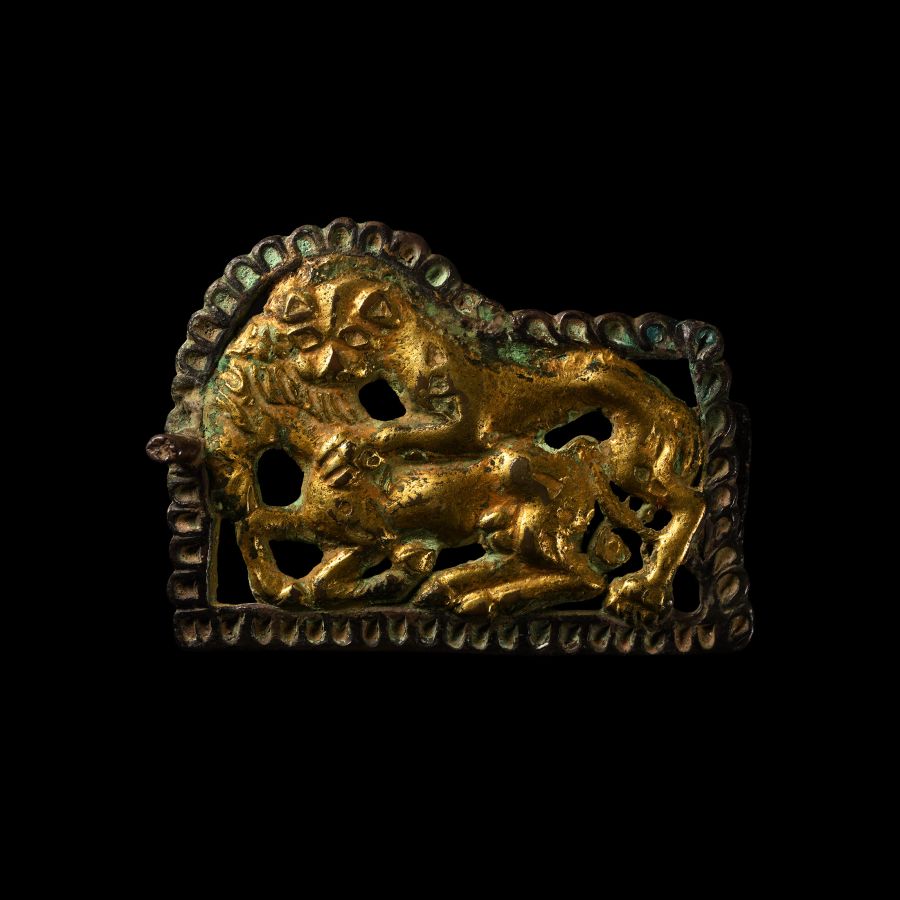
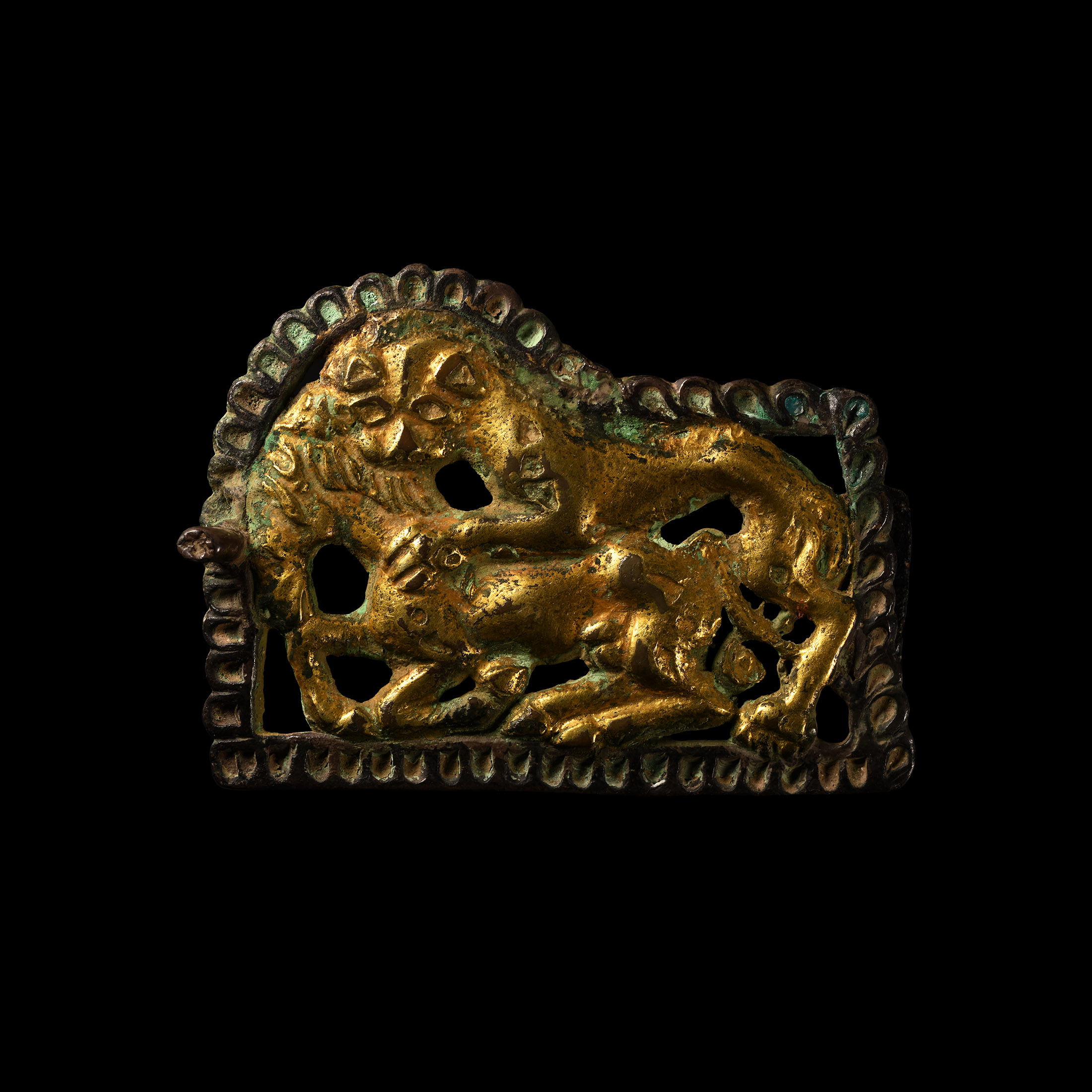
Central Asian Silver-Gilt Zoomorphic Belt Plaque with Attack Scene
2ND-1ST CENTURY B.C.
2 5/8 in. (48 grams, 6.6 cm).
Comprising an openwork design displaying a feline attacking a horse within an ovolo border; the feline pouncing on the horse's back with its jaws sunk into its neck, bringing the horse to the ground; a tang to forward edge.
ProvenanceEx Soufi family collection, circa 1950.
with Christie's, London, 13 October 2008, lot 32.
Accompanied by an academic report by Dr Raffaele D’Amato.
Accompanied by a copy of the relevant Christie's catalogue page.
This lot has been checked against the Interpol Database of stolen works of art and is accompanied by search certificate number no.11746-202177.
Cf. Altheim, F., Die Krise der Alten Welt, im 3. Jahrhundert n.Zw. und ihre Ursachen, Berlin-Dahlem, 1943, pls.51-53, for similar plaques; Rawson, J., Bunker, E., Ancient Chinese and Ordos Bronzes, Hong Kong, 1990, pp.350-351, no.228.
FootnotesThe nomadic style was expressed in the openwork and embossed bronze plates that served as belt buckles and plaques. The 'Ordos bronzes' furthermore consisted mostly of decorative plaques which were sewn onto garments and horses' bridles, the favourite motif being animal combat.
CONDITIONTimeLine Auctions follows a vetting process to ensure the authenticity and legality of all items, reinforcing our commitment to integrity and responsible trading. Each antiquity, antique, and coin lot undergoes thorough examination by a vetting committee of at least ten external specialists, professional trade association members, scientists, and archaeologists: Our Vetting Process
AUCTIONS:
TimeLine is a leading auction house specialising in antiquities, ancient art, collectables, natural history, coins, medals, and books. Our auctions offer museums, collectors, historians, and enthusiasts the opportunity to acquire unique and historically significant pieces.
LOT 0188
Central Asian Silver-Gilt Zoomorphic Belt Plaque with Attack Scene
Estimate £7,000 - 9,000€8,120 - 10,440 (for guidance only)$9,450 - 12,150 (for guidance only)
-
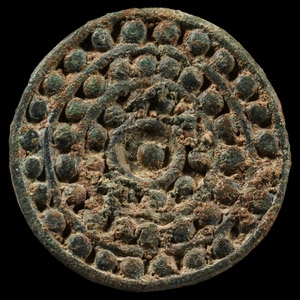
Amlash Decorated Bronze Ring
1st millennium B.C.Sold for (Inc. bp): £85
Featuring a large discoid bezel displaying concentric roundels of pellets, supported by a gently carinated hoop. 12.66 grams, 28.14 mm overall, 19.69 mm internal diameter (approximate size British N 1/2, USA 6 3/4, Europe 14.35, Japan 13)
Ex private collection, 1980s. Acquired on the UK art market in the 1990s. -
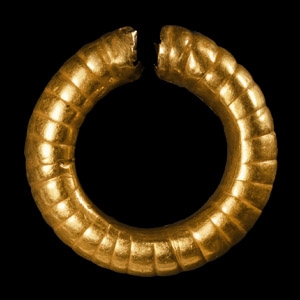
Achaemenid Gold Penannular Hair Ring
Circa 5th century B.C.Sold for (Inc. bp): £494
Composed of a hollow D-section body, decorative vertical grooves around the outer face. 4.83 grams, 32 mm
From the collection of a North American gentleman, formed in the 1990s.
In Achaemenid graves, it is possible to determine if the jewellery contained within belonged to an adult female or a child by its size. The jewellery of the adult women included a wreath, as well as three pairs of boat-shaped earrings, two necklaces, two pendants, four finger rings, and a set of dress ornaments. Children's jewellery pieces usually consisted of only three pairs of earrings and a necklace. -
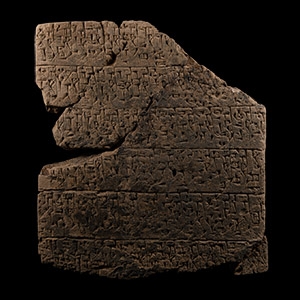
Large Sumerian Clay Cuneiform Tablet Fragment with a List of Professional Titles
Mid 3rd millennium B.C.Estimate: £1,500 - 2,000 (+bp*)
Opening Bid: £750
The titles written on one face; some remaining text to reverse; a school list of Sumerian proper names that begins with lugal 'King', Sumerian names being generally small phrases. Among the names in this list = lugal-nir-gal2 'The King is Noble'; lugal-gal-zu 'The King is Wise' and; such can also be abbreviated as lugal-abzu 'The King, (in/from) the Abzu(X}' the Abzu is the home of the god Enki(X); repaired. 881 grams, 16.5 cm
Specialised collection of cuneiform texts, the property of a London gentleman and housed in London before 1992. Thence by descent to family members. Examined by Professor Wilfrid George Lambert FBA (1926-2011), historian, archaeologist, and specialist in Assyriology and Near Eastern archaeology, in the late 1980s and early 1990s. The collection is exceptional for the variety of types, including some very rare and well preserved examples.
