
Loading, please wait...
_900x900.jpg "Central Asian Silver-Gilt Decorated Buckle Set on Modern Leather Belt")
_200x200.jpg "Central Asian Silver-Gilt Decorated Buckle Set on Modern Leather Belt")
.jpg "Central Asian Silver-Gilt Decorated Buckle Set on Modern Leather Belt")
LOT 2331
Central Asian Silver-Gilt Decorated Buckle Set on Modern Leather Belt
18TH-19TH CENTURY A.D.
39 1/4 in. (3 in.) (41 grams, 99.5 cm long (buckles 75 mm each)).
Comprising two silver-gilt fastening plaques, each D-shaped in section and tongue-shaped in plan with applied granules and filigree bands; one element with a pierced plaque and the other with a domed bulb topped by a facetted glass insert; to the underside of each plaque, the end of a braided leather cord forming a girdle or belt; possibly from Uzbekistan. [No Reserve]
ProvenanceEx Silk Road Exhibition, Piccadilly, London, 2003.
CONDITIONTimeLine Auctions follows a vetting process to ensure the authenticity and legality of all items, reinforcing our commitment to integrity and responsible trading. Each antiquity, antique, and coin lot undergoes thorough examination by a vetting committee of at least ten external specialists, professional trade association members, scientists, and archaeologists: Our Vetting Process
AUCTIONS:
TimeLine is a leading auction house specialising in antiquities, ancient art, collectables, natural history, coins, medals, and books. Our auctions offer museums, collectors, historians, and enthusiasts the opportunity to acquire unique and historically significant pieces.
LOT 2331
Central Asian Silver-Gilt Decorated Buckle Set on Modern Leather Belt
Sold for (Inc. bp): £7
-
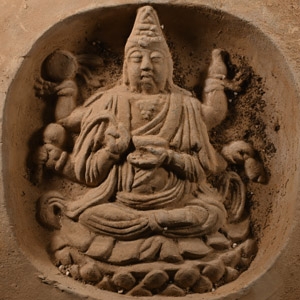
Chinese Song Terracotta Tile with Deity
Song Dynasty, 960-1279 A.D. or laterSold for (Inc. bp): £117
Circular recess with high-relief modelled figure of Mahākāla sitting cross-legged on a lotus dais, six arms holding various symbols. 4.9 kg, 28.5 cm
From a West Country, UK, collection, 1990s. -
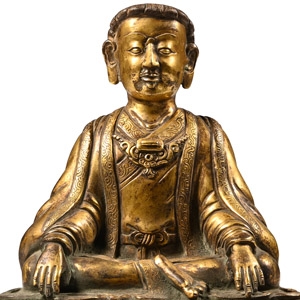
Sino-Tibetan Gilt Bronze Bodhisattva Statue
20th century A.D.Sold for (Inc. bp): £468
Hollow-formed, sitting cross-legged on a D-shaped base, wearing an uttariya mantle over a cross-over robe and neck ornament. 1.64 kg, 19.3 cm
From a West Country, UK, collection, 1990s. -
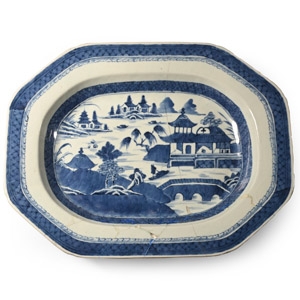
Diana Cargo Shipwreck Large Glazed Blue and White Serving Dish
Early 19th century A.D.Sold for (Inc. bp): £52
A large octagonal dish with raised lip with net border; painted scenery of a lakeside town with multiple buildings in various designs on islands, boats floating on the water and an arched bridge to the foreground; repaired. 1.36 kg total, 35.5 cm
Ex Christie's, Amsterdam, March 1995.
'The Diana' was owned by Palmer and Co. a powerful Calcutta ship owner and was licenced by the English East India Company to sail from Calcutta or Madras to Canton. On the 14th of March 1817, she hit rocks off the Straits of Malacca and sank. The wreck was identified and recovered in 1994 by Dorian Ball of Malaysian Historical Salvors.
