
.jpg "Celtic Northeast Gaul. Remi Potin Unit.")
LOT 2833
Celtic Northeast Gaul. Remi Potin Unit. Circa 100-50 BC.
Figure running to right, holding torque and spear / Beast to right; uncertain ornaments above and below. Depeyrot, NC VII, 29; D&T 155; CCCBM III 483-506; de la Tour 8124. Very Fine.(4.11gr, 20mm, 2h.).
ProvenanceFrom the private collection of John Meredith, acquired since the 1990s; thence by descent.
TimeLine Auctions follows a vetting process to ensure the authenticity and legality of all items, reinforcing our commitment to integrity and responsible trading. Each antiquity, antique, and coin lot undergoes thorough examination by a vetting committee of at least ten external specialists, professional trade association members, scientists, and archaeologists: Our Vetting Process
AUCTIONS:
TimeLine is a leading auction house specialising in antiquities, ancient art, collectables, natural history, coins, medals, and books. Our auctions offer museums, collectors, historians, and enthusiasts the opportunity to acquire unique and historically significant pieces.
-
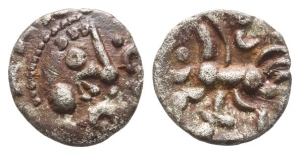
Celtic Britannia. Dobunni AR Unit. Circa 50 BC-AD 50. Uninscribed. Cotswold Eagle type. Head type C.
Sold for (Inc. bp): £78
Profile moon head to right, pelletted crescents for hair, large boss on chin, stalk lips; crescents and pellets before / Celtic triple-tailed annulate horse to left, 'flower' symbol below, stylised bird's head above, pellet before. ABC 2018; Van Arsdell 1045-1 (Corio); SCBC 377. 0.93gr, 13mm, 10h.
Near Very Fine.
Found Gloucestershire, UK. -
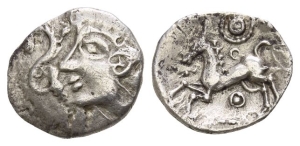
Celtic Britannia. Iceni AR Unit. Circa 50-40 BC. Uncertain mint in the upper Yare valey. Bury Diadem type. Uninscribed issue.
Sold for (Inc. bp): £195
Diademed female head to left; snake symbol before / Horse leaping to left; annulet and pellet boss in ring of pellets above, pellet-in-annulet below. ABC 1495; VA 80-1 (Imported); SCBC 432. 1.38gr, 15mm, 1h.
Very Fine.
From a private Merseyside, UK, collection; formed since circa 2000. -
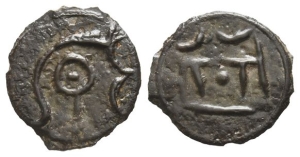
Celtic Britannia. Cantiaci Potin Unit. Early 1st century BC. Uninscribed. Angular Bull type (Cantian D).
Sold for (Inc. bp): £59
Stylised head to right / Stylised bull to right; two crescents above, pellet and exergual line below. ABC 171; Van Arsdell 129-1; SCBC 63. 1.45gr, 18mm, 9h.
Very Fine.
From the private collection of John Meredith, acquired since the 1990s; thence by descent.
