
LOT 2832
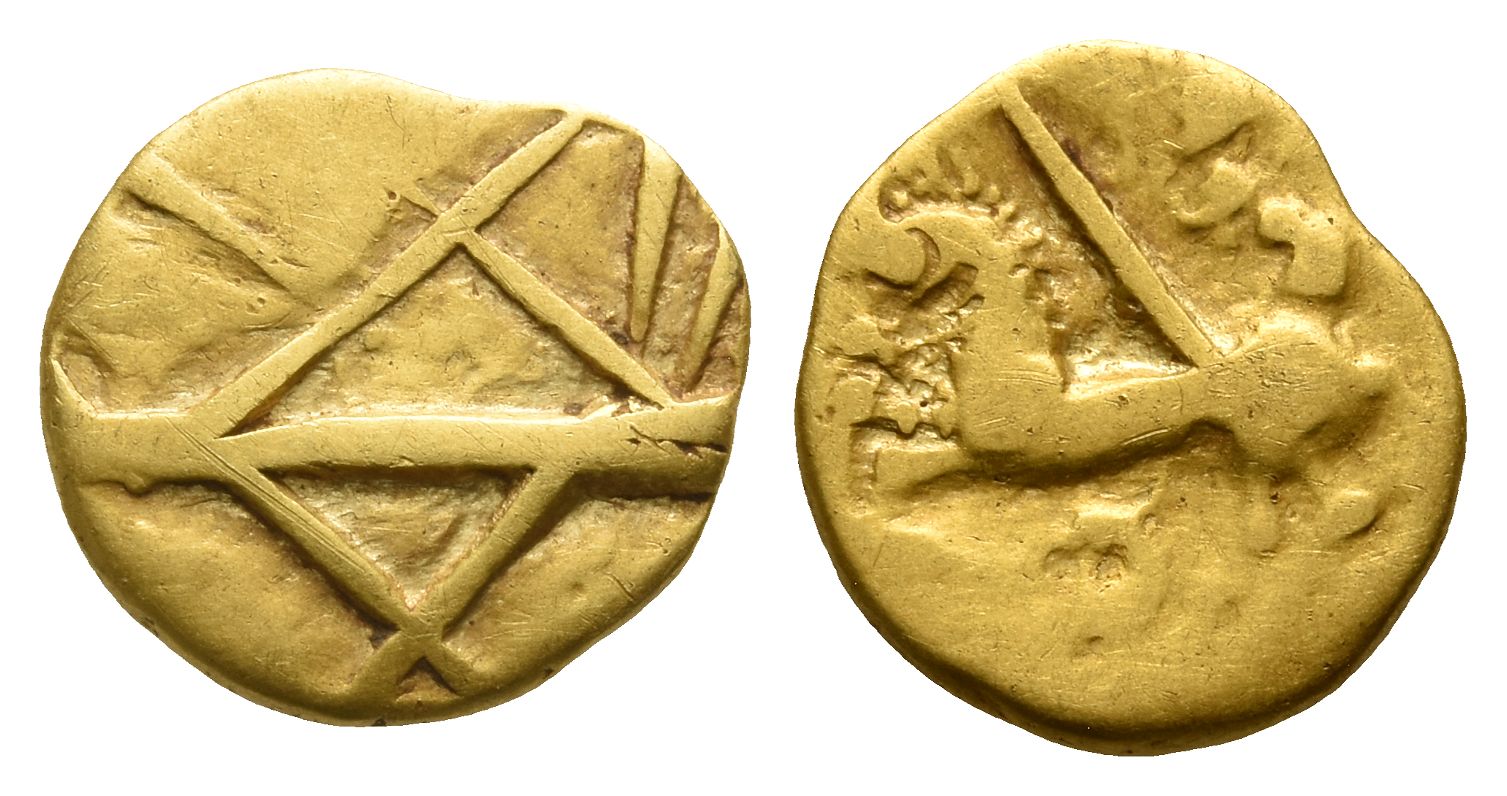
Celtic Northeast Gaul. Nervii AV Quarter Stater. 2nd century BC. Crossed Lines with Rider type. Gallo-Belgic B.
Die defaced with chisel marks / Charioteer driving horse to left; [‘lyre’ and pellet] below. VA 37; ABC 37; SCBC 9. Very Fine.(1.86gr, 13mm.).
ProvenanceFrom a private East Anglian collection formed since the 1980s.
TimeLine Auctions follows a vetting process to ensure the authenticity and legality of all items, reinforcing our commitment to integrity and responsible trading. Each antiquity, antique, and coin lot undergoes thorough examination by a vetting committee of at least ten external specialists, professional trade association members, scientists, and archaeologists: Our Vetting Process
AUCTIONS:
TimeLine is a leading auction house specialising in antiquities, ancient art, collectables, natural history, coins, medals, and books. Our auctions offer museums, collectors, historians, and enthusiasts the opportunity to acquire unique and historically significant pieces.
-
.jpg)
Celtic Britannia. Atrebates and Regni, Verica AR Unit. Circa AD 10-40. Uncertain Southern mint. Verica Tiberius type.
Sold for (Inc. bp): £156
Figure standing facing and holding curved lituus and grapes, COM to left field, MI F to right / Laureate bust of Tiberius to right, VERI behind head, CA before. VA 533-1; ABC 1250; SCBC 136. 1.30gr, 13mm, 10h.
Very Fine.
Ex Spink (company's tickets included). From the private collection of John Meredith, acquired since the 1990s; thence by descent. -
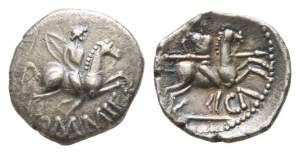
Celtic Britannia. Atrebates and Regni, Verica AR Unit. Circa AD 10-40. Verica Cavalry Duo type.
Sold for (Inc. bp): £247
COMMIF, warrior on horse to right holding oval shield / [VERI]-CΛ, warrior on horse to right holding spear. ABC 1238; VA 530-1; SCBC 133. 0.94gr, 12mm, 8h.
Good Very Fine. Nicely toned.
Ex Noonans Mayfair, 18 September 2013, lot 1264. From the private collection of John Meredith, acquired since the 1990s; thence by descent. -
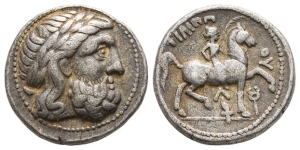
Celts in Lower Danube AR Tetradrachm. Circa late 4th-3rd centuries BC. Imitations of Philip II of Macedon.
Sold for (Inc. bp): £390
Laureate head of Zeus to right / ΦΙΛΙΠΠΟΥ, young jockey, holding palm branch and reins, riding horse to right; beneath horse, Λ above torch; beneath foreleg, kerykeion. Dembski -; Lanz -; OTA -; CCCBM I -; Pink 11. 13.62gr, 25mm, 1h.
Very Fine.
From the collection of a Surrey, UK, gentleman.
