
Loading, please wait...
LOT 0347
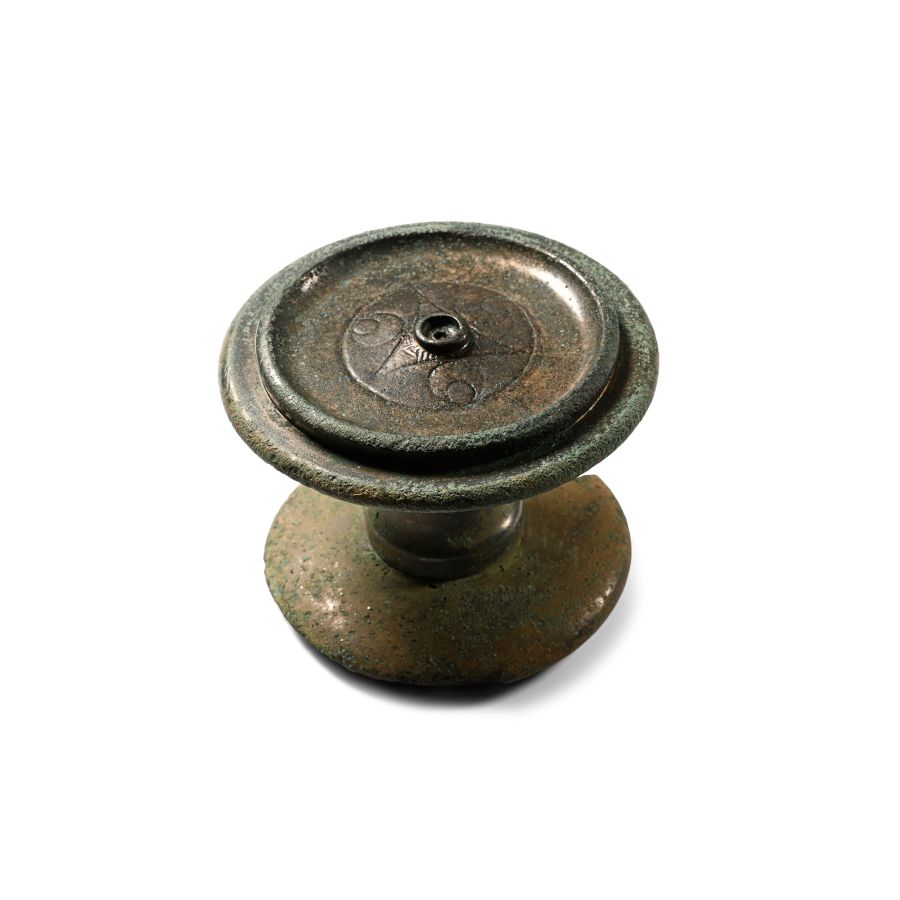
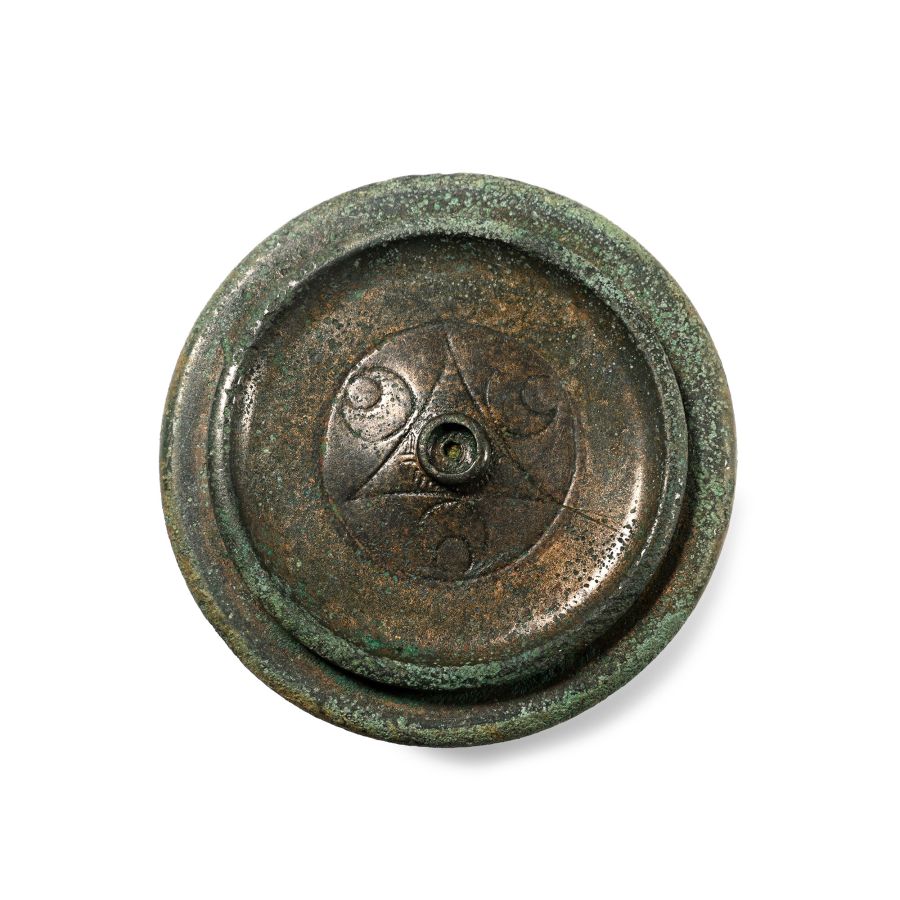
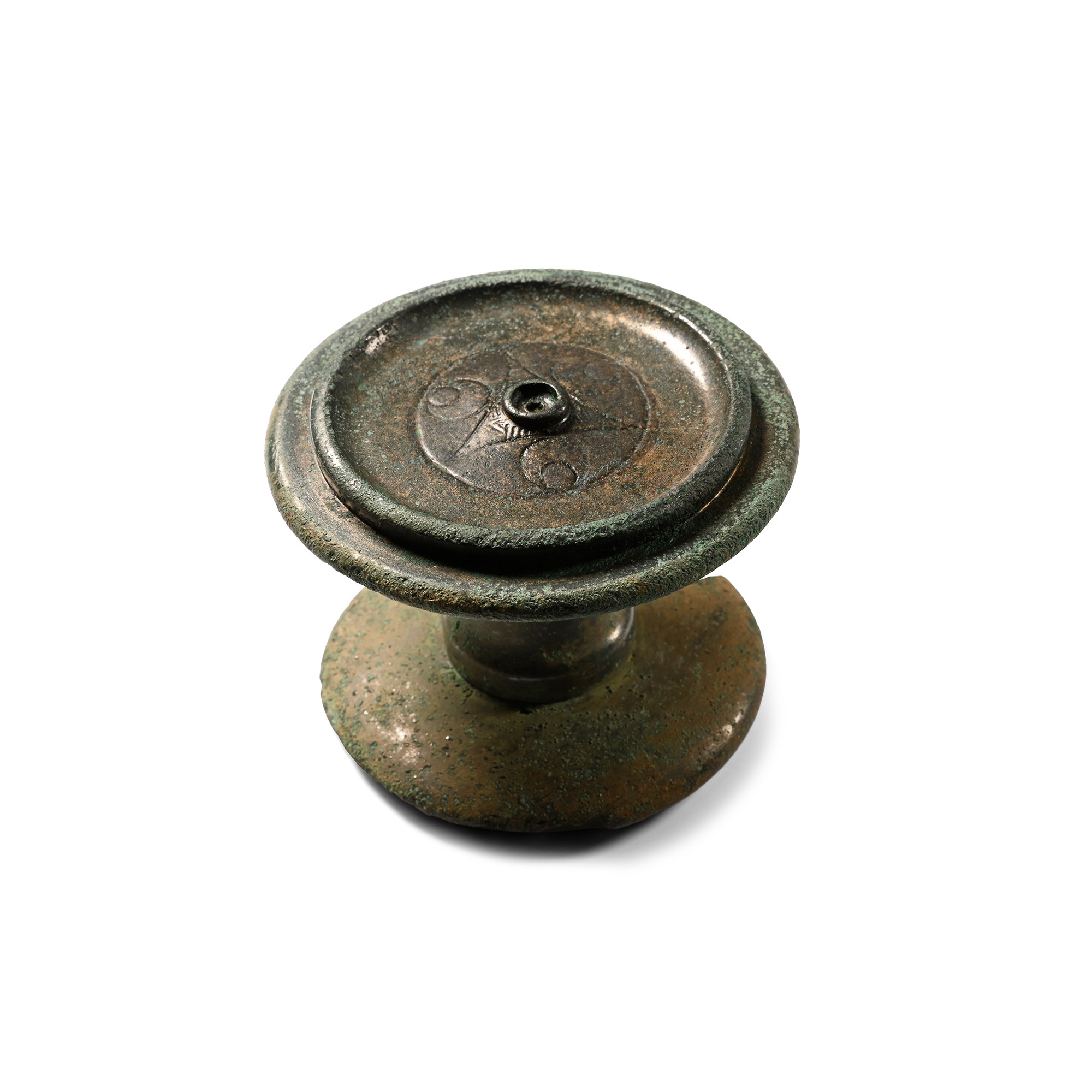
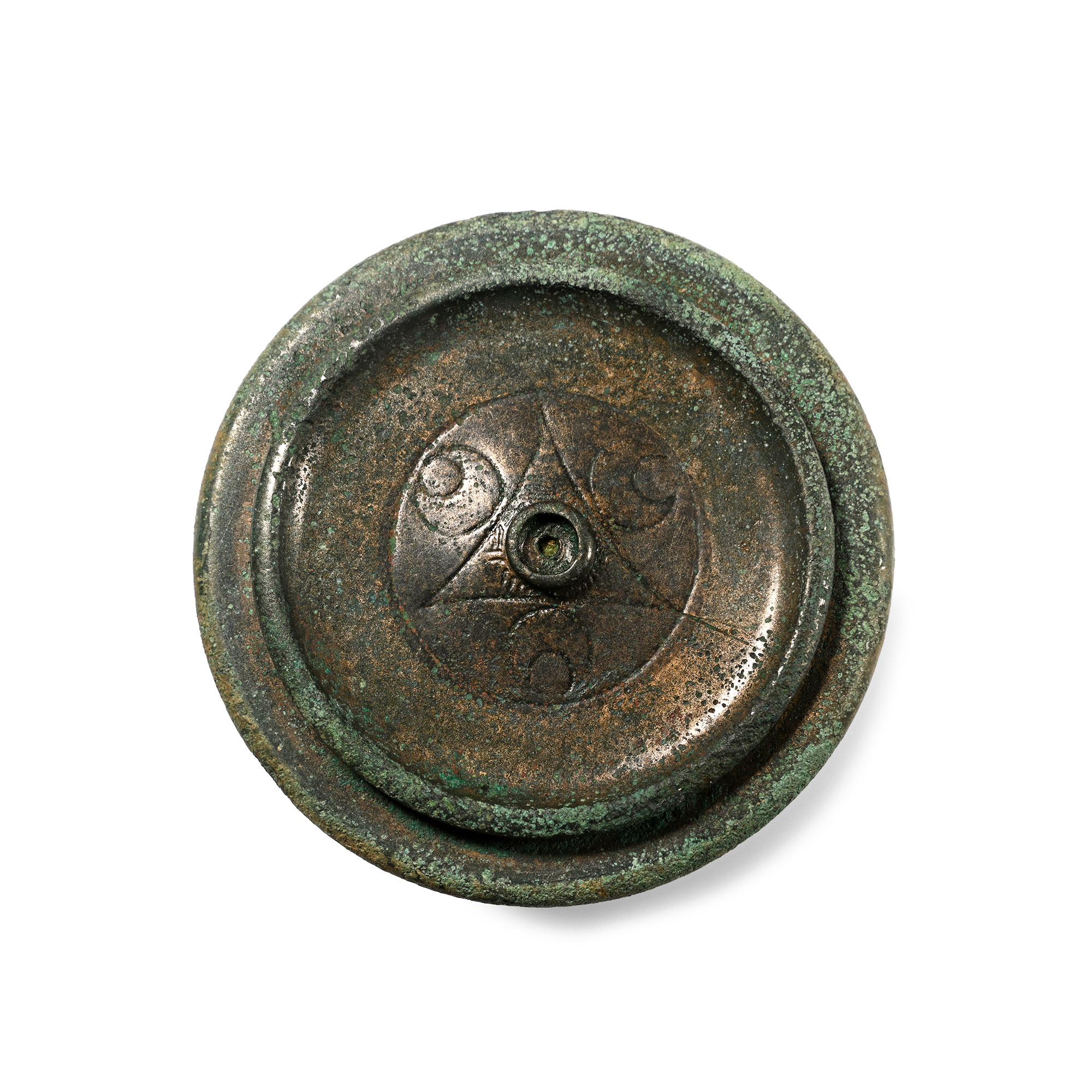
Celtic Iceni Decorated Bronze Horn Cap
IRON AGE, 2ND CENTURY B.C.-EARLY 1ST CENTURY A.D.
1 3/4 - 3 in. (314 grams total, 45-75 mm).
Sceptre head or other fitting with biconvex flange, possibly a finial from the yoke of a chariot.
ProvenanceFound Colchester, Essex, UK, 1990s.
This lot is accompanied by an illustrated lot declaration signed by the Head of the Antiquities Department, Dr Raffaele D'Amato.
Cf. Jope, E. M., Early Celtic Art, Oxford, 2000, pl.302-3, described as a vehicle pole and yoke fittings; Macdonald, P., Llyn Cerrig Bach. A Study of the Copper Alloy Artefacts from the Insular La Tène Assemblage, Cardiff, 2007, fig.23, item 49; cf. similar offered in Christie's, London, 12 December 1984, no.26A (£7,000-£10,000).
FootnotesTwenty or so 'horn caps' are known in museums and private collections, all have been found in Britain and mostly in Southern England. This type of decorative cap is from the end of a curved wooden handle which projected from the back of an Iron Age chariot, by which a warrior could pull himself back into the chariot. The chariot to which this would have been attached would have belonged to a chief or wealthy warrior from the Icenic tribe.
CONDITIONTimeLine Auctions follows a vetting process to ensure the authenticity and legality of all items, reinforcing our commitment to integrity and responsible trading. Each antiquity, antique, and coin lot undergoes thorough examination by a vetting committee of at least ten external specialists, professional trade association members, scientists, and archaeologists: Our Vetting Process
AUCTIONS:
TimeLine is a leading auction house specialising in antiquities, ancient art, collectables, natural history, coins, medals, and books. Our auctions offer museums, collectors, historians, and enthusiasts the opportunity to acquire unique and historically significant pieces.
-
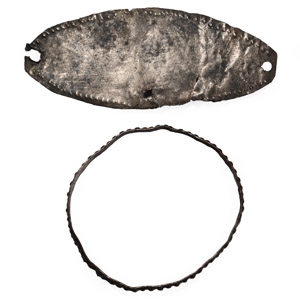
Celtic Silver and Bronze Jewellery Group
Iron Age, 1st century B.C.-1st century A.D.Estimate: £100 - 140 (+bp*)
Opening Bid: £50
Comprising: narrow bangle with beaded outer face; ellipsoid plaque with repoussé pellets to rim, three attachment points. 4.28 grams total, 49-70 mm
Ex German art market, 2000s. Acquired from an EU collector living in London. From the collection of a Surrey, UK, gentleman. This lot is accompanied by an illustrated lot declaration signed by the Head of the Antiquities Department, Dr Raffaele D'Amato. -
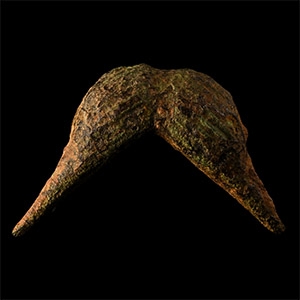
Iron Age Celtic Bronze Moustache Type Dagger Pommel
2nd century B.C.-1st century A.D.Sold for (Inc. bp): £39
Comprising a swollen body tapering towards the pointed terminals; the centre of the body with a circumferential recess; decorated with alternating ridges and grooves. 19.8 grams, 39 mm
Property of a Cambridgeshire, UK, collector. From his private collection since the 1970s; thence by descent circa 2000. Ex private collection of a Bedfordshire gentleman. This lot is accompanied by an illustrated lot declaration signed by the Head of the Antiquities Department, Dr Raffaele D'Amato.
This type of pommel is called a 'moustache pommel', so named because of its shape, a sort of comedic, droopy moustache. -
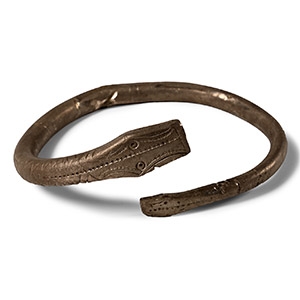
Iron Age Celtic Silver Snake-Headed Bracelet
1st century A.D.Sold for (Inc. bp): £468
Comprising a round-section shank and flattened finials: one with punched annulet detailing and ring-and-dot eyes, the other smaller with punched pellets. 61.5 grams, 81 mm
Acquired on the London art market in the late 1980s-1990s. From the family collection of an East London, UK, gentleman. This lot is accompanied by an illustrated lot declaration signed by the Head of the Antiquities Department, Dr Raffaele D'Amato.
