
LOT 2852
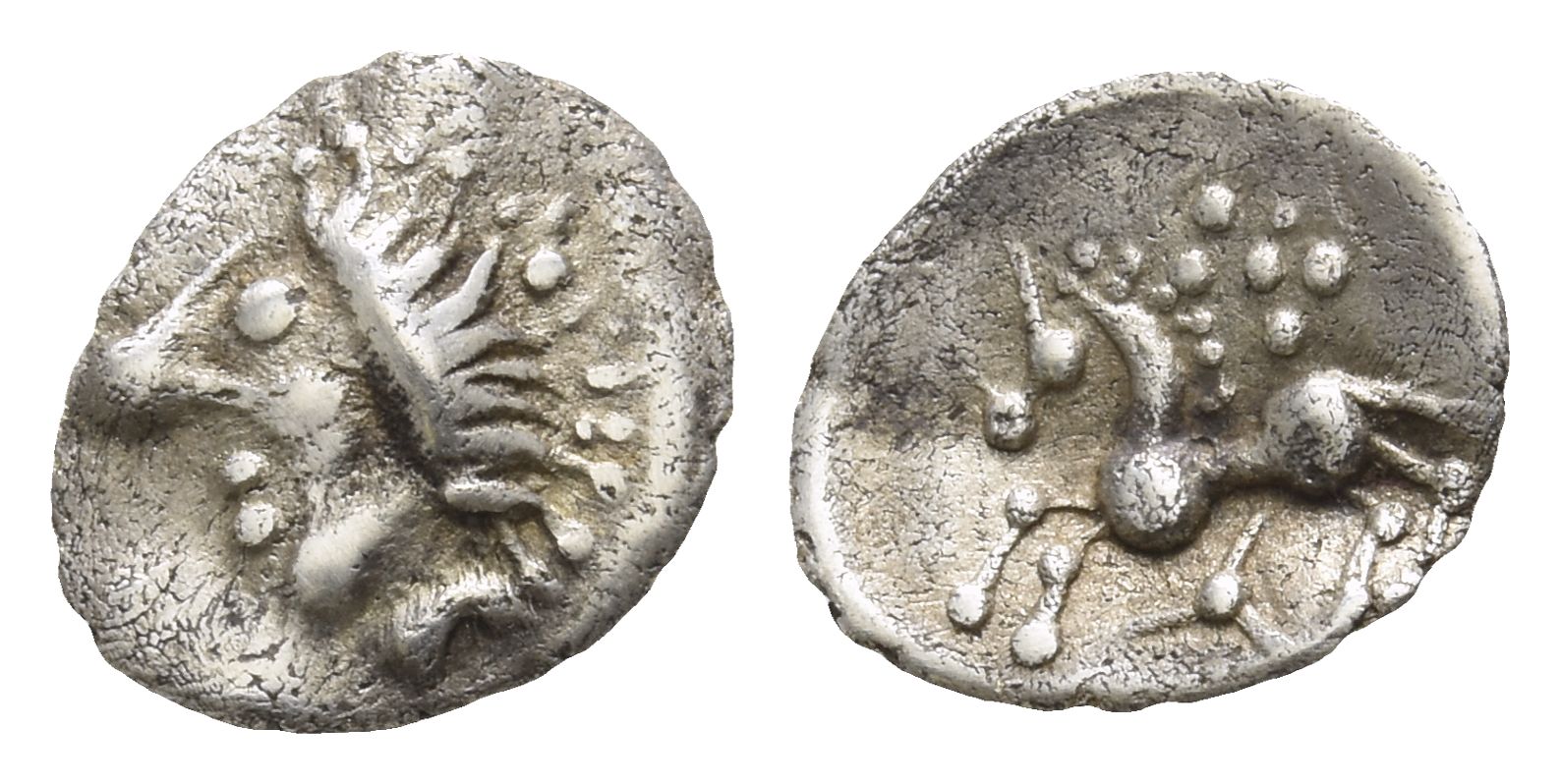
Celtic Central Europe. Vindelici AR Quarter Quinar. 1st century BC. Manching II type.
Celticized male head with spiky hair to left / Celticized horse galloping to left; above, five pellets; below, ornament ('Winkelspitz'). Flesche 389; Kellner, Manching, 963. Good Very Fine. Flan slightly bent.(0.44gr, 10mm, 8h.).
ProvenanceEx Chris Rudd, 128, lot 4, ref. no.16865.
Ex Dr Miklos Hoka collection.
From the private collection of John Meredith, acquired since the 1990s; thence by descent.
TimeLine Auctions follows a vetting process to ensure the authenticity and legality of all items, reinforcing our commitment to integrity and responsible trading. Each antiquity, antique, and coin lot undergoes thorough examination by a vetting committee of at least ten external specialists, professional trade association members, scientists, and archaeologists: Our Vetting Process
AUCTIONS:
TimeLine is a leading auction house specialising in antiquities, ancient art, collectables, natural history, coins, medals, and books. Our auctions offer museums, collectors, historians, and enthusiasts the opportunity to acquire unique and historically significant pieces.
-
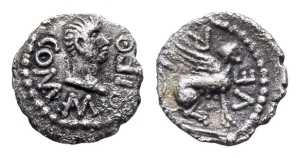
Celtic Britannia. Atrabates and Regni, Verica AR Minim. AD 10-20. Verica Sphinx Right type.
Sold for (Inc. bp): £338
CⵙMMⵙIFⵙ, bare male head to right; all within beaded border / VE-R-I (anticlockwise), Sphinx seated to right, with wings spread; all within beaded border. ABC 1340, VA -; BMC 1587-89; SCBC 163. 0.23gr, 8mm, 5h.
Near Extremely Fine. A miniature masterpiece. Exceedingly rare. Only twelve other recorded (when sold); no other examples on CoinArchives.
Ex Chris Rudd, 123, lot 26, ref. no.15994 (dealer's ticket included). Found near Ford, Arundel. From the private collection of John Meredith, acquired since the 1990s; thence by descent.
Dr John Creighton says: 'One of the most potent symbols was that on the signet ring of Augustus himself: the sphinx. Octavian had used this image in Rome during the Triumvirate, and its significance grew as he continued to use it as his defining image on his signet ring. It was his distinctive seal. Tasciovanus was the first to use the image in Britain, followed by Sego, Cunobelin and Verica' (Coins and Power in Late Iron Age Britain, 2000, p.107). -
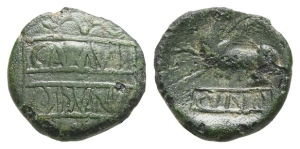
Celtic Britannia. Catuvellauni and Trinovantes, Cunobelin AE Unit. Circa AD 10-41. Camuloduno type.
Sold for (Inc. bp): £52
CAMVL-ODVNO in two panels / Sphinx crouching to left, raising her right foreleg; CVNO in panel below. Hobbs 1928-30; VA 1977; SCBC 332. 2.08gr, 15mm, 11h.
Very Fine.
Ex Chris Rudd, LL50, lot 53, ref. no.14432 (dealer's ticket included). From the private collection of John Meredith, acquired since the 1990s; thence by descent. -
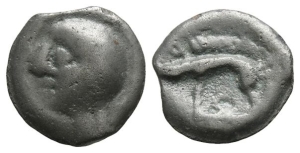
Celtic Northeast Gaul. Leuci Potin Unit. Circa 100-50 BC.
Sold for (Inc. bp): £26
Bare head to left / Boar standing to left; three semicircles below. D&T 228; Depeyrot, NC VII, 141; CCCBM III 426-32. 3.17gr, 18mm, 4h.
Near Very Fine.
Acquired on the UK art market since the early 2000s. Property of a Lincolnshire gentleman, thence by descent.
