
Loading, please wait...
LOT 0346
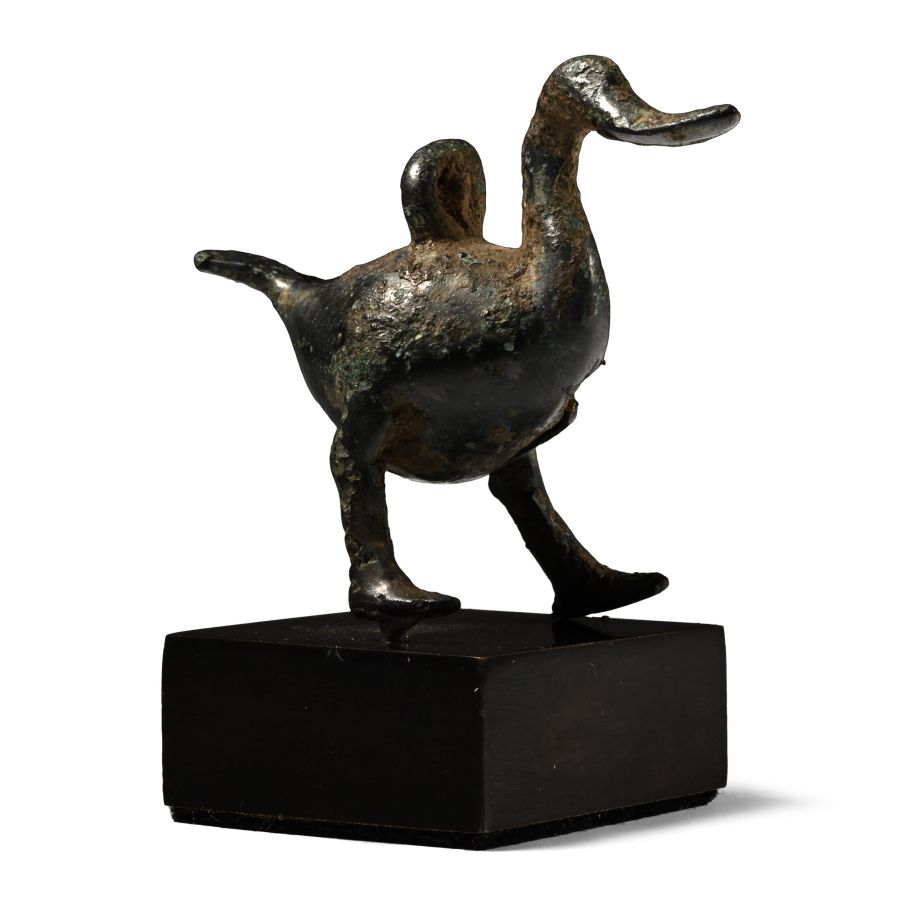
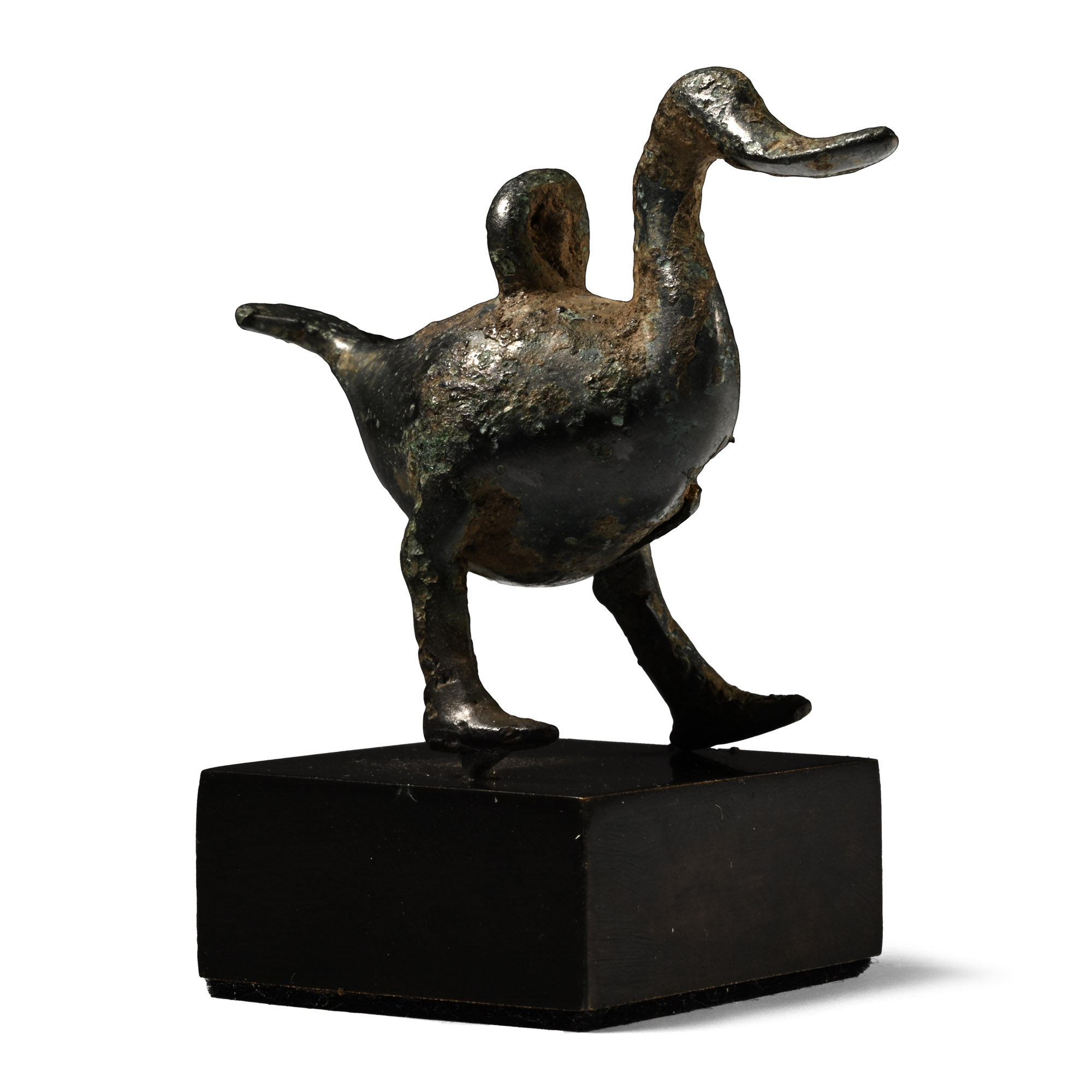
Celtic Bronze Statuette of a Duck
IRON AGE, 1ST CENTURY B.C.-1ST CENTURY A.D.
1 3/4 in. (52 grams total, duck: 43 mm high).
Modelled in the round with splayed legs, scooped beak, T-shaped tail with serrated edge and loop to the back; mounted on a custom-made stand. [No Reserve]
ProvenanceEx Cambridge, UK, collection, 1990-2010.
This lot is accompanied by an illustrated lot declaration signed by the Head of the Antiquities Department, Dr Raffaele D'Amato.
TimeLine Auctions follows a vetting process to ensure the authenticity and legality of all items, reinforcing our commitment to integrity and responsible trading. Each antiquity, antique, and coin lot undergoes thorough examination by a vetting committee of at least ten external specialists, professional trade association members, scientists, and archaeologists: Our Vetting Process
AUCTIONS:
TimeLine is a leading auction house specialising in antiquities, ancient art, collectables, natural history, coins, medals, and books. Our auctions offer museums, collectors, historians, and enthusiasts the opportunity to acquire unique and historically significant pieces.
-
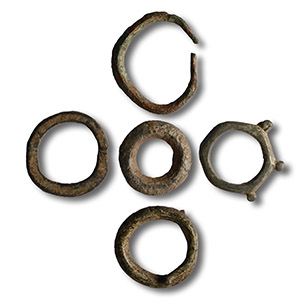
Iron Age Celtic Bronze Proto-Ring Money Collection
Circa 3rd-1st century B.C.Sold for (Inc. bp): £20
A 'proto-money' or harness ring group comprising round-section rings, some with butt-joints, radiating lobes and other features. 25.9 grams total, 22-31 mm
From an English collection formed before 2000. This lot is accompanied by an illustrated lot declaration signed by the Head of the Antiquities Department, Dr Raffaele D'Amato.
From the 3rd to 2nd Century B.C. and even before, Celtic rings in bronze were often used as a medium of exchange, before the actual issue of coinage in the area. The first attestation of rings as proto-money came from the Celtic Moesia, before the Roman conquest. -
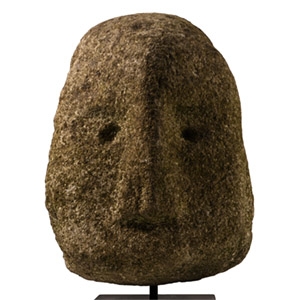
Iron Age Celtic Stone Head
Circa 2nd century B.C.-2nd century A.D. or laterSold for (Inc. bp): £1,040
An iconic Pagan sculpture with rounded forehead and chin, broad nose and recessed eyes; mounted on a custom-made display stand. 17.2 k total, 30.5 cm including stand
From Staffordshire, UK. From a collection acquired on the UK art market. Property of a West Midlands, UK, private collector. This lot is accompanied by an illustrated lot declaration signed by the Head of the Antiquities Department, Dr Raffaele D'Amato. -
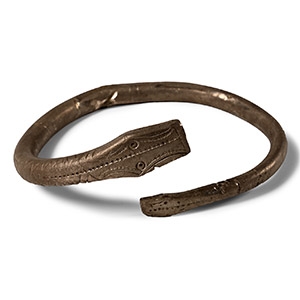
Iron Age Celtic Silver Snake-Headed Bracelet
1st century A.D.Sold for (Inc. bp): £468
Comprising a round-section shank and flattened finials: one with punched annulet detailing and ring-and-dot eyes, the other smaller with punched pellets. 61.5 grams, 81 mm
Acquired on the London art market in the late 1980s-1990s. From the family collection of an East London, UK, gentleman. This lot is accompanied by an illustrated lot declaration signed by the Head of the Antiquities Department, Dr Raffaele D'Amato.
