
LOT 2806
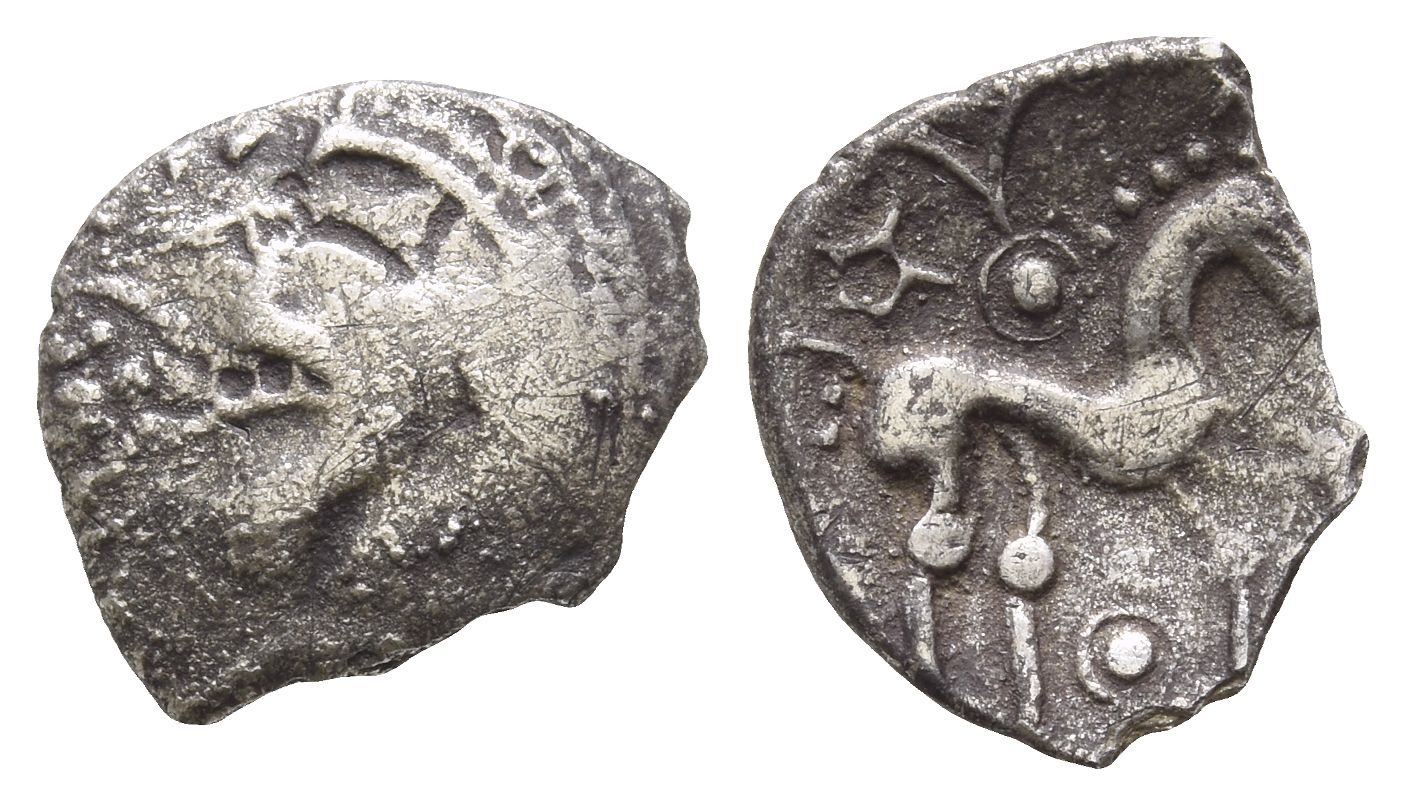
Celtic Britannia. Iceni AR Unit. Mid-late 1st century BC. Mossop Proto Head type. Uninscribed issue.
Male head to left, pelleted rosette before, star beneath neck / Horse to right, pellet-in-ring below, star above tail; diamond-shaped motif above with pellet in ring in each corner. ABC 1522; BMC 3549; VA -; SCBC 433. Near Very Fine. Edge chipped.(1.11gr, 15mm, 5h.).
ProvenanceFrom a private Merseyside, UK, collection; formed since circa 2000.
TimeLine Auctions follows a vetting process to ensure the authenticity and legality of all items, reinforcing our commitment to integrity and responsible trading. Each antiquity, antique, and coin lot undergoes thorough examination by a vetting committee of at least ten external specialists, professional trade association members, scientists, and archaeologists: Our Vetting Process
AUCTIONS:
TimeLine is a leading auction house specialising in antiquities, ancient art, collectables, natural history, coins, medals, and books. Our auctions offer museums, collectors, historians, and enthusiasts the opportunity to acquire unique and historically significant pieces.
-
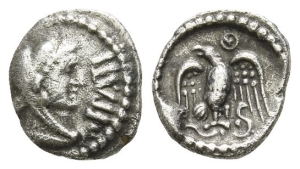
Celtic Britannia. Catuvellauni and Trinovantes, Epaticcus AR Unit. Circa AD 35-43. Epaticcus Eagle type.
Sold for (Inc. bp): £182
Head of Hercules to right, wearing lion skin headdress; [pellet-in-annulet] to left, EPATI upward before / Eagle standing facing on snake, head to left, with wings displayed; pellet-in-annulet above. ABC 1346; VA 580-1; SCBC 356. 1.26gr, 13mm, 5h.
Good Very Fine. Toned.
Ex Chris Rudd, LL69, lot 20, ref. no.17673 (dealer's ticket included). From the private collection of John Meredith, acquired since the 1990s; thence by descent. -
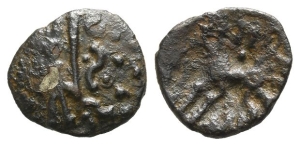
Celtic Britannia. Dobunni, Anted Fourrée Unit. Circa 10 BC-AD 10.
Sold for (Inc. bp): £39
Stylised head to right, with stalk lips, 'worms' and pellets in front, ringed-pellets and X on cheek / Triple-tailed horse to left, pellet and TED above, AN below. For prototype: ABC 2072; VA 1082; SCBC 380. 1.19gr, 14mm, 2h.
Near Very Fine.
Found Gloucestershire, UK. -
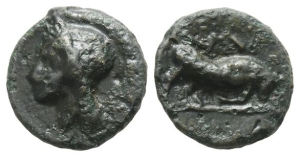
Celtic Britannia. Cantiaci Cast Potin Unit. 150-101 BC. Thurrock MA type.
Sold for (Inc. bp): £26
Head of Apollo to left / Bull butting to right; MA above. ABC 120; VA 1402-1. 4.71gr, 17mm, 2h.
Very Fine.
Ex Noonans Mayfair. Sale No 85, Lot 6. Found at Woodnesborough (Kent) c.1999. Chris Rudd FPL 59, September 2001 (21). CCI 01.1102. From the private collection of John Meredith, acquired since the 1990s; thence by descent.
