
Loading, please wait...
LOT 0301
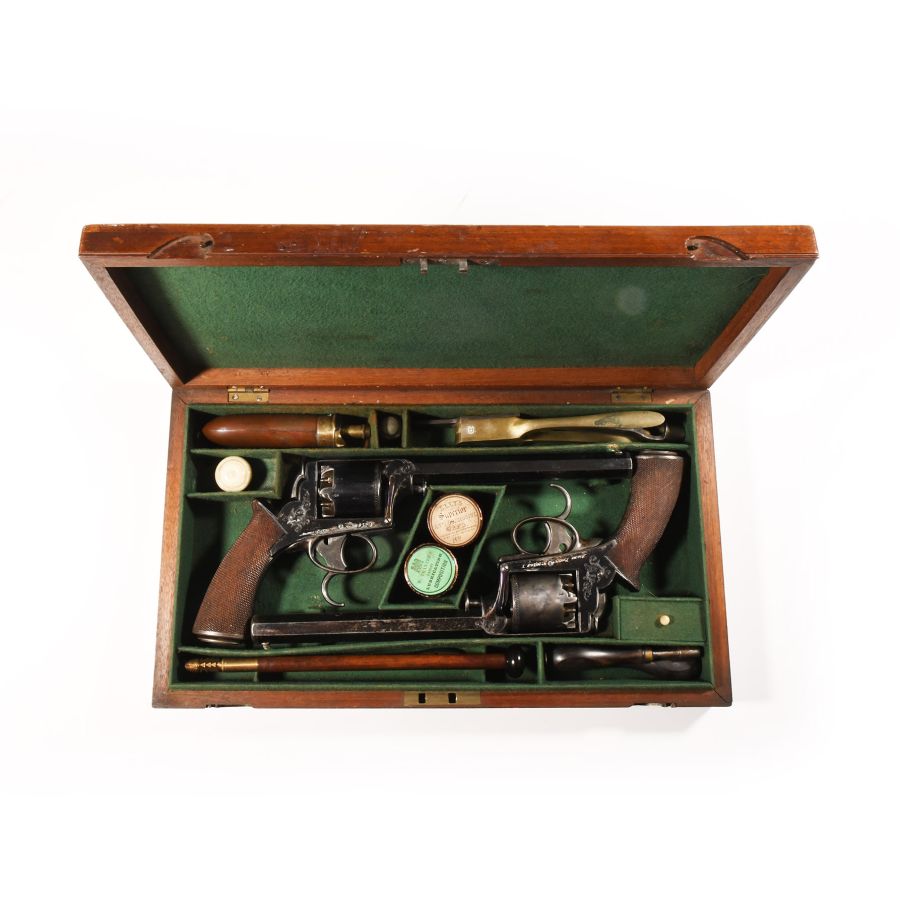
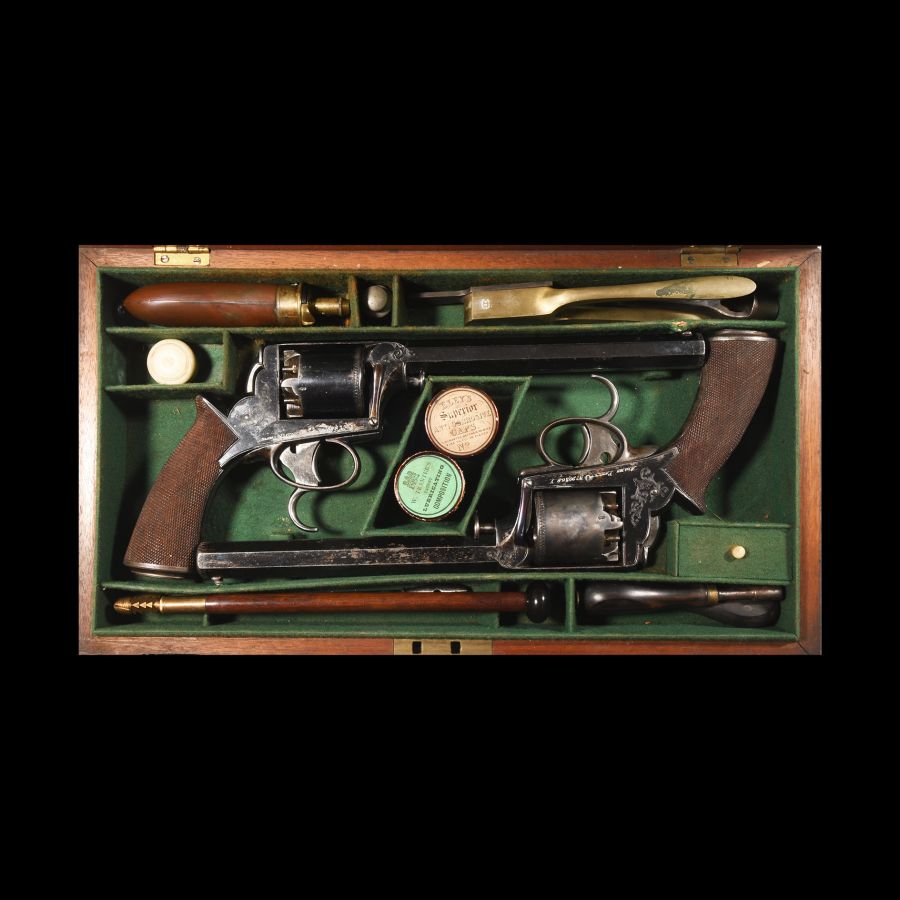
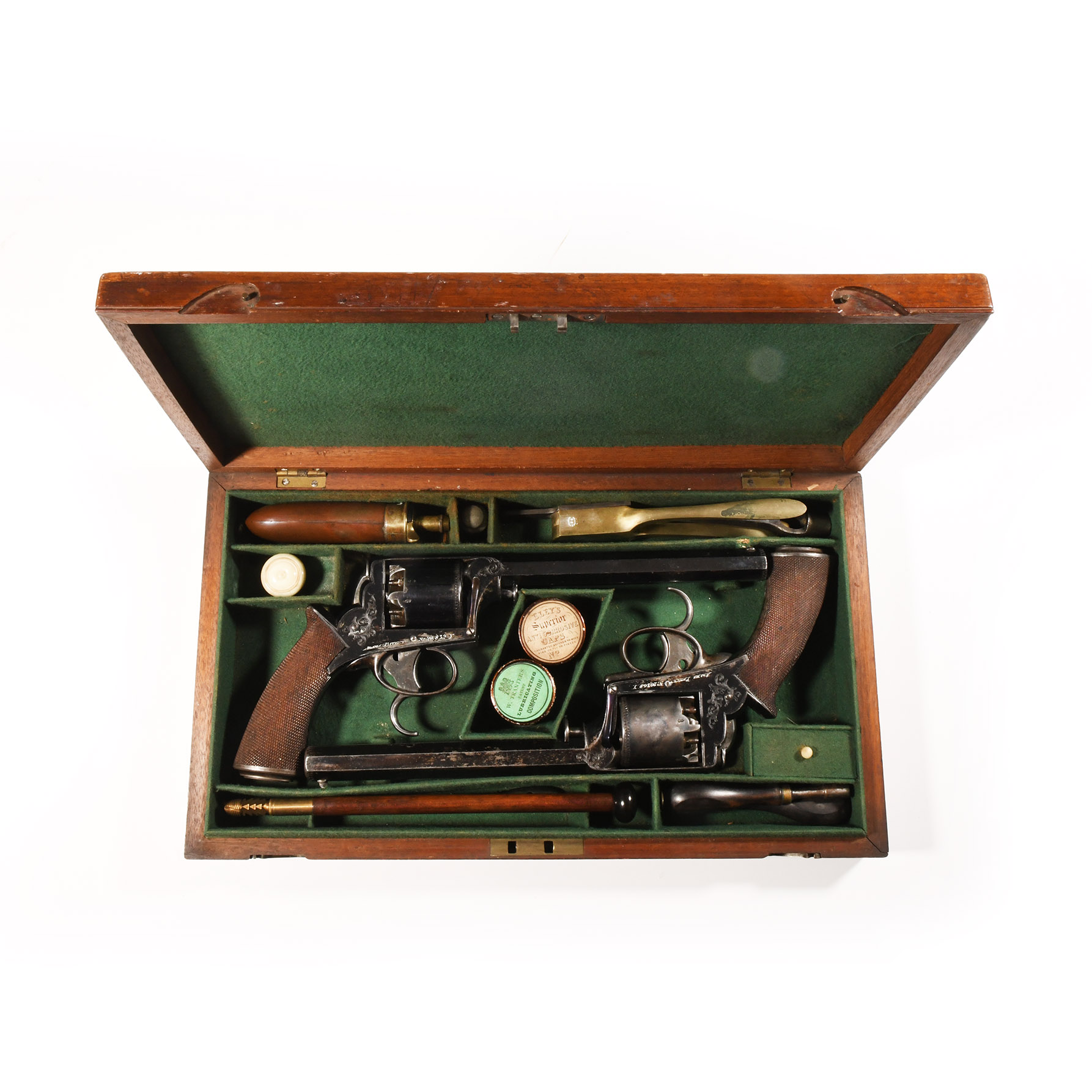
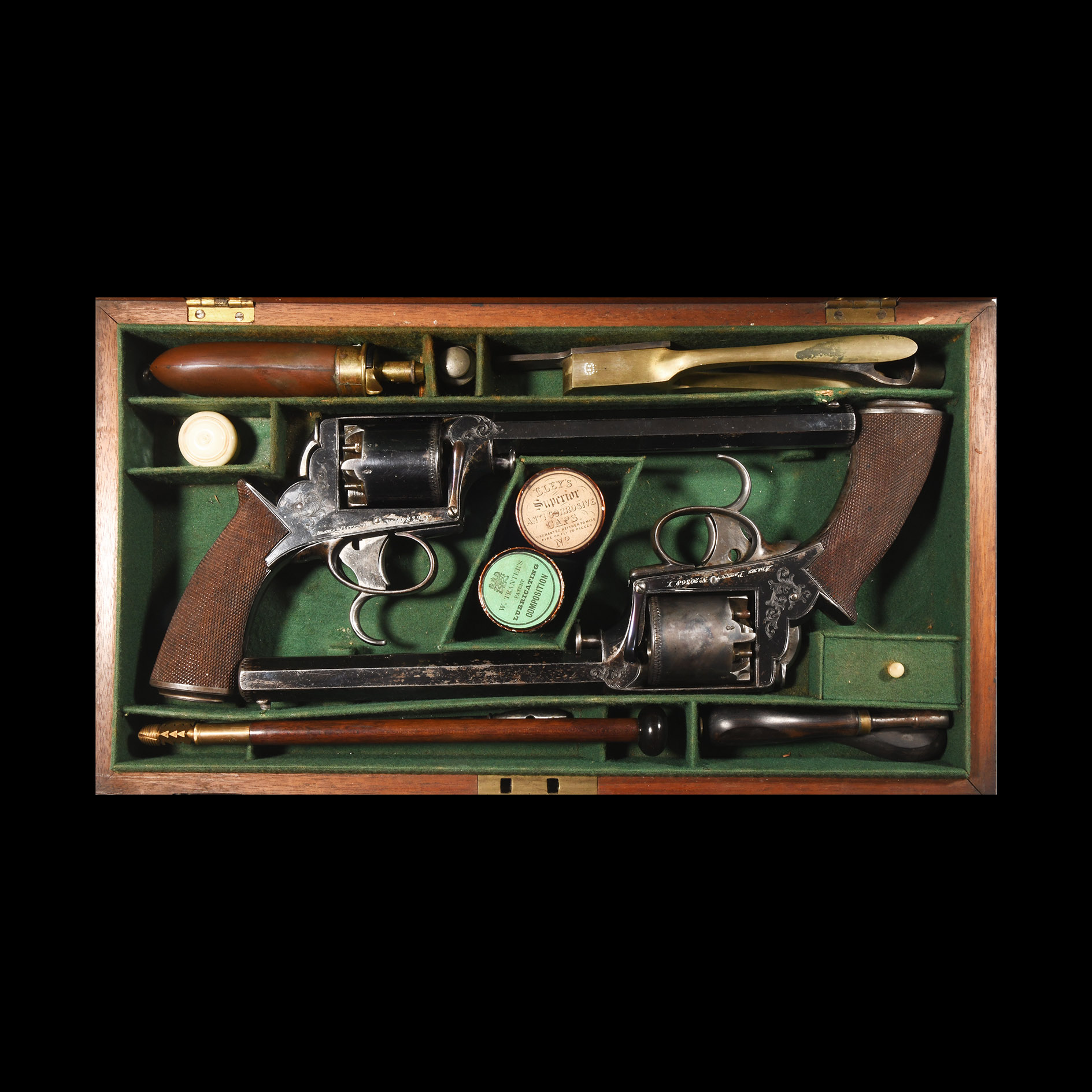
Cased 1st Model Tranter 36 Bore Revolver Pair
1853-1854 A.D.
17 x 9 1/2 in. (5.10 kg total, case 43 x 24 cm).
With 19.5cm (8¾") octagonal rifled barrels of 36 bore (marked to front of frame), solid Adams patent frames with foliate engraving marked 'ADAMS PATENT ' and serial numbers 20,368Y and 20,832Y with plain loading lever pins to left side, Tranter double trigger (providing single and double action), London proof marks to 5-shot cylinders and barrels, blued finish; in wood case with two hook latches and lock (no key) with accessories including loading lever (stamped 'TRANTERS PATENT 36), wood cleaning rod with extractor screw and two brass cleaning tips), wood handled turnscrew and nipple key, pewter oil bottle, steel wad cutter (marked CAST STEEL), brass-handled double bullet mould (stamped 'TRANTERS PATENT 36); Dixon powder flask, tin of Eley's Superior caps, tin of Tranter's Lubricating Composition, turned bone container with four spare nipples and three pre-made bullets with felt wads.
ProvenanceAcquired Brighton dealer, 2020.
Property of a Kent collector.
This lot has been checked against the Interpol Database of stolen works of art and is accompanied by search certificate no.204131.
See Prescott, G., The English Revolver, 2014, pp.64-65, for this model but not listed for this calibre.
FootnotesThe Tranter revolvers based on the Adams solid frame were numbered from 20,000 and have the Y suffix.
Sold as an exempt item under Section 58 (2) of the Firearms Act, 1968, to be held as a curiosity or ornament. No license required but buyer must be over 18 years of age. Overseas bidders should note that, due to UK regulations governing export of all firearms, overseas buyers will need to make arrangements for shipping this lot out of the UK directly, by air freight, with a specialist company or agent.
TimeLine Auctions follows a vetting process to ensure the authenticity and legality of all items, reinforcing our commitment to integrity and responsible trading. Each antiquity, antique, and coin lot undergoes thorough examination by a vetting committee of at least ten external specialists, professional trade association members, scientists, and archaeologists: Our Vetting Process
AUCTIONS:
TimeLine is a leading auction house specialising in antiquities, ancient art, collectables, natural history, coins, medals, and books. Our auctions offer museums, collectors, historians, and enthusiasts the opportunity to acquire unique and historically significant pieces.
-
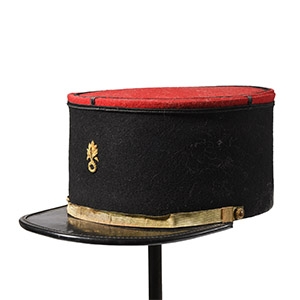
French Foreign Legion Kepi
Circa 1930-1940s A.D.Sold for (Inc. bp): £104
Black and red cloth with gold-coloured banding and 'button'; red lining and typed label reading 'Sergent BUYUKISPIR Haluk 1o R.E. Quartier Viénot C.S.L.E./S.I.H.L.E....'. 197 grams, 24.5 cm wide
Acquired from Czerny's Auctions, Italy, lot 104, 2016. The Kusmirek Collection, UK. Accompanied by copy of Czerny's invoice and information. -
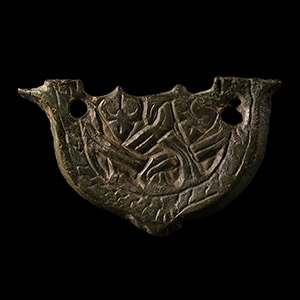
Viking Age Bronze Jellinge Sword Scabbard Chape
10th century A.D.Sold for (Inc. bp): £130
Plate with lip to the outer curved edges, knop to the centre of the bow and spurs to the angles; low-relief design of interlaced foliage within a braided band; lateral mounting holes, three studs to the reverse. 14.7 grams, 52 mm
From the collection of a North American gentleman, formed in the 1990s. -
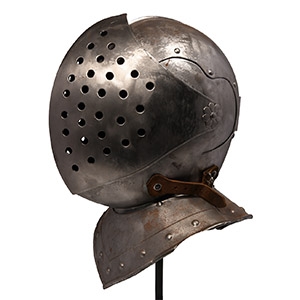
Italian Foot-Combat Helm
21st century A.D.Sold for (Inc. bp): £169
Comprising a pivoting visor, one piece skull raising to a small medial comb and fitted at the nape with a plume holder, flower-shaped pivots, front and rear gorget formed of a single plate. 3.9 kg, 37 cm high
The Kusmirek Collection, UK.
The helmet is a reproduction of a foot-combat helm, or great bascinet, used between the end of 15th and the first half of 16th century in the battles and tournaments. A similar helmet is that of Sir Giles Capel (1485-1556), a prominent figure at Henry VIII's court. These helmets were characterised by a unique rounded pierced visor with (here 60) slots for sight and ventilation. Helmets of this massive size and distinctive type were intended for foot-combat, a sporting contest fought by two fully armoured warriors armed with poleaxes, spears or swords. However, in this reproduction the visor has been mounted upon a separated collar.
