
Loading, please wait...
LOT 1829
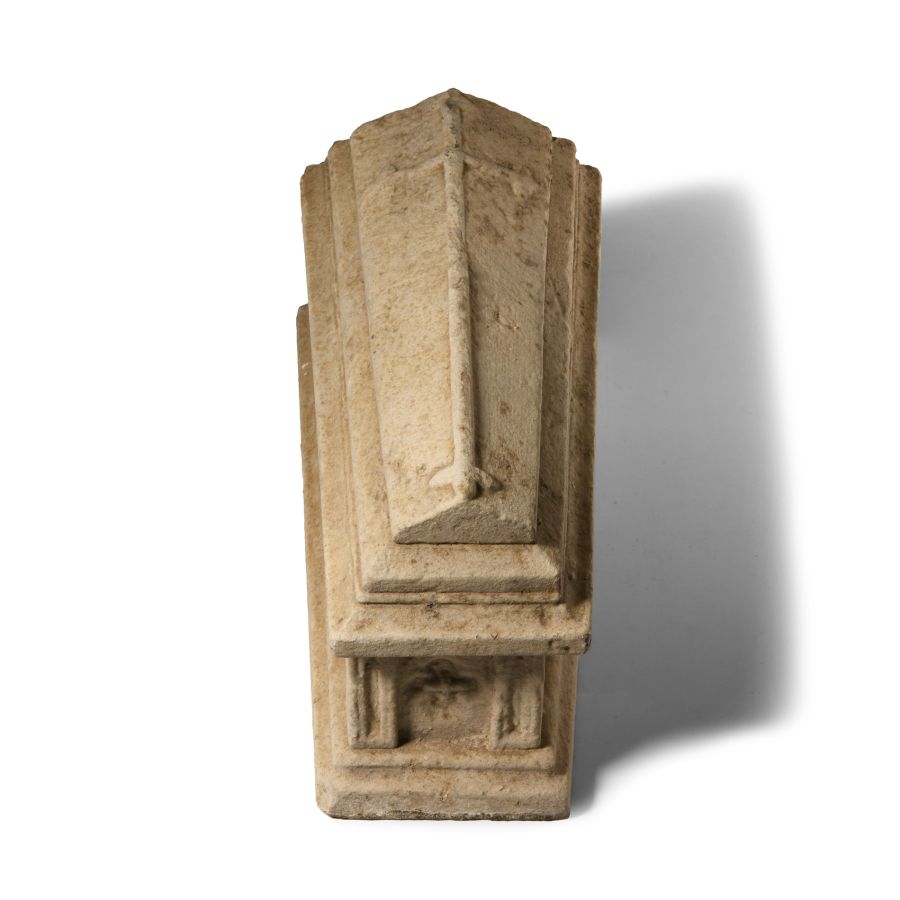
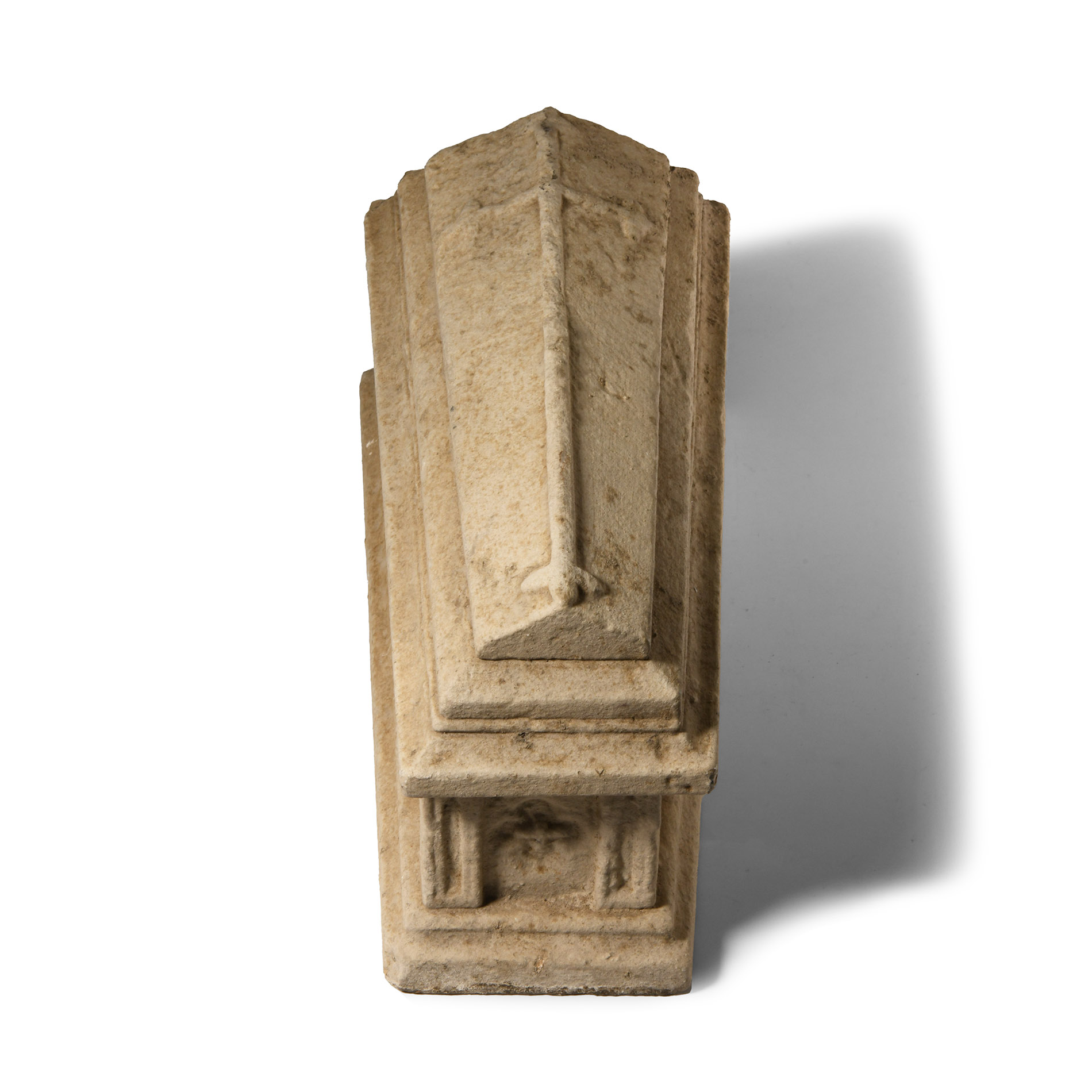
Carved Gothic Style Limestone Tomb Model
LATE 18TH-19TH CENTURY A.D.
13 5/8 in. (9.9 kg, 34.5 cm).
Miniature tomb with lancet arch detailing to the corners. tiered base, tiered upper body with carinated lid and high-relief cross pommee ornament. [No Reserve]
ProvenanceAcquired Mallams, Abingdon, UK, 7 October 2013, lot 238.
Property of a Kent collector.
TimeLine Auctions follows a vetting process to ensure the authenticity and legality of all items, reinforcing our commitment to integrity and responsible trading. Each antiquity, antique, and coin lot undergoes thorough examination by a vetting committee of at least ten external specialists, professional trade association members, scientists, and archaeologists: Our Vetting Process
AUCTIONS:
TimeLine is a leading auction house specialising in antiquities, ancient art, collectables, natural history, coins, medals, and books. Our auctions offer museums, collectors, historians, and enthusiasts the opportunity to acquire unique and historically significant pieces.
-
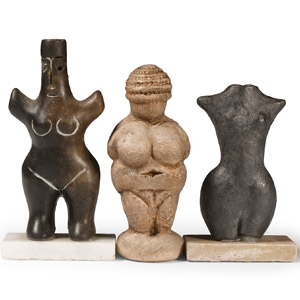
Mother Goddess Idol Group
20th century A.D.Sold for (Inc. bp): £234
Including a reproduction of the 'Venus of Willendorf' and other types. 175 grams total, 76-94 mm including stand
From a collection acquired on the UK art market from various auction houses and collections mostly before 2000. From an important Cambridgeshire estate; thence by descent. -
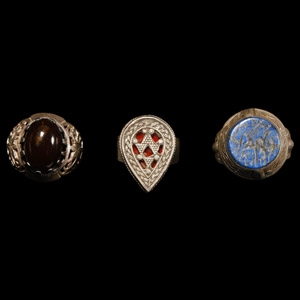
Silver-Coloured Ring Group
20th century A.D.Sold for (Inc. bp): £20
Comprising: one with teardrop bezel, glass inserts; one with lapis lazuli disc insert; one with openwork shoulders, cabochon to the bezel. 20.41 grams total, 23-30 mm
From a collection acquired on the UK art market from various auction houses and collections mostly before 2000. From an important Cambridgeshire estate; thence by descent. -
.jpg)
Stone Weight Collection
20th century A.D. or earlierSold for (Inc. bp): £13
Composed of spherical, coin-shaped and tubular weights, together with examples of hexagonal and octagonal cross-section; carved using a veined stone. 76 grams total, 26-42 mm
Ex Simmons Gallery, London E11, UK, in the 1990s. From a North London collection.
