
Loading, please wait...
LOT 1427
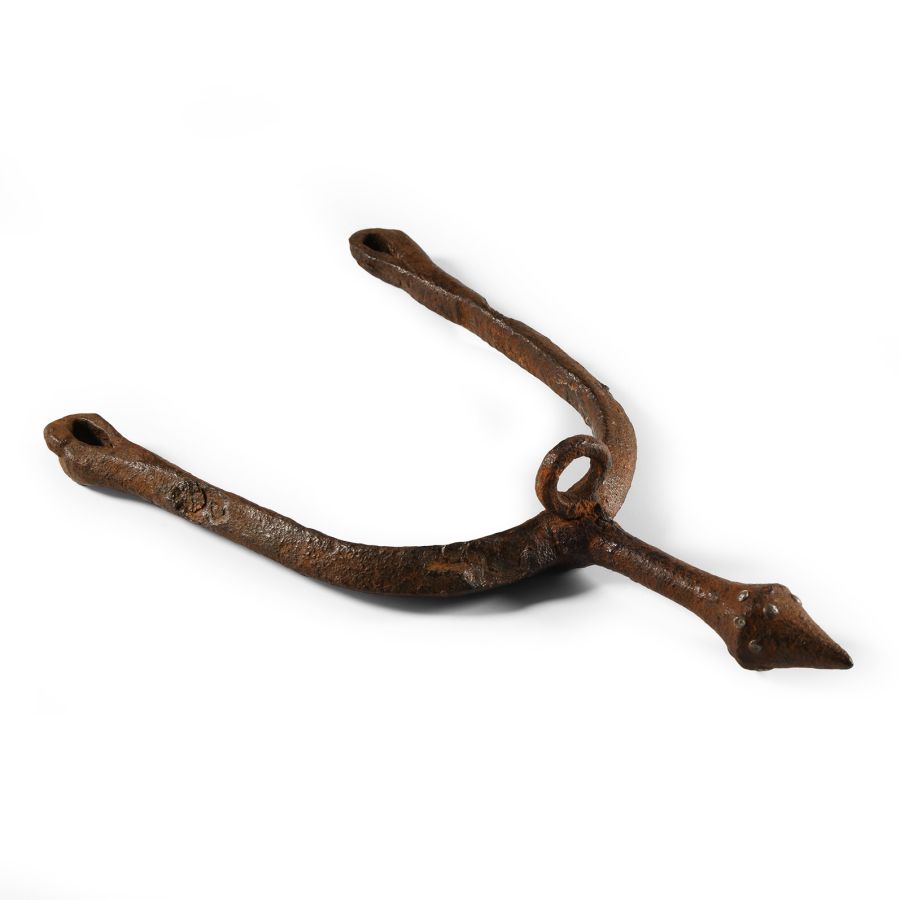
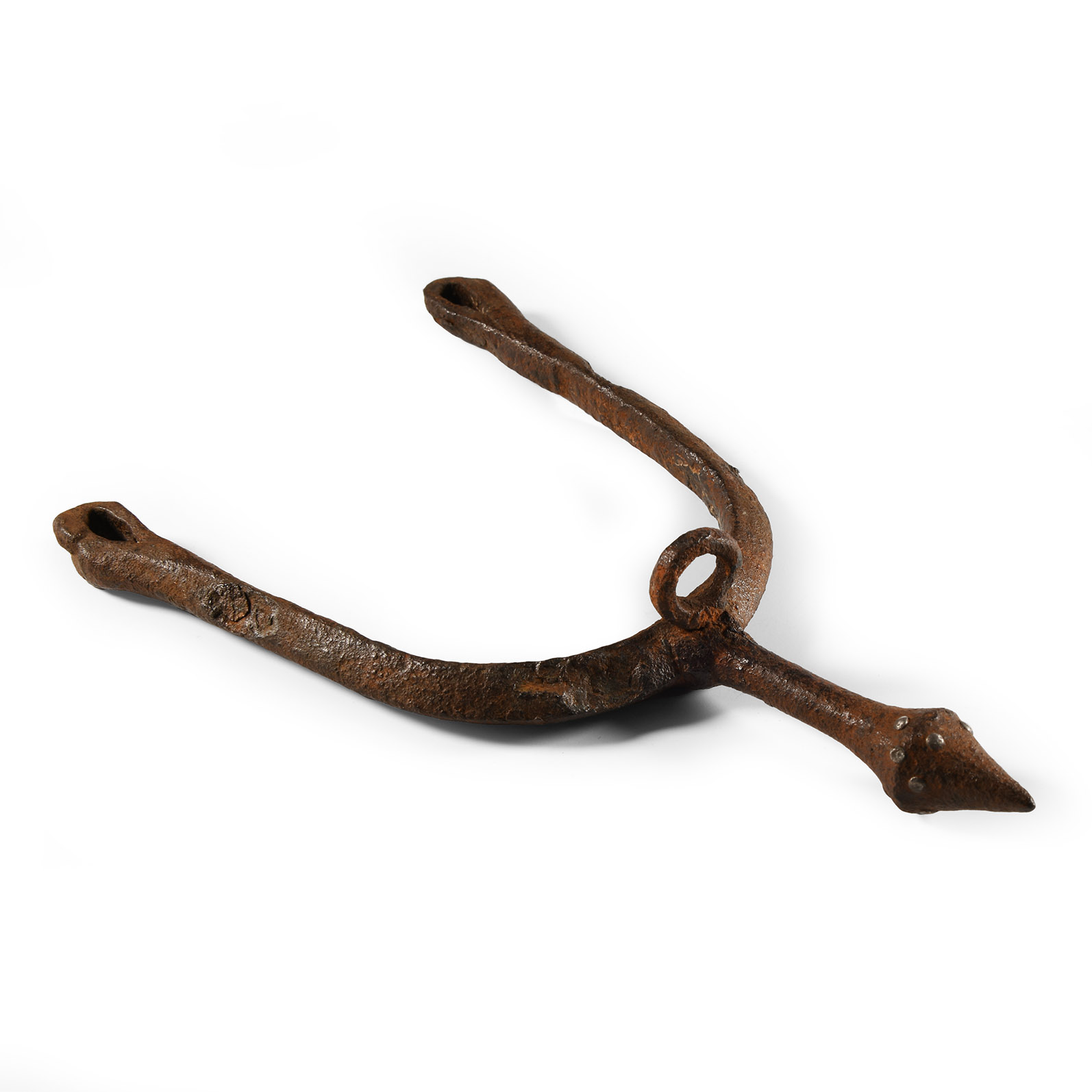
Carolingian Iron Spur with Silver Studs
CIRCA 8TH CENTURY A.D.
7 in. (150 grams, 18 cm).
With D-section arms, attachment loop, prick spur with two bands of applied studs. [No Reserve]
ProvenanceEx B Posey collection, 1990s.
Ex Den of Antiquity, Cambridgeshire, UK.
Accompanied by a dealer's catalogue information card.
TimeLine Auctions follows a vetting process to ensure the authenticity and legality of all items, reinforcing our commitment to integrity and responsible trading. Each antiquity, antique, and coin lot undergoes thorough examination by a vetting committee of at least ten external specialists, professional trade association members, scientists, and archaeologists: Our Vetting Process
AUCTIONS:
TimeLine is a leading auction house specialising in antiquities, ancient art, collectables, natural history, coins, medals, and books. Our auctions offer museums, collectors, historians, and enthusiasts the opportunity to acquire unique and historically significant pieces.
-
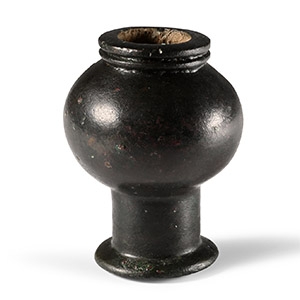
Luristan Sar-e Gorz Bronze Macehead
14th-13th century B.C.Sold for (Inc. bp): £208
With plain globular body, extended to a small raised ring encircling the top of the mace-head, circular short shaft expanding to a circular flat base. 279 grams, 70 mm high
Acquired 1980-2015. Ex Abelita family collection.
Caucasian stone and bronze maces were distinguished by modestly finished, clean processed and predominantly close-to-ball shapes (with a variety of surface finishing, ranging from the smooth, ribbed, lobular forms to the rounded with protrusions and spikes), and the Western Iranian maces, especially the Luristan ones, notable for the variety of different forms. Similar mace-heads, probably realised in Luristan, decorated the head of the sceptres of Assyrian kings like Tukulti-Ninurta I (1243-1207 B.C.). -
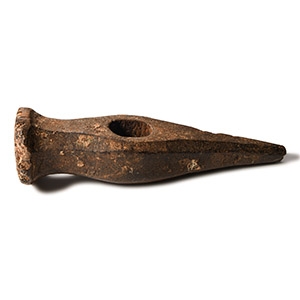
'The Customs House' Tudor Inscribed Iron Hammer-Head
16th century A.D.Sold for (Inc. bp): £156
Octagonal in section with one tapering end and one flat, circular end; square punch marks to one face in a pattern: '10B'. 2.82 kg, 24.2 cm
Found Thames foreshore, Customs House, London, UK, on Thursday 9th November 2006. Accompanied by a copy of the British Museum's Portable Antiquities Scheme (PAS) report no.LON-D6B085. -
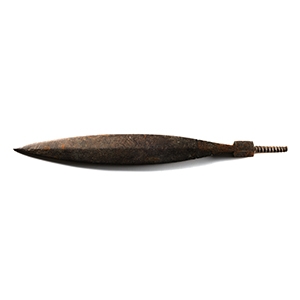
Maasai Leaf-Shaped Iron Spear
20th century A.D.Sold for (Inc. bp): £91
Lenticular in section, leaf-shaped in plan with rectangular block to the shoulder and threaded tang. 447 grams, 37 cm
From an old English collection formed in the 1980s. Property of an Essex gentleman; acquired on the UK art market.
