
Loading, please wait...
LOT 1876
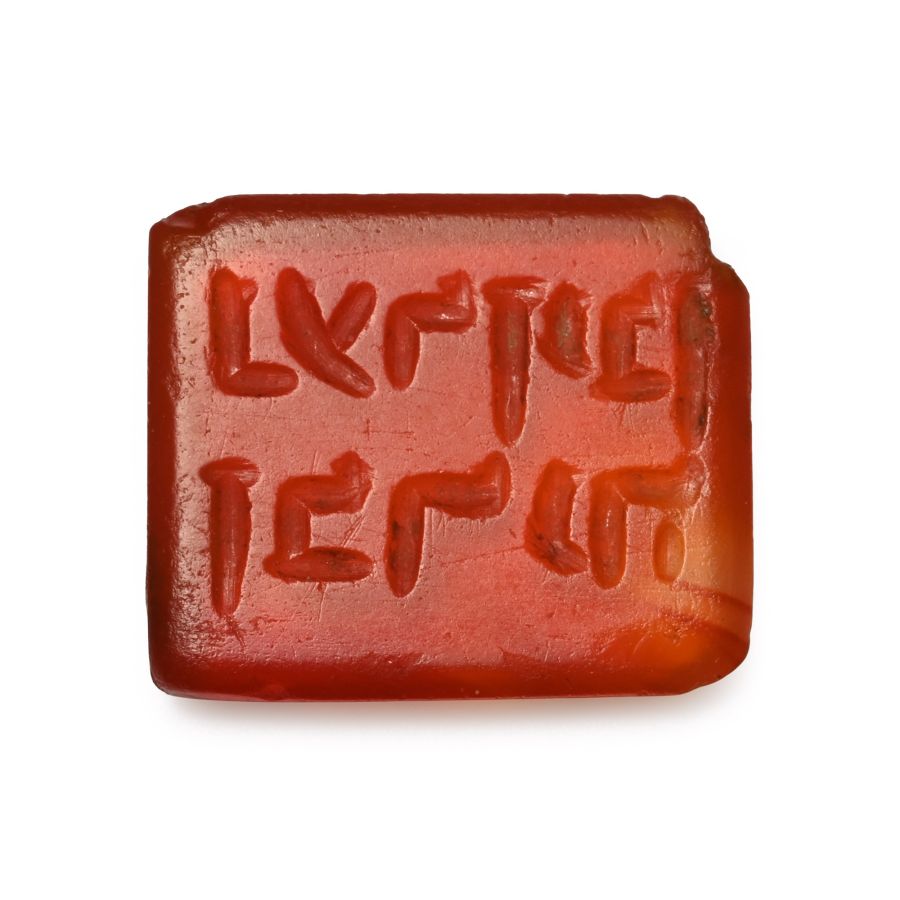
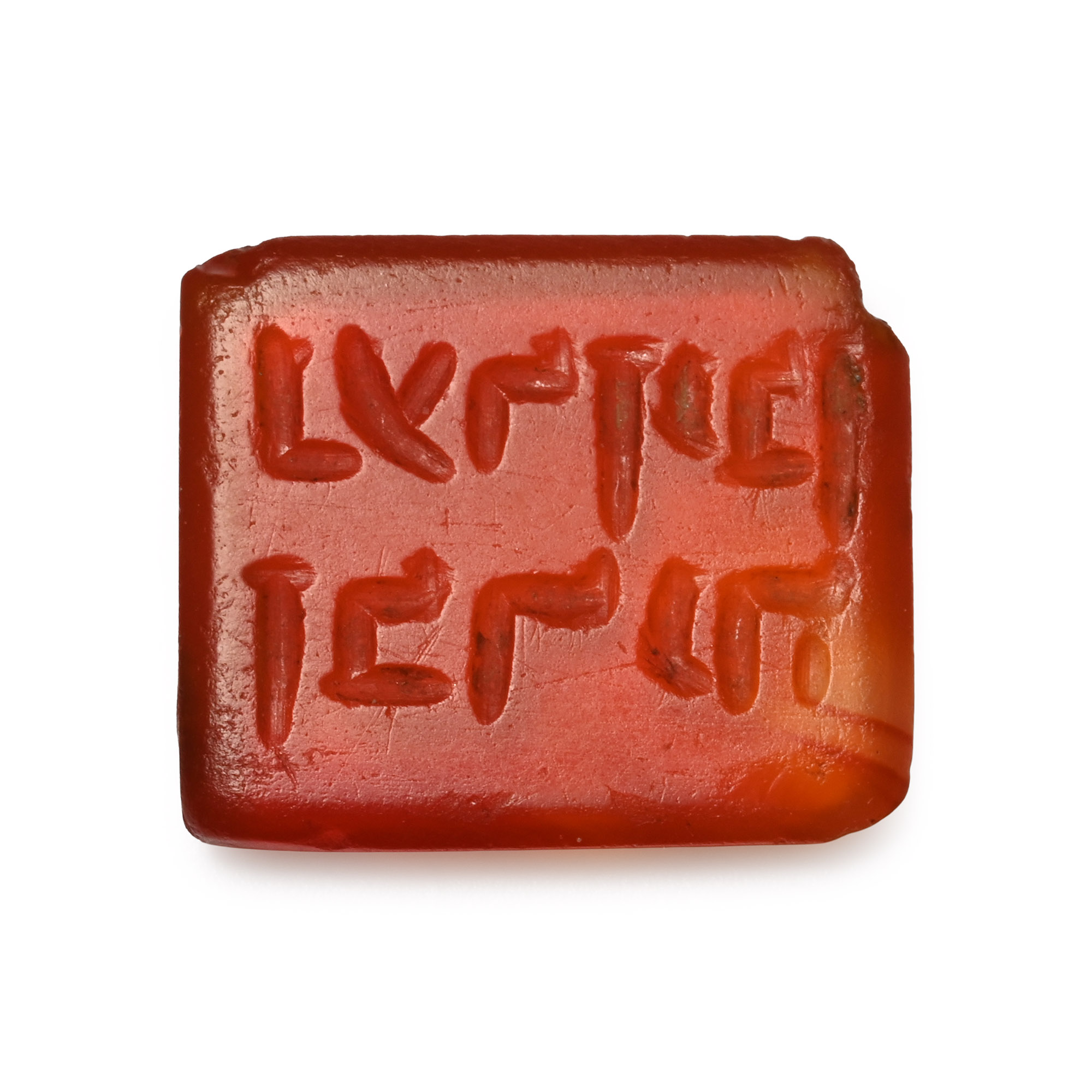
Carnelian Gemstone with Hebrew Inscription
19TH CENTURY A.D.
1/2 in. (0.71 grams, 12 mm).
Rectangular in plan with bevelled edges, two lines of Hebrew text reading 'Na'aran yelen u'vrenah' for 'Na'aran dwells and enjoys'. [No Reserve]
ProvenancePrivate collection of a London, UK, gentleman, acquired between 1965-2020.
This lot is accompanied by an illustrated lot declaration signed by the Head of the Antiquities Department, Dr Raffaele D'Amato.
Na'aran is a personal name referring to a biblical city on modern West Bank near Jericho.
CONDITIONTimeLine Auctions follows a vetting process to ensure the authenticity and legality of all items, reinforcing our commitment to integrity and responsible trading. Each antiquity, antique, and coin lot undergoes thorough examination by a vetting committee of at least ten external specialists, professional trade association members, scientists, and archaeologists: Our Vetting Process
AUCTIONS:
TimeLine is a leading auction house specialising in antiquities, ancient art, collectables, natural history, coins, medals, and books. Our auctions offer museums, collectors, historians, and enthusiasts the opportunity to acquire unique and historically significant pieces.
-
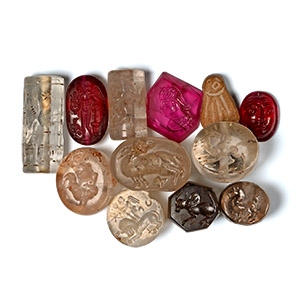
Western Asiatic Style Stone and Other Seal and Amulet Group
20th century A.D.Sold for (Inc. bp): £72
Comprising seven stamp seals, two cylinder seals, a stone amuletic pendant, a cabochon with human face, and a hexagonal insert with profile bust. 141 grams total, 19-36 cm
From the family collection of a Hampstead gentleman; formerly acquired in the 1980s. This lot is accompanied by an illustrated lot declaration signed by the Head of the Antiquities Department, Dr Raffaele D'Amato. -
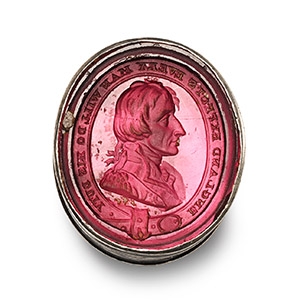
Post Medieval Silver Seal with Portrait of Lord Nelson
19th century A.D.Sold for (Inc. bp): £312
Amethyst-coloured seal with incuse profile portrait, garter surrounding with legend 'England Expects Every Man Will Do His Duty'; ribbed silver cell with tubular socket for handle. 24.4 grams, 26 mm
Acquired on the UK art market. Property of a London, UK, antiquarian. This lot is accompanied by an illustrated lot declaration signed by the Head of the Antiquities Department, Dr Raffaele D'Amato. -
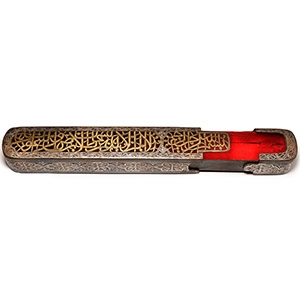
Western Asiatic Style Inlaid Bronze Calligraphic Brush or Pen Box
20th century A.D.Sold for (Inc. bp): £117
A narrow openwork box with sliding mechanism, the inside lined with red velvet. 353 grams, 20.8 cm
From the family collection of a Hampstead gentleman; formerly acquired in the 1980s. This lot is accompanied by an illustrated lot declaration signed by the Head of the Antiquities Department, Dr Raffaele D'Amato.
