
Loading, please wait...
_900x900.jpg "Cappadocian Stone Cylinder Seal with Court Scene")
_200x200.jpg "Cappadocian Stone Cylinder Seal with Court Scene")
.jpg "Cappadocian Stone Cylinder Seal with Court Scene")
LOT 0194
Cappadocian Stone Cylinder Seal with Court Scene
CIRCA 2000-1900 B.C.
1 5/8 in. (21.9 grams, 40 mm).
Frieze including two standing attendants in flounced floor-length robes before a laden table and a seated figure in similar robes, the seated figure drinking from a vessel through a drinking pipe, behind him a stag with a small animal between its legs, a border of pellets above and below.
ProvenanceAcquired in the mid 1980s-1990s.
Private collection, Switzerland, thence by descent.
Private collection, since the late 1990s.
Cf. Teissier, B., Ancient Near Eastern Cylinder Seal from the Marcopoli Collection, California, 1984, pp.200-201, no.352.
CONDITIONTimeLine Auctions follows a vetting process to ensure the authenticity and legality of all items, reinforcing our commitment to integrity and responsible trading. Each antiquity, antique, and coin lot undergoes thorough examination by a vetting committee of at least ten external specialists, professional trade association members, scientists, and archaeologists: Our Vetting Process
AUCTIONS:
TimeLine is a leading auction house specialising in antiquities, ancient art, collectables, natural history, coins, medals, and books. Our auctions offer museums, collectors, historians, and enthusiasts the opportunity to acquire unique and historically significant pieces.
LOT 0194
Cappadocian Stone Cylinder Seal with Court Scene
Estimate £1,200 - 1,700€1,390 - 1,970 (for guidance only)$1,620 - 2,300 (for guidance only)
-
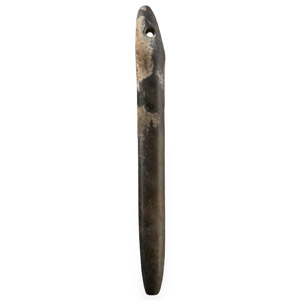
Western Asiatic Whetstone
1st millennium B.C.Sold for (Inc. bp): £156
Columnar in section with tapering tip, bulb to rear end and lateral piercing. 39 grams, 13.3 cm
Ex London, UK, gallery, 1971-early 2000s. London, UK, collection. -
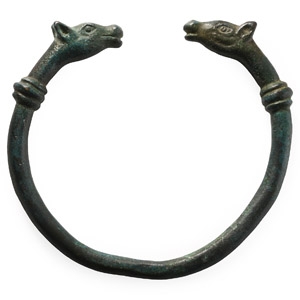
Graeco-Persian Bronze Bracelet
4th-2nd century B.C.Sold for (Inc. bp): £468
A torc-shaped bracelet with round-section body, ribbed collar to the terminals ending in opposed deer heads with open mouths. 37.1 grams, 71 mm
Property of a Surrey collector; acquired in the early 1970s. -
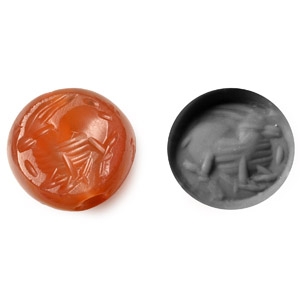
Sasanian Carnelian Stamp Seal with Antelope
Circa 6th-7th century A.D.Sold for (Inc. bp): £195
Plano-convex in profile with intaglio ibex with its legs folded beneath the body; supplied with a museum-quality impression. 1.54 grams, 11 mm
Ex P Chapman collection, 1980s-1990s.
