
Loading, please wait...
LOT 0240
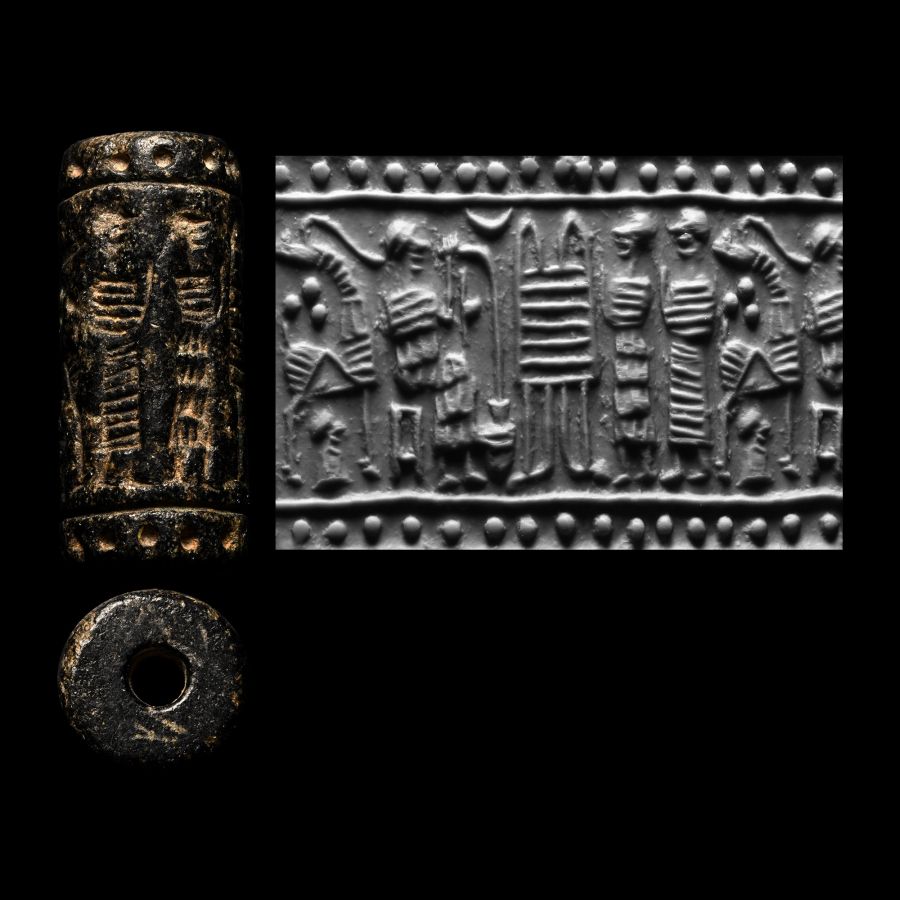
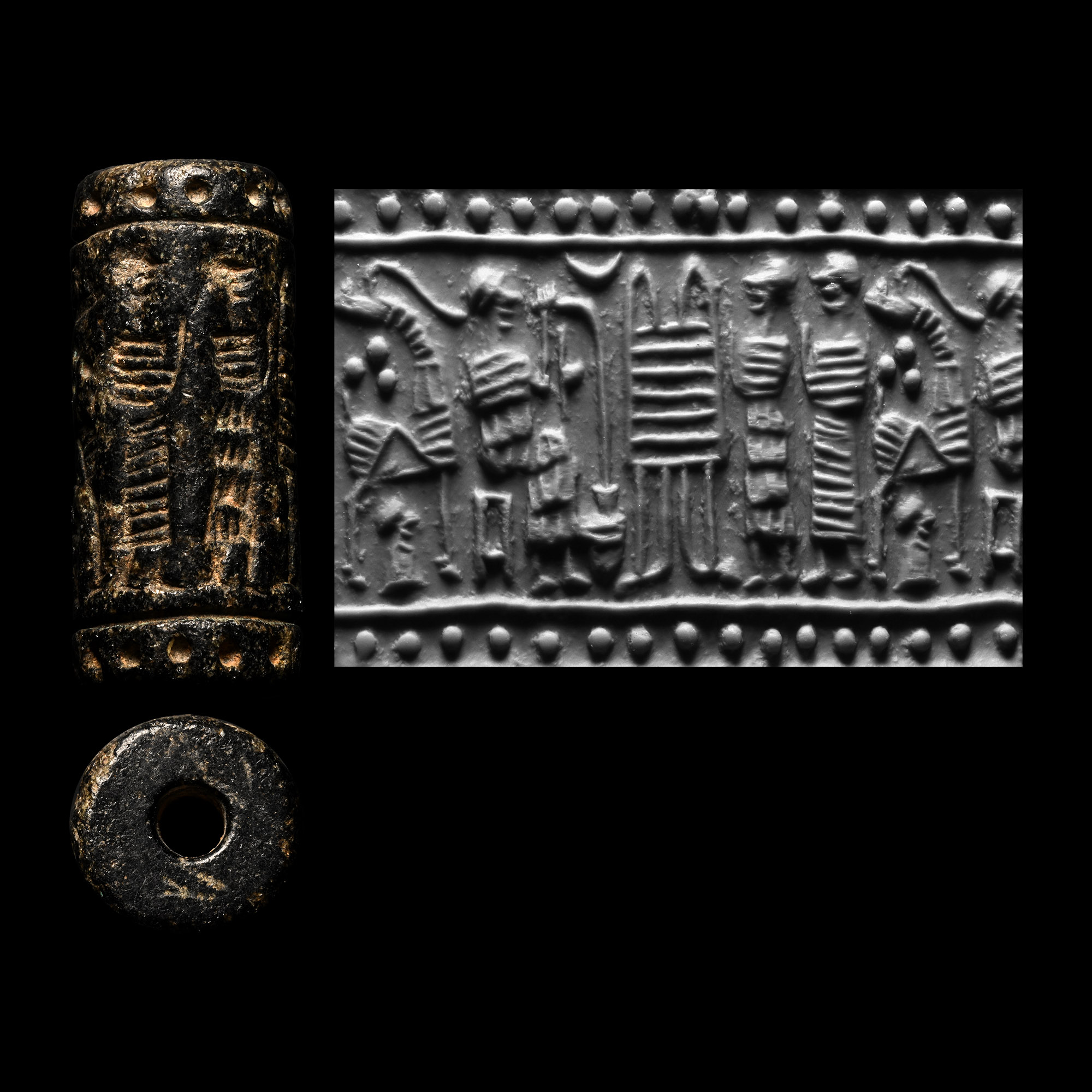
Cappadocian Stone Cylinder Seal with Court Scene
CIRCA 2000-1900 B.C.
1 5/8 in. (21.9 grams, 40 mm).
Frieze including two standing attendants in flounced floor-length robes before a laden table and a seated figure in similar robes, the seated figure drinking from a vessel through a drinking pipe, behind him a stag with a small animal between its legs, a border of pellets above and below; supplied with a museum-quality impression.
ProvenanceAcquired in the mid 1980s-1990s.
Private collection, Switzerland, thence by descent.
Private collection, since the late 1990s.
This lot has been cleared against the Art Loss Register database, and is accompanied by an illustrated lot declaration signed by the Head of the Antiquities Department, Dr Raffaele D'Amato.
Cf. Teissier, B., Ancient Near Eastern Cylinder Seal from the Marcopoli Collection, California, 1984, pp.200-201, no.352.
CONDITIONTimeLine Auctions follows a vetting process to ensure the authenticity and legality of all items, reinforcing our commitment to integrity and responsible trading. Each antiquity, antique, and coin lot undergoes thorough examination by a vetting committee of at least ten external specialists, professional trade association members, scientists, and archaeologists: Our Vetting Process
AUCTIONS:
TimeLine is a leading auction house specialising in antiquities, ancient art, collectables, natural history, coins, medals, and books. Our auctions offer museums, collectors, historians, and enthusiasts the opportunity to acquire unique and historically significant pieces.
LOT 0240
Cappadocian Stone Cylinder Seal with Court Scene
Estimate £1,200 - 1,700€1,390 - 1,970 (for guidance only)$1,620 - 2,300 (for guidance only)
-
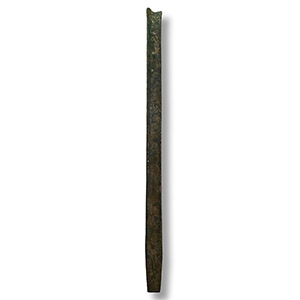
Luristan Bronze Gouge Chisel
Circa 1600-800 B.C.Estimate: £80 - 100 (+bp*)
Opening Bid: £40
With a long semi-circular shaft with a narrow channel transitioning to a blunt square-section handle. 320 grams, 26.9 cm
Ex London collection, formed between 1990-present. Accompanied by an old dealer's information card. This lot has been cleared against the Art Loss Register database, and is accompanied by an illustrated lot declaration signed by the Head of the Antiquities Department, Dr Raffaele D'Amato. -
.jpg)
Sumerian Lapis Lazuli Cylinder Seal Collection
3rd millennium B.C.Sold for (Inc. bp): £1,560
Including various geometric and zoomorphic motifs; supplied with a museum-quality impression. 16.04 grams total, 16-30 mm
Private Swiss collection. Acquired in 1998. This lot has been cleared against the Art Loss Register database, and is accompanied by an illustrated lot declaration signed by the Head of the Antiquities Department, Dr Raffaele D'Amato. -
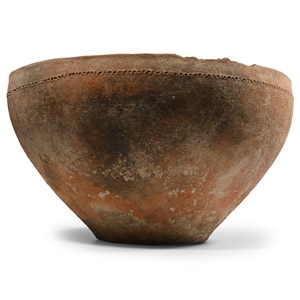
Very Large Transjordan Holy Land Terracotta Bowl
Early Bronze Age I, 3rd millennium B.C.Sold for (Inc. bp): £52
Large bowl with piriform body and narrow foot, circumferential decorative band below the rim; section of the rim absent. 2.75 kg, 35.1 cm wide
From the collection of a gentleman, Geneva, before 1988. This lot has been cleared against the Art Loss Register database, and is accompanied by an illustrated lot declaration signed by the Head of the Antiquities Department, Dr Raffaele D'Amato.
