
Loading, please wait...
LOT 1453
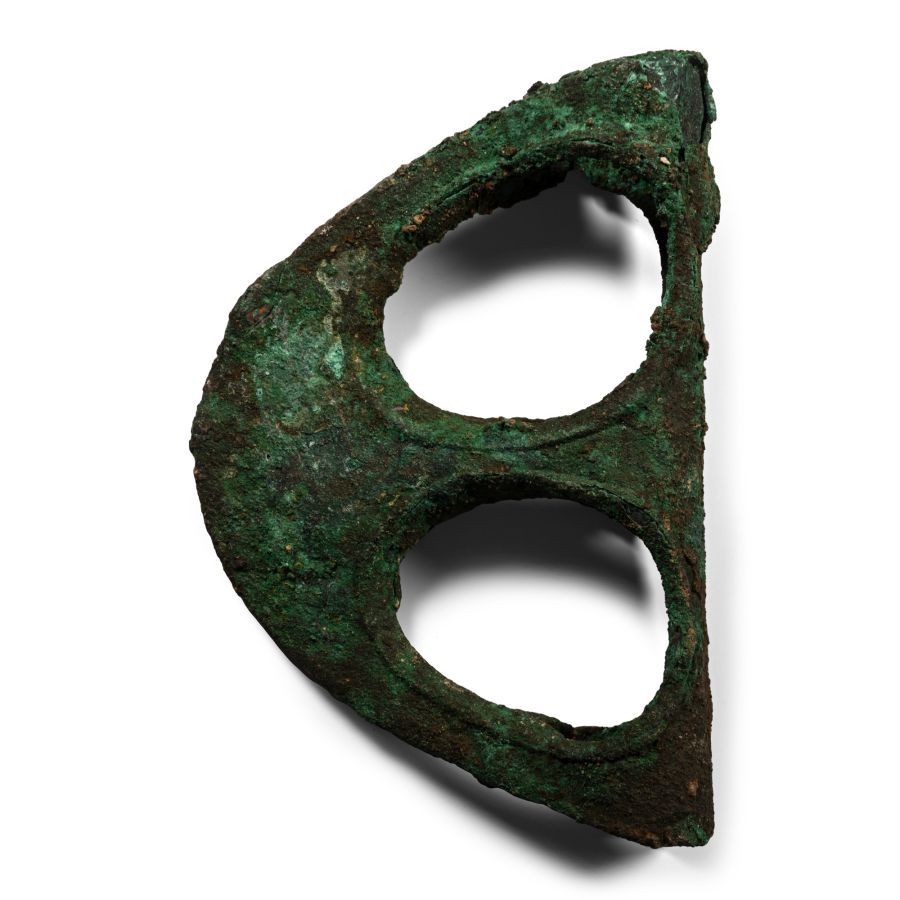
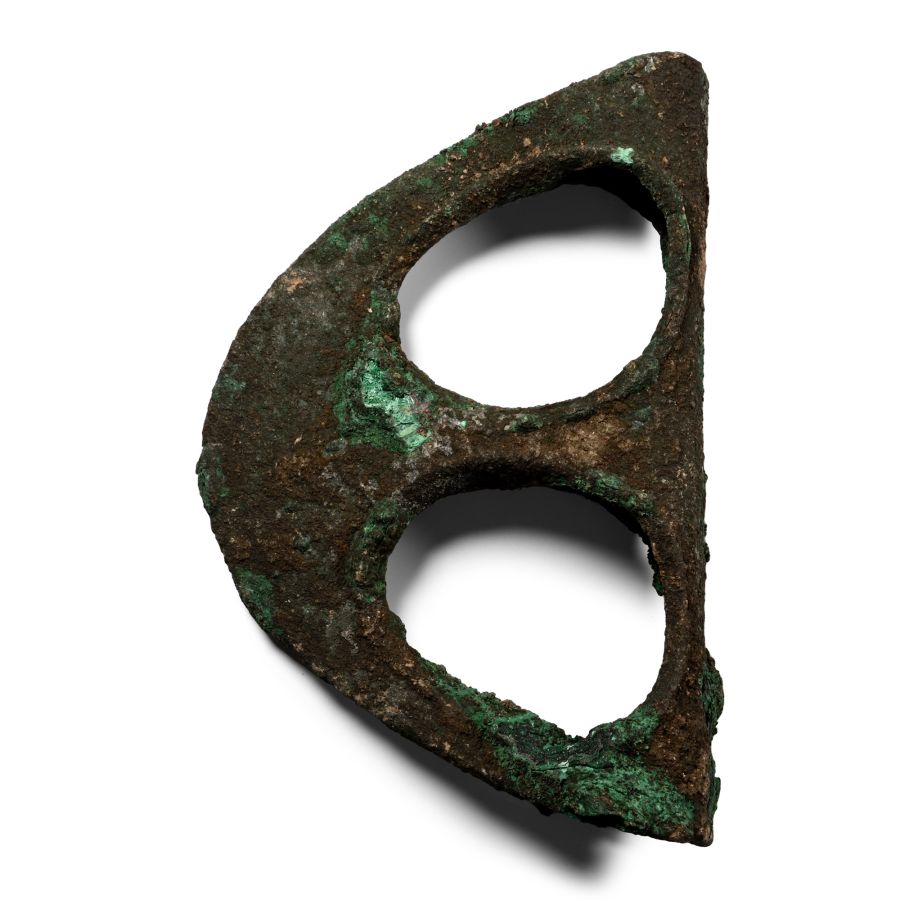
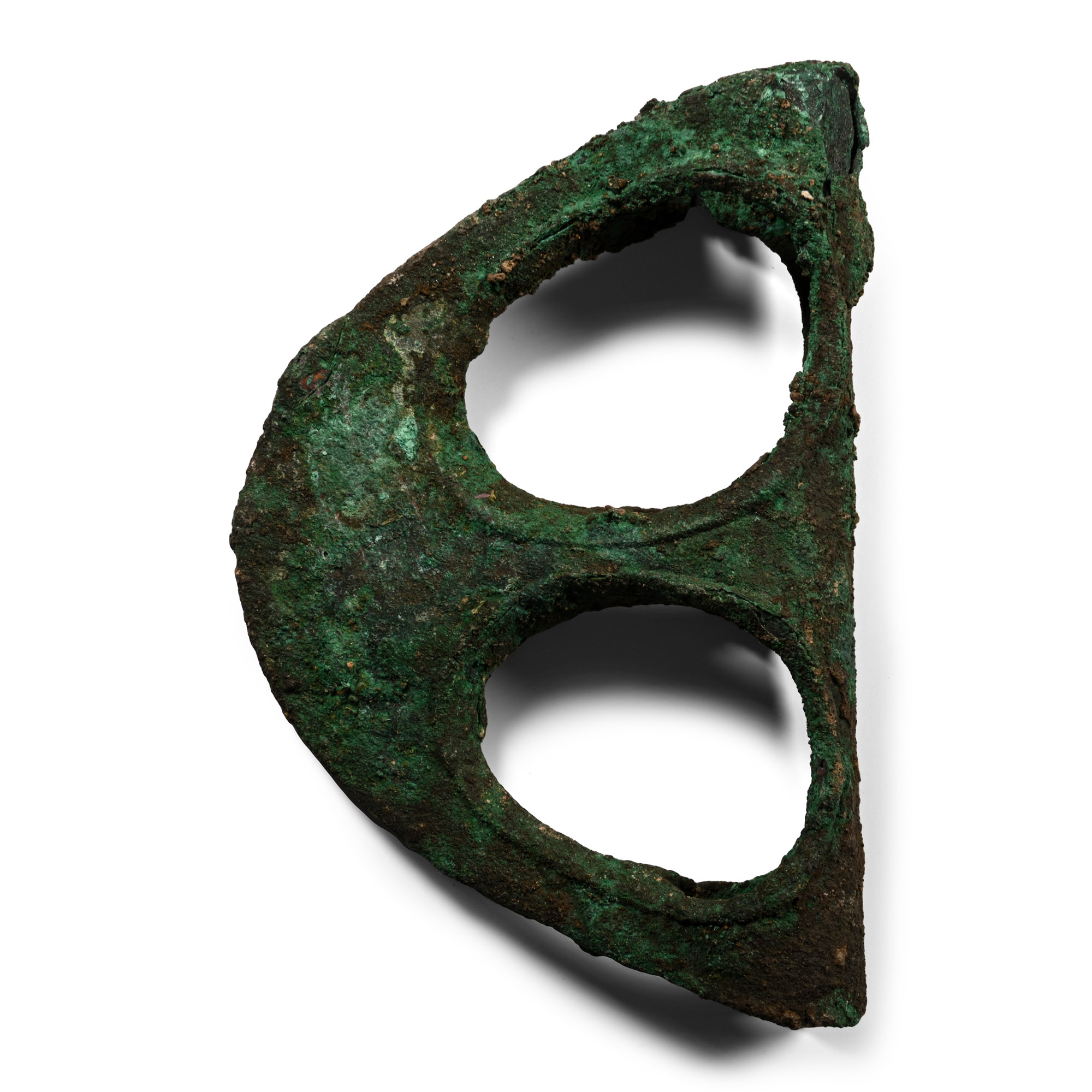
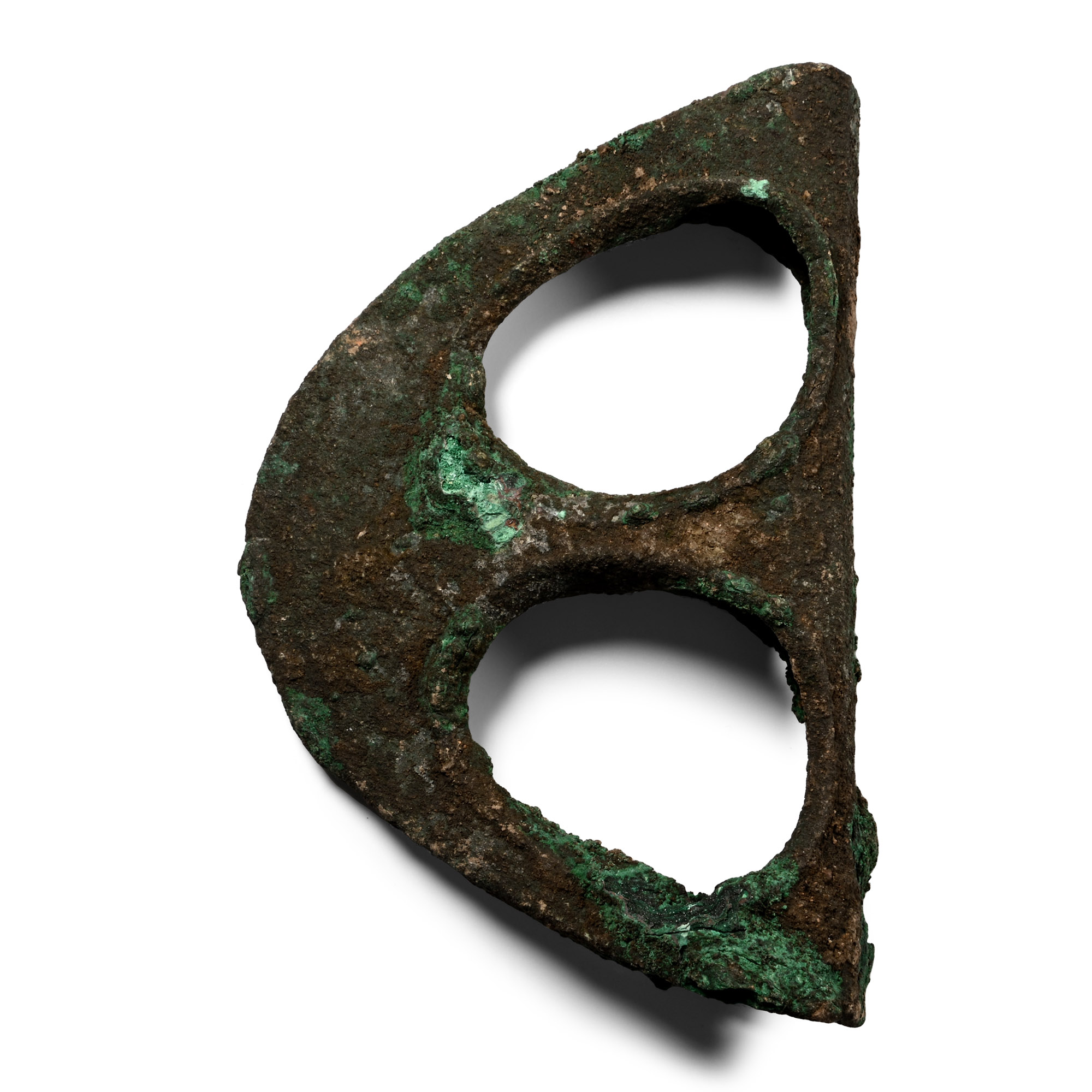
Canaanite 'Window' Bronze Axehead
2100-1800 B.C.
4 3/8 in. (142 grams, 11 cm).
Curving blade with two large 'eye-shaped' openings, cylindrical socket.
ProvenanceAcquired in the mid 1980s.
Private collection, Switzerland, thence by descent.
Private collection, since the late 1990s
This lot is accompanied by an illustrated lot declaration signed by the Head of the Antiquities Department, Dr Raffaele D'Amato.
Cf. Miron, E., Axes and Adzes from Canaan, Stuttgart, 1992, cat.no.231, p.53, pl.15; Gernez, G., L’armament en métal au Proche et Moyen-Orient: des origines a 1750 av. J.C., Paris, 2007, p.190, fig.2.42, type H4.
FootnotesThe ‘window’ axes have several morphological characteristics. The blade, semi-circular or elongated in shape, always ended in a rounded edge. In this type the blade was flat in section. It included two openings at its base—windows—of varying width, circular or oval. The haft consisted of a collar as wide as the blade. The weapon was threaded into an elongated wooden handle, often curved at its base, of oval section, with a differential width promoting the strength of the haft. It was thus wedged, and a rivet passed through the handle, just above the axe, serving as a stop.
CONDITIONTimeLine Auctions follows a vetting process to ensure the authenticity and legality of all items, reinforcing our commitment to integrity and responsible trading. Each antiquity, antique, and coin lot undergoes thorough examination by a vetting committee of at least ten external specialists, professional trade association members, scientists, and archaeologists: Our Vetting Process
AUCTIONS:
TimeLine is a leading auction house specialising in antiquities, ancient art, collectables, natural history, coins, medals, and books. Our auctions offer museums, collectors, historians, and enthusiasts the opportunity to acquire unique and historically significant pieces.
-
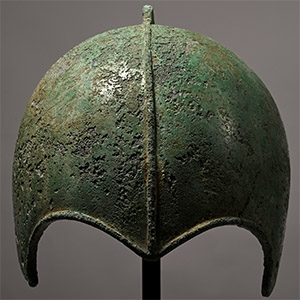
Scythian Bronze 'Kuban' Type Helmet
7th-6th century B.C.Sold for (Inc. bp): £18,200
Raised from a single sheet with rounded skull and semi-circular cut-outs for the eyes with raised rims, raised bar to the front extending to the top with a loop; ten circular perforations to the lower edge; accompanied by a custom-made display stand. 1.47 kg, 23.5 cm wide
Private collection formed in Europe in the 1980s. Westminster collection, central London, UK. Accompanied by an academic report by Dr Raffaele D’Amato. This lot has been checked against the Interpol Database of stolen works of art and is accompanied by search certificate number no.12616-235608. This lot has been cleared against the Art Loss Register database, and is accompanied by an illustrated lot declaration signed by the Head of the Antiquities Department, Dr Raffaele D'Amato.
This war helmet, typical of the Caucasian Scythians, belongs to the so-called Kuban type according to B. Z. Rabinovich, named after the north Caucasian region where the majority of this type of helmets were found. The helmet is almost identical to the helmet found in the 6th century barrow at Kelermes (Stanitsa Kelermeskaya), and in fact many of such helmets have been found in the Northern Caucasus. The helmets were typical of the noblemen fighting on horseback with spear, javelins and especially with bow and arrows. -
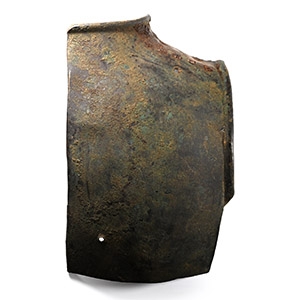
Hellenistic Bronze Cuirass Section
3rd-1st century B.C.Sold for (Inc. bp): £520
Possibly the upper right back element of a composite cuirass for a cataphract (armoured horseman), part of the edge around the neck and shoulders preserved, iron rivets and holes for attaching the shoulder straps still visible. 220 grams, 23 cm
UK private collection, acquired in 1996. This lot is accompanied by an illustrated lot declaration signed by the Head of the Antiquities Department, Dr Raffaele D'Amato.
A near complete armour for cataphract was found in the French excavations in Al-Khanoum, a Hellenistic city in Afghanistan. The cavalry of Seleucid, Ptolemaic and other Hellenistic Kingdoms formed regiments of heavy armoured horsemen, who in the west, employed a combination of lamellar and segmented armour together with muscled armour of Greek type. Cataphract armour in the West had more Greek element, for example more plate armour and less scale and lamellar. -
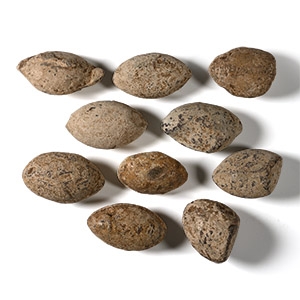
Graeco-Roman Lead Sling Shot Collection
5th-3rd century B.C.Sold for (Inc. bp): £208
Each a prolate spheroid, some with lettering and casting seam or sprue. 328 grams total, 21-32 mm
Acquired in the mid 1980s-1990s. Private collection, Switzerland, thence by descent. Private collection, since the late 1990s. This lot is accompanied by an illustrated lot declaration signed by the Head of the Antiquities Department, Dr Raffaele D'Amato.
